














This blog is part of an ongoing series, A Brave New World: Finding Life Sciences Success in Modern Markets.
David versus Goliath. Billy Beane and the Oakland A’s. Rocky versus Apollo Creed. History, sports, and cinema are full of underdog stories. The story of an upstart challenger defying long odds to find success is inspiring. In life sciences, there are many similar underdog stories characterized by organizations launching into mature markets with a new product, under-resourced teams trying to find traction, or small manufacturers competing against the deep resources and investments of larger pharma.
Unfortunately, long odds exist for a reason because the truth is that most underdogs do not prevail. At the same time, asymmetrical launches in modern markets are a growing necessity as more products with constrained resources launch into already developed therapeutic areas, thereby inflating the cost of promotion. While product differentiation and launch archetypes remain key success factors, when resources are limited, knowing where to allocate investments across stakeholders can accelerate performance while sustaining the bottom line.
Navigating a challenging environment
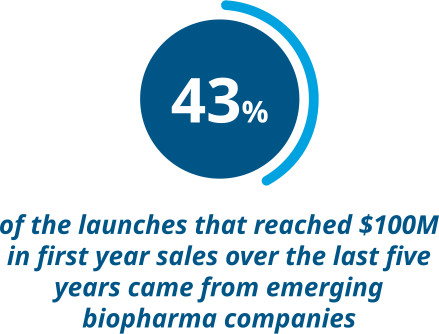
The launch environment is increasingly difficult, but the data reveals success is possible. Although the total number of launches has been similar, since 2020 only 23 products have reached $100 million in first-year sales, compared with 53 in the previous five years. Notably, among the successful launches that achieved $100 million in recent years, over 40% came from emerging biopharma (EBP) companies, suggesting that execution still matters even when balancing resource investment is required.
The flip side of the equation is that heavy investment in brand promotion does not guarantee success. There are multiple modern market examples where launch spending outstripped revenues by wide margins. A major reason for missed expectations is when investments in generating demand such as sales force promotion or Direct-to-Consumer (DTC) advertising are out of synch with evidence and access.
Five pillars of a successful modern launch
Launching a new therapy in today’s competitive landscape requires more than innovation. It demands strategic differentiation and sustained value delivery. Asymmetric launches often struggle to stand out in crowded markets because of limited real-world or clinical evidence, leading to skepticism from payers and providers. Securing access is equally complex as requirements tighten and affordability pressures mount.
Promotional challenges further intensify when smaller teams are constrained by limited resources and data gaps that hinder precision targeting. At the same time, patient-centric strategies are essential yet difficult to execute, requiring coordination, support infrastructure, and strong outcome tracking. Finally, balancing short-term performance with long-term growth remains a major test as organizations must stay agile, invest wisely, and plan across multiple scenarios to achieve lasting impact beyond the initial launch.
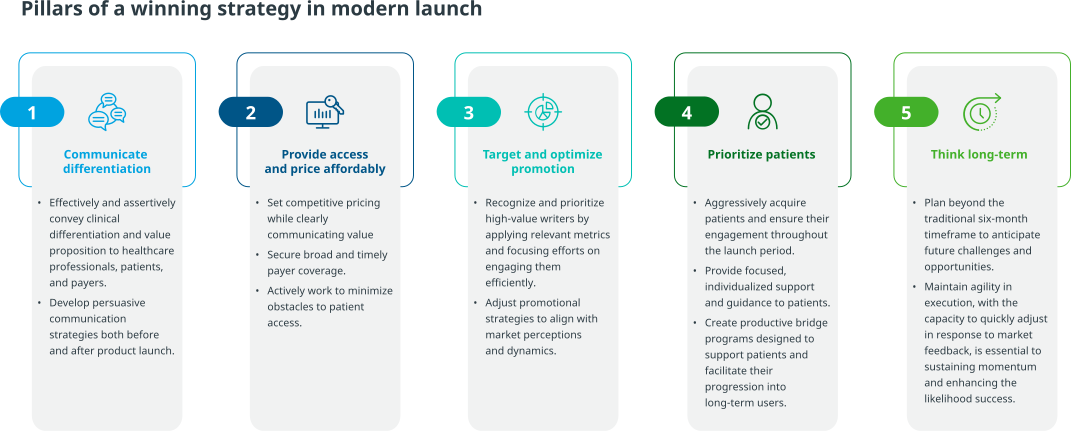
To navigate these challenges effectively, organizations should implement five critical launch pillars to achieve success in today’s evolving environment. For brands with limited budgets and little-to-no existing market presence, executing these well against the right metrics, and pivoting when needed, is vital. Tailor investments within each pillar to maximize returns on limited resources, guided by unique product dynamics. The five pillars are:
- Communicate differentiation: Effectively articulate the product’s value proposition to differentiate key benefits to stakeholders. Craft impactful messaging strategies that drive understanding and engagement throughout both the pre-launch planning and post-launch execution phases. For asymmetric launches, the key is to look for gaps in the market to generate niche utilization while generating targeted evidence to specific patient or healthcare provider segments.
- Provide access and price affordability: Ensure that demand is minimally eroded by coverage denials or high out-of-pocket costs. Be prepared for large payers to view a product’s value differently while demanding evidence against the standards of care. These demands far outstrip the evidence generated through clinical trials which may get a product into market but do not guarantee coverage.
This means a smart market access strategy: pricing responsibly; balancing promotional efforts and costs with the total cost of access; knowing where existing coverage opportunities overlap to prioritize sales force efforts on opportunity not just volume; and providing co-pay or patient support so that prescription demand translates into filled prescriptions. - Targeted and optimized promotion: Make every marketing dollar count through precise targeting and messaging. Instead of overspending broadly, focus on the highest-value prescriber audiences and the channels that yield the best return on investment, particularly digital.
Much like messaging differentiation, look for opportunities where competitive intensity is favorable. Finding where the competitive intensity is lower can improve the likelihood of your messaging being heard and acted on. Leverage the right data to continuously refine the promotional mix across personal, non-personal, and digital strategies. - Prioritize patients: Prevent patient leakage after initiation. Provide market appropriate patient support services (nurse hotlines, education, adherence reminders, financial assistance) to keep patients on therapy once they start. In a world of high abandonment, a launch must actively shepherd patients to treatment success.
Nothing will sink an asymmetric launch faster than not capitalizing on the demand being generated. When resources are tight, the efficiency of understanding demand capture and patient pathways to care are heightened. As such, underinvestment into demand capture through patient support services is a quick path to succumbing to the long odds of a competitive market. - Think long-term: Plan beyond the traditional launch timeline and be ready to adapt. This includes pursuing additional indications or formulations (to “stack” value) and maintaining organizational agility to pivot strategy based on real-world feedback. Consider adding in investment gates that unlock additional investment or strategies. Keeping commercial breakeven points in mind can help ensure you do not unleash spend too soon.
Importantly, the runway for success has extended to a three-year launch horizon. Avoid both cutting support too early when opportunity still exists and hanging on to costly strategies too long. Modeling a range of scenarios across high-, mid-, and low-performance cases increases the ability to identify post-launch reality versus pre-launch planning. Remember, no plan survives first contact.
How an asymmetric launch succeeds
Launch success is more than just understanding the market landscape and strategy fundamentals. Winning also requires an understanding of market inflection points, strategies to exploit them, and the amount of effort required to do so across stakeholders. Think of judo rather than brute force.
For example, while it is important to engage providers, the quality and behaviors of providers vary. Success is not just about getting the largest number of providers to prescribe your brand; the adoption rate, productivity, and influence of those providers are equally critical.
Provider adoption rate
Understanding the quality of providers is important to maximize the impact of limited resources. Rather than adopting a broad (expensive) strategy that attempts to reach every provider, utilize a targeted approach. For instance, leveraging metrics such as launch adoption rates can help accurately pinpoint which providers are most receptive to new products. By focusing on these high-potential providers, asymmetric launches can significantly enhance the likelihood of rapid product uptake, which is crucial in highly competitive markets. This targeted strategy ensures that resources are invested where they will yield the greatest return, ultimately improving the odds of launch success.
Additionally, the performance of a product’s launch adoption compared to the adoption rates of other products for an individual provider can provide rapid feedback on the sufficiency of promotional efforts. During launch, this is a key metric to monitor that should drive the push and pull of investment strategy. If adoption rates fall below forecast, engagement strategies should be shifted towards efforts that work. Conversely, additional resources should be steered towards approaches that are yielding the best outcome.
An evaluation of providers’ overall adoption rates compared to respiratory products illuminates this analysis in action. A broad well-resourced launch could afford to focus on a larger number of targeted healthcare providers. However, for an asymmetric launch strategy where resources are thin, focusing on high-probability targets can provide a similar level of early volume as a broad, more costly launch. Additionally, understanding when HCPs activate can also give needed insights into what market conditions need to be present for that activation to occur so that it can be accelerated. Successful asymmetric launches are governed by this type of agility against the right metrics.
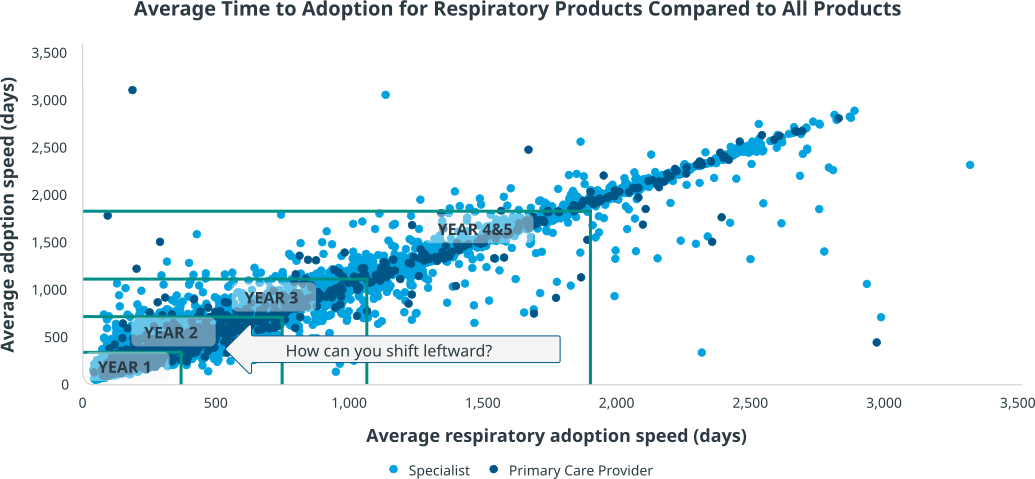
Source: IQVIA U.S. Center for Thought Leadership & Innovation; Patient Targeting Library; LAAD.
Provider productivity
Providers are not a homogeneous group, and their prescribing patterns vary widely. Some consistently generate higher prescription volumes and reach more patients than others, making their engagement especially influential. Understanding this dynamic, and the right metric to use to evaluate provider productivity is fundamental for reaching launch goals. Take, for instance, an EBP launch product that recently achieved a highly effective asymmetric launch. At first glance, the brand (Product A below) appeared to lag behind a competitor (Product B) when comparing the total number of unique providers prescribing in the first year. However, a deeper, more strategic analysis revealed a different story. The providers who prescribed the EBP’s product were significantly more productive and reached a wider patient population by writing more prescriptions, amplifying the reach of their provider strategy.
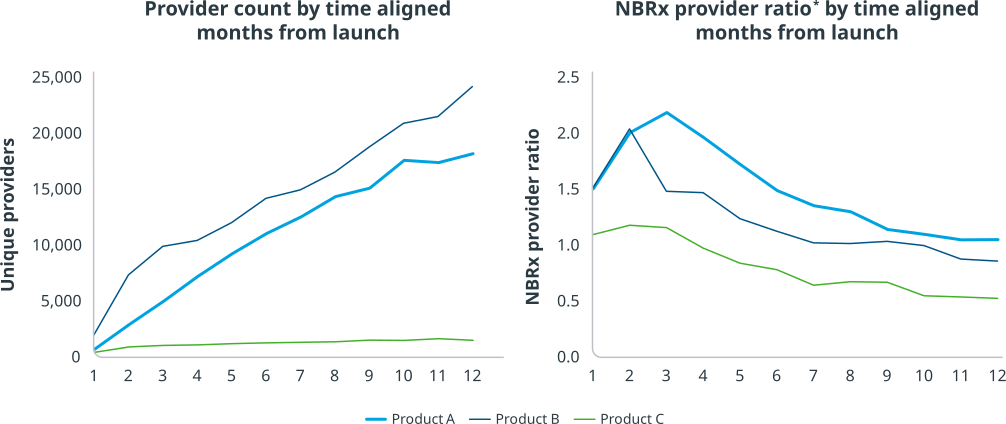
Source: IQVIA Xponent Prescriber Dynamics (XPD); NBRx Provider Ratio: NBRx/Unique Provider Count.
Provider influence
Identifying providers who are both productive and early adopters has the potential to turbocharge promotional expenditures. These high-quality providers will not only return the greatest bang for each proverbial buck, but they also tend to cluster in groups that can amplify promotional messages organically. Take, for example, an analysis of early adoption rates amongst 960 different oncology practices. Adoption speed can be observed at the practice level not just by the individual provider. Understanding where opportunity is concentrated can help spread limited resources further. Additionally, when evaluating the practice level, promotional sensitivity can also be observed. By examining where manufacturer promotion is present either through in-person promotion or digital promotion, targeting lists can be further refined to those that are most likely to respond to resource deployment.
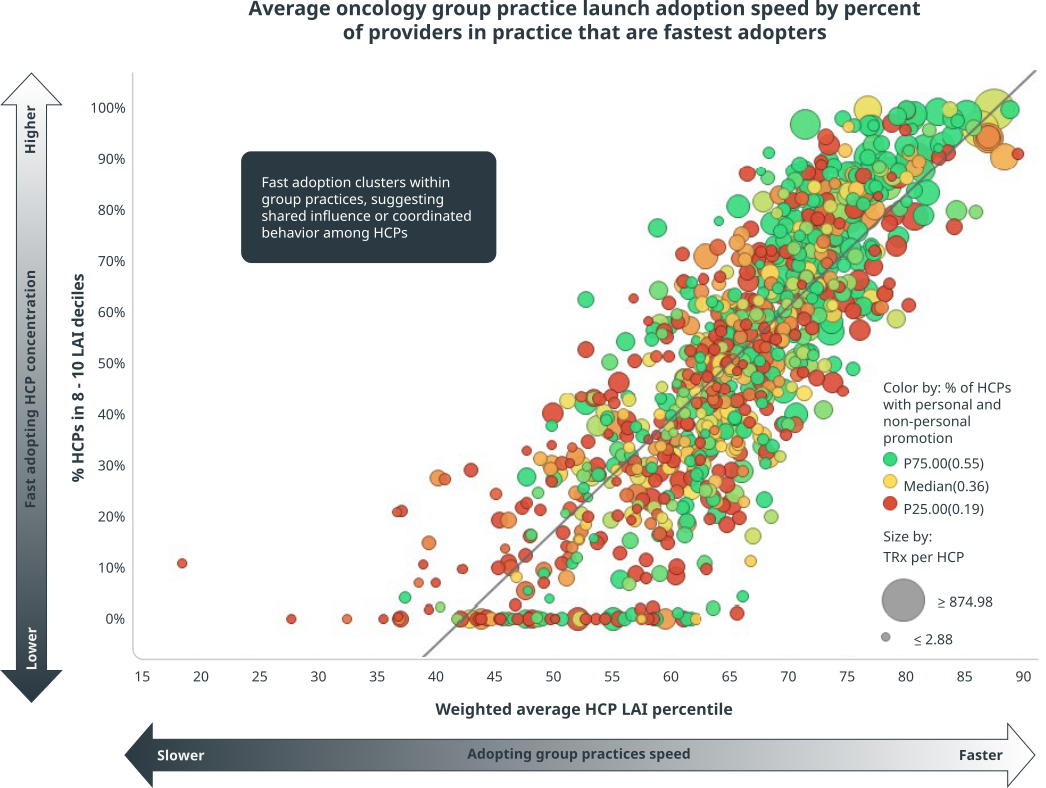
Source: 2024 LAAD / Physician Targeting Library; OneKey Group Practice Affiliation Data; Open Payments Data (CMS); Aim XR960 Group Practices with majority of TRx volume coming from Oncologists & at least 5 HCPs (11,479 NPIs) Group practice Launch Adoption Index (LAI) is calculated as a weighted average of member HCPs’ LAI based on launches from 2013-2024. HCP: Health Care Provider.
In a crowded field like oncology, where competitive noise can be overwhelming, success depends on identifying the right data points and connecting them effectively to cut through the clutter with efficiency and precision. Brute-force marketing may ultimately reach some of the ideal prescribers for a product, but significant amounts of resources can be wasted on those who are unlikely to respond in ways that drive uptake.
While these strategies focus on identifying and engaging high-quality providers, they speak to the importance of identifying strategies that will stretch the impact of dollars invested. Similar assessments of market trends and tactics to appropriately direct funding on promotion, patient support, and access are paramount for asymmetric launch success.
The bottom line
While large spenders may grab headlines, it is frequently the asymmetric launches that quietly show what’s possible with the right approach. These successes prove that even in a challenging environment, a smart, well-executed launch can break through. Payers are tough, patients have more choices, louder share of voice can be difficult to overcome, and policy changes such as the Inflation Reduction Act (IRA) squeeze timelines. But as we’ve seen, a small budget armed with a great product and a strategic data-driven launch plan aligned to the leading factors for success can not only survive, but thrive.

A Brave New World
Finding life science success in modern markets
Related solutions
Data, AI, and expertise empower Commercial Solutions to optimize strategy, accelerate market access, and maximize brand performance.
Grow your brand, now and through patent expiry
Gain high value access and increase the profitability of your brands