






.svg)











Stay ahead with the EMEA Thought Leadership insights: your source for industry-leading expertise and analysis
Blog
Beyond the weight loss race: tolerability moves into the spotlight
Sep 28, 2026
In an earlier IQVIA blog discussing tolerability1, we argued that obesity innovators would have to look beyond headline weight-loss figures. Since then, the market has evolved rapidly. As multiple therapies now deliver substantial weight reduction, the search for differentiation is shifting towards the factors that determine long-term treatment success.
The first chapter of the obesity market was defined by the question: how much weight could patients lose? Successive waves of obesity medicines (OMs) pushed the efficacy bar ever higher, with tirzepatide establishing a new benchmark, delivering a mean reduction in body weight of 20.9% in the SURMOUNT-1 trial2. As a result, incretin-based OMs now routinely achieve weight loss in the range of 15-25%. The weight-loss race is far from over, but it is no longer the only contest that matters. As multiple therapies move towards similarly transformative efficacy levels, innovators are being forced to compete on a broader set of attributes. Increasingly, attention is shifting towards the factors that determine whether patients can stay on treatment long enough to achieve and maintain their weight-loss goals. In that environment, tolerability moves from the margins of product profiles to a strategic differentiator.
New mechanisms of action elevate tolerability
Figure 1 highlights the variation in gastrointestinal treatment-emergent adverse event (GI-TEAE) rates across OMs, underscoring the growing importance of tolerability alongside efficacy. The figure compares the GI tolerability profiles of selected OMs, including established OMs alongside several next-generation pipeline candidates. Tolerability is assessed across five dimensions: nausea, vomiting, constipation, diarrhoea and treatment discontinuation due to adverse events. GI adverse events remain a meaningful challenge across many OMs, although the nature and extent of this burden vary considerably between therapies and mechanisms of action (MoA). A caveat to note, is that these are cross-trial comparisons, which have limitations as they include data of varying maturity spanning Phase II to Phase III clinical trials. Furthermore, because the analysis uses placebo-adjusted event rates, some OMs exhibit negative values for certain GI-TEAE dimensions, reflecting adverse event or treatment discontinuation rates that were lower than those observed in the corresponding placebo arm.
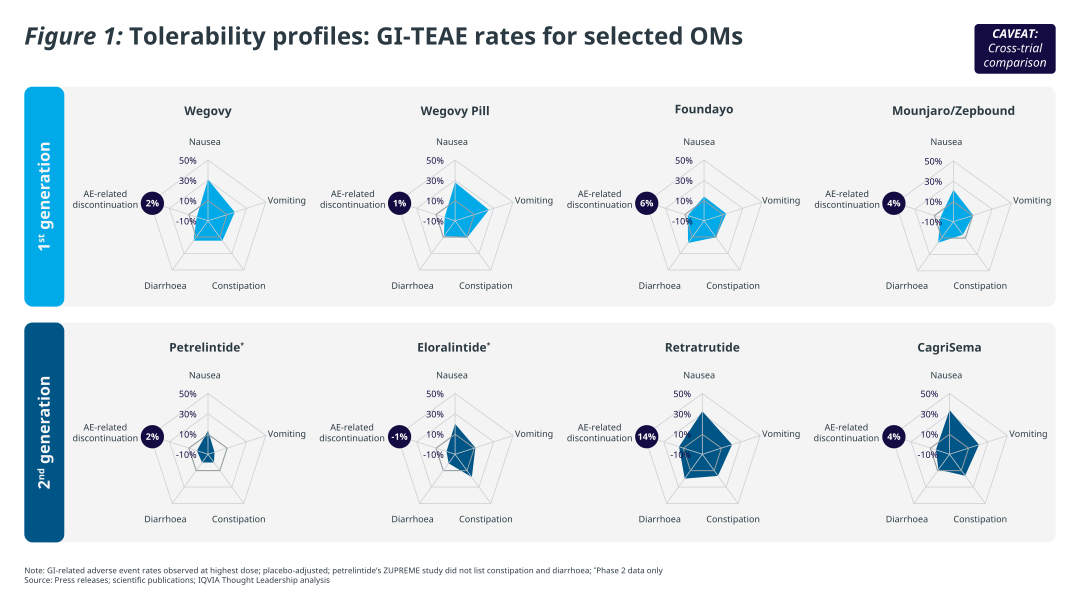
The first generation of OMs transformed expectations around efficacy but did not eliminate the tolerability challenge. Therapies such as Wegovy, Wegovy pill, Foundayo and Mounjaro/Zepbound exhibit meaningful rates of nausea, vomiting and diarrhoea, illustrating that GI-TEAEs remain a significant consideration even among therapies that have redefined obesity treatment (Figure 1). The success of these OMs has demonstrated the willingness of many patients to tolerate a degree of gastrointestinal burden in exchange for substantial weight loss. However, as the market becomes increasingly competitive and the focus shifts towards long-term obesity management, tolerability is emerging as an important point of differentiation.
The second wave of OMs is introducing greater diversity in MoA, and with it, greater variation in tolerability profiles. Whereas the first generation of OMs was dominated by incretin-based therapies, the emerging pipeline includes amylin-based therapies, dual- and triple-agonist combinations and other novel MoAs, introducing greater variation in both efficacy and tolerability.
Amylin-based therapies are among the most interesting examples of this trend. Both petrelintide and eloralintide demonstrate comparatively favourable placebo-adjusted GI-TEAE profiles across multiple dimensions, particularly nausea, vomiting and treatment discontinuation due to adverse events. For example, placebo-adjusted nausea rates are substantially lower than those reported for Wegovy (13% for petrelintide and 20% for eloralintide versus 31% for Wegovy), while adverse event-related discontinuation rates remain low for petrelintide and eloralintide at 2% and -1%, respectively. These figures illustrate the potential of amylins to deliver “placebo-like tolerabilty"3.
Retatrutide has generated considerable interest because of its exceptional efficacy potential (24-29% weight loss), yet this is accompanied by comparatively high GI-TEAE rates across several dimensions and a high adverse event-related discontinuation rate (14%). CagriSema, which combines the GLP-1 receptor agonist semaglutide with the amylin analogue cagrilintide, illustrates the complexity of balancing efficacy and tolerability in next-generation OMs. Despite incorporating an amylin, its placebo-adjusted GI-TEAE profile remains higher than those reported for standalone amylin candidates, with nausea, vomiting and adverse event-related discontinuation rates comparable to some established incretin-based therapies. This contrasts with amylin agents, which demonstrate a lower GI burden across multiple dimensions.
The significance of these findings extends beyond the management of adverse events. As the obesity pipeline becomes more diverse, the basis of competition will also begin to evolve. The first generation of OMs established new efficacy benchmarks; the second wave is beginning to differentiate itself through distinct efficacy-tolerability profiles. In an increasingly crowded obesity market, tolerability will emerge as an important source of strategic differentiation alongside efficacy, particularly as treatment expands into long-term weight maintenance and a broader patient population, including patients pursuing more modest weight loss goals who may prioritise treatment experience over efficacy.
Tolerability matters
As IQVIA explored in a previous blog4, the obesity market is increasingly evolving from a weight-loss market into a weight-loss and maintenance market. While OMs can deliver substantial weight loss, sustaining those outcomes remains an important challenge. Patients may be willing to accept gastrointestinal side effects during an initial weight-loss phase if treatment delivers meaningful results. However, expectations may differ when obesity treatment becomes a lifelong therapy. As obesity care evolves beyond weight loss alone, tolerability becomes a key driver of treatment persistence and overall patient experience.
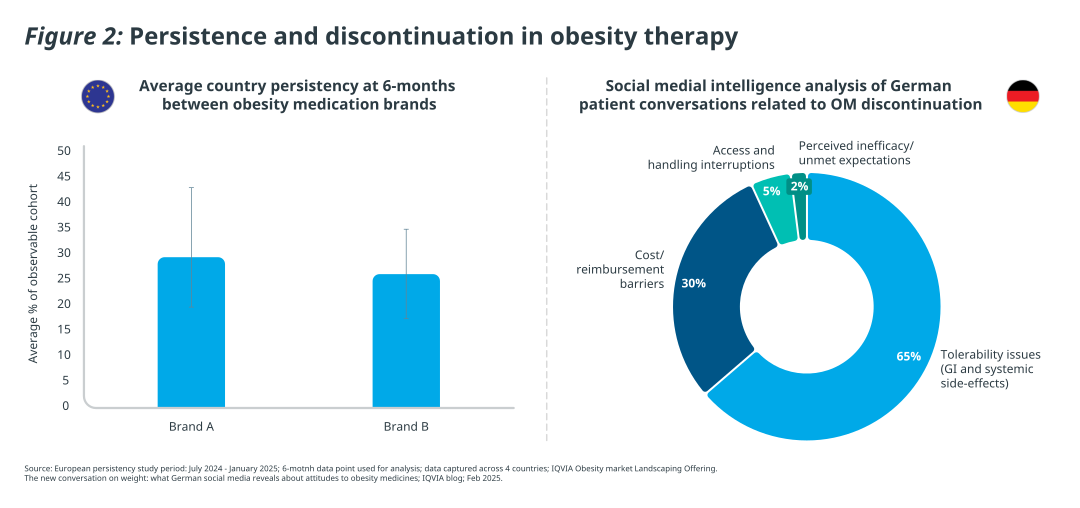
Persistence will therefore become increasingly important. Yet maintaining patients on therapy remains a well-recognised challenge. As shown in Figure 2, across selected European markets, average six-month persistence was 29.57% for Brand A and 26.25% for Brand B. IQVIA's social media analysis of German OM conversations5 found that tolerability issues accounted for 64% of discussions related to treatment discontinuation, outweighing reimbursement barriers, access and handling interruptions, and unmet efficacy expectations discussions (Figure 2).
Beyond clinical trials, real-world evidence will play a key role, including comparative real-world tolerability and persistence studies that can help demonstrate differentiation between obesity therapies in routine clinical practice. As a broader range of OMs with distinct efficacy-tolerability profiles enter the market, understanding how tolerability influences persistence and treatment experience across different patient populations will become increasingly important. While some patients may prioritise maximum weight loss during an induction phase, others may place greater value on long-term tolerability, convenience, affordability, lower discontinuation risk or suitability for managing multiple comorbidities.
As the obesity market matures, competition will increasingly extend beyond efficacy alone. The ability to identify, generate evidence for and communicate differentiated tolerability profiles across specific patient populations will become an important source of strategic differentiation. The first generation of OMs changed expectations around how much weight patients could lose. The next generation may increasingly be judged on how successfully they help patients stay on treatment long enough to realise and maintain those benefits.
References
- Tackling tolerability: The next challenge facing obesity therapies; IQVIA blog; Oct 2024: https://www.iqvia.com/locations/emea/blogs/2024/10/tackling-tolerability-the-next-challenge-facing-obesity-therapies
- Jastreboff et al. (2022) ‘Tirzepatide once weekly for the treatment of obesity’, New England Journal of Medicine, 387(3), pp. 205-216. doi: 10.1056/NEJMoa2206038
- ADA: Tolerability ‘not to be underappreciated’ in Roche, Zealand’s amylin obesity prospect, June 2026: ADA: Roche, Zealand make tolerability case for petrelintide
- Maintaining momentum: The next frontier of the obesity market; IQVIA blog; Oct 2025: https://www.iqvia.com/locations/emea/blogs/2025/10/maintaining-momentum-the-next-frontier-of-the-obesity-market
- The new conversation on weight: what German social media reveals about attitudes to obesity medicines; IQVIA blog; Feb 2026: https://www.iqvia.com/locations/emea/blogs/2026/02/the-new-conversation-on-weight