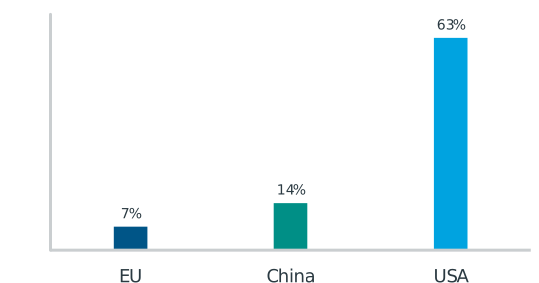
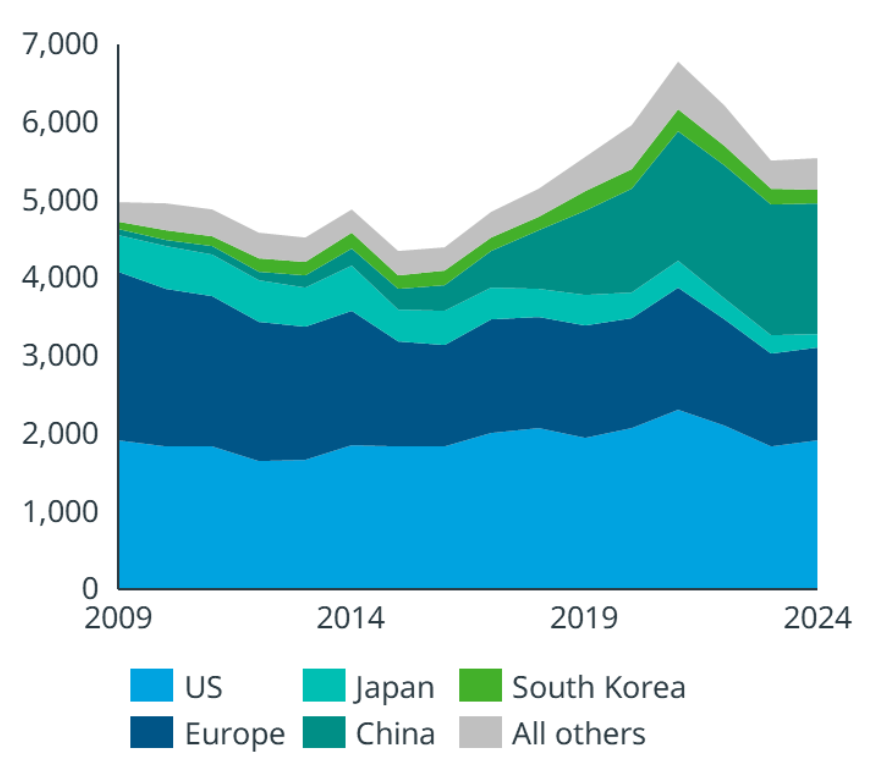
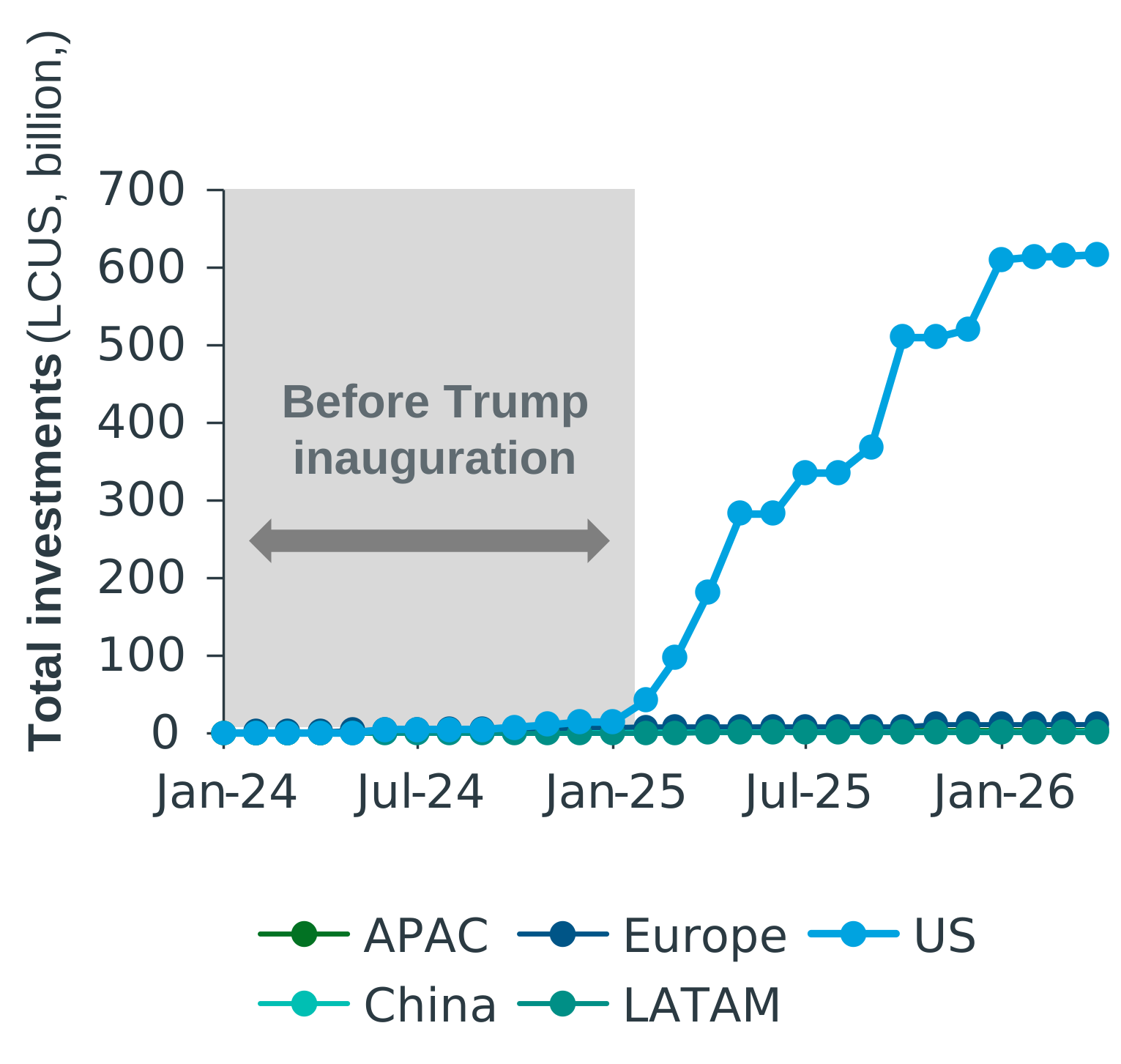
Figure 3: Manufacturing investment pledges into the U.S. from the top 20 pharma companies (Jan 2024 – April 2026)
Notes: Top 20 pharma based on 2024 FY revenues (IQVIA MIDAS FY 2024); Analysis based on investments in facility upgrades, manufacturing sites, technologies and warehouse expansions announced between Jan 2024 and April 2026. This includes a small percentage of R&D investments. LCUS= Local Currency, converted to US dollars.
Source: Company press release, news articles and industry reports.
Whilst the EU succeeds in securing relatively fast access to new medicines, most are launched outside the EU first, resulting in delays of over a year for EU patients. This is due to a variety of reasons, including:
- Reimbursement levels and delays, with many companies focussing on launching their medicines in the US first due to its attractive pricing – the US makes up about 50% of global sales for innovative pharmaceutical companies, whereas the EU makes up around 20% percent. Pricing and reimbursement processes differ across the Union and can be lengthy which results in delays to access and uncertainty for investors.
- Limited access to translational funding, like venture capital, which means many products are not tested and commercialised in the EU.
- Regulatory timelines and fragmentation, including in running clinical trials, can delay products that are being developed in the EU but also deter access - there is a correlation with where developers do their R&D and where they launch first.
The proposed Act is designed to reduce these hurdles, to enhance the Union's attractiveness and ensure that breakthrough therapies are developed and deployed within the EU.
Biotech Act Summary
The Act goes much further than ‘biotechnology’ as traditionally defined, i.e. deriving from living organisms, but defines it to encompass most medicinal products. This was chosen to broaden the scope and impact of the Act.
The overarching Act is two pieces of legislation, the first of which was released in December 2025, and is the focus of this blog. Part 2 of the Act will build on this framework, focussing on industrial biotechnologies and biomanufacturing. It is expected in the third quarter of 2026.
Part one of the European Union’s proposed Biotech Act blends industrial policy with long‑overdue regulatory modernisation:
- Strategic Projects: The Regulation introduces the concepts of ‘health biotechnology strategic projects’ and ‘high-impact health biotechnology strategic projects’. These designations are designed to mobilise public and private investment, scale up critical research infrastructures, and reinforce the Union's industrial biomanufacturing value chains. The designation brings faster permitting and enhances regulatory support. More information on these below.
- Finance: It establishes an ‘EU Health Biotechnology Investment Pilot’, acknowledging Europe’s shortage of risk tolerant capital. Forged in partnership with the European Investment Bank Group, this mechanism aims to mobilise private investment and venture debt tailored to the high-risk profiles and long lifecycles of biotech enterprises.
- Intellectual property rights: the Act proposes a 12-month extension to the Supplementary Protection Certificate (SPC) for cutting-edge biotech medicinal products developed via biotechnology processes in the EU. This incentive aims to anchor the clinical development and manufacturing of innovative therapies within the Union.
- Accelerating Clinical Trials: The Act reforms the Clinical Trials Regulation (EU) No 536/2014 to drastically cut approval timelines for multinational clinical trials from 106 to 75 days. More on that in our forthcoming blog focussing on what the Act means for clinical trials.
- Medical Device and In Vitro Diagnostic Regulations receive targeted amendments to reduce the structural and regulatory bottlenecks that have slowed innovation across the device ecosystem and prevent supply disruptions.
- Sandboxes and AI: The Act establishes ‘regulatory sandboxes’ to allow the testing in a controlled environment of novel health biotechnology products that defy existing legal classifications. Recognising the age of algorithms, it tasks the EMA with publishing guidance on the deployment of Artificial Intelligence systems across the entire lifecycle of medicinal product development, from pre-clinical research to post-authorisation monitoring.
- Biosecurity: The Act takes a robust stance on biosecurity, introducing mandatory screening, requiring verification of who customers are and why they need the ‘biotechnology products of concern’ to prevent misuse.
- Genetically Modified Micro-organisms: Through the accompanying Directive, the EU is modernising its rules and establishes a streamlined, tailored authorisation procedure for eligible ‘low risk’ genetically modified micro-organisms.
Combined, these measures aim to ensure that Europe can turn its scientific leadership into strategic advantage. The ambition is not merely administrative efficiency but strengthened autonomy, a more resilient industrial base, and the ability to compete with faster-moving regions who spend more. If successful, the legislative trio will offer Europe a clearer route from laboratory breakthroughs to patient‑ready products.
The Act is still a draft, subject to revision. So please read the below understanding that the final Act will be different.
Biotech Act – Key components impacting the EU’s financial attractiveness
In subsections below, we summarise the key components of the Act which impact incentives.
Intellectual Property Incentives – The SPC extension
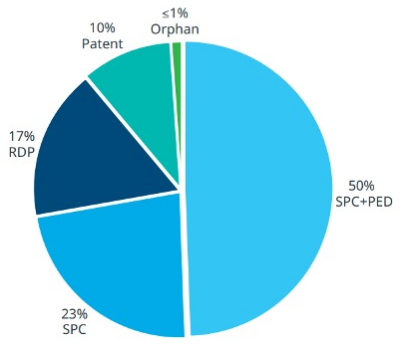
The proposal introduces a twelve month extension to the Supplementary Protection Certificate (SPC) for biotechnology medicines judged to be novel and developed within the Union. An SPC is a form of intellectual property right that extends the protection of patented medicines or products for a specified period beyond the original patent expiry, compensating for time lost during development and regulatory approval processes. Patent rights secure innovative discoveries, preventing competitors from commercialising the same invention for a set period, thus encouraging investment in research. SPCs are one of the most important forms of intellectual property protection for medicinal products and therefore a strong incentive (see Figure 4).
Beyond SPC extensions and patents, other forms of protection include data exclusivity, and market exclusivity. These further shield approved biotechnology medicines from direct competition by restricting the use of clinical trial data and granting sole access to the market for a defined timeframe. This layered protection is crucial to companies’ ability to recoup the substantial costs associated with bringing novel medicines to patients.
Biotechnology medicines are defined here in the traditional sense, akin to EMA’s definition of Biologics.








.svg)