














Global Oncology Intelligence
Unravel the complexities of cancer treatment with patient-level data-driven solutions.
Chimeric antigen receptor (CAR) T-cell therapies have the potential to cure haematological cancers in just a single infusion, and as Emily Whitehead’s story illustrates, the impact can be life-changing. In 2012, aged six, Emily had relapsed twice with acute lymphoblastic leukaemia (ALL), and her family were told there were no remaining treatment options for her. However, Emily enrolled in a phase I CAR T trial where she became the first ever patient to receive this treatment for ALL, and she has been cancer-free ever since.1
When a patient receives a traditional CAR T-cell therapy for cancer, their own T-cells must first be collected and genetically engineered outside the body to express a CAR, which targets an antigen expressed on the surface of their cancer cells. The CAR T-cells are then expanded before being reinfused, binding to the cancerous cells, and destroying them. The CAR T manufacturing process is therefore currently personalised for each patient.
The first CAR T-cell therapy became commercially available in 2017, and nearly a decade later, CAR T is now well established in the treatment of many haematological cancers, including some B‑cell lymphomas and leukaemias, and multiple myeloma. Haematological cancers remain at the forefront of CAR T development and innovation: all seven CAR T-cell therapies currently approved by the FDA and EMA are for these diseases. More recently, development has also gained momentum in solid tumours and even autoimmune diseases such as lupus,2 which together are further expanding the field through new targets and CAR T designs.
In the past, CAR T-cell therapies were reserved for late-line relapsed or refractory haematological cancer populations. By this point, patients have often accumulated treatment-related complications and organ damage, and the number and function of their T-cells (used to produce the CAR T) are reduced. Moving CAR T treatment earlier was therefore hypothesised to increase efficacy and improve patient outcomes. As a result of subsequent clinical trials, CAR T-cell therapies successfully moved from fourth line and beyond into second line in some indications, such as B-cell lymphoma and multiple myeloma, with first-line clinical trials anticipated in some indications in the near future.3
Despite many advances in the field, the clinical and commercial environments for CAR T present both ongoing and emerging challenges, as outlined below.
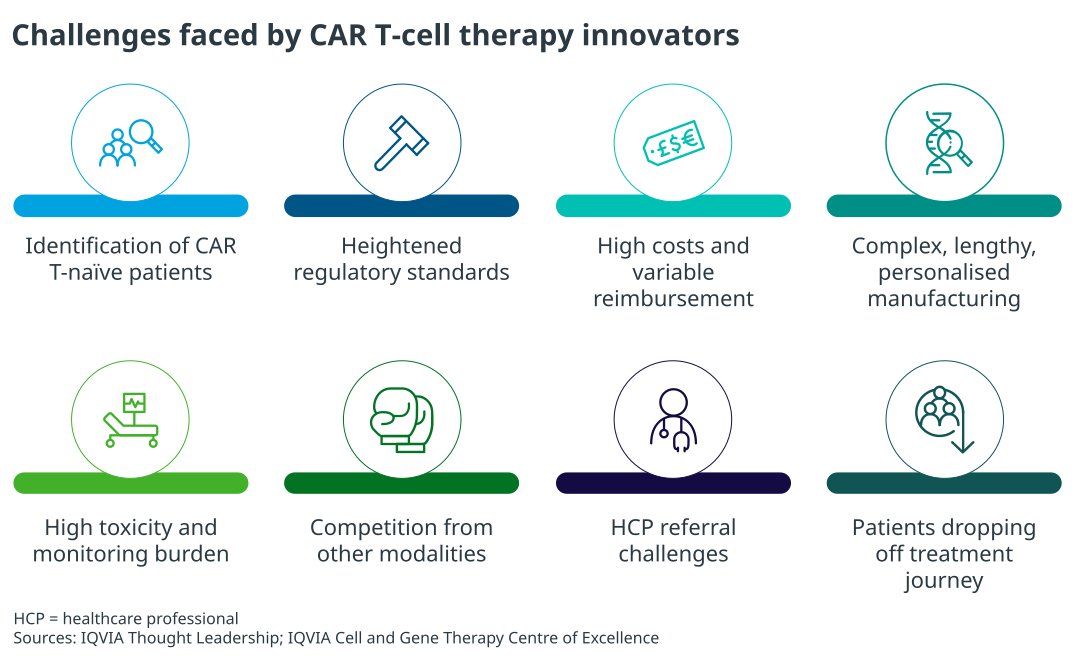
As CAR T becomes more widely administered, sponsors face growing difficulty in identifying CAR T‑naïve patients in established markets such as the US and Europe. Ethical considerations also complicate early-stage trial enrolment, as patients and clinicians may favour approved therapies with proven efficacy over those in clinical development. This has prompted a shift in clinical trial geography, with sponsors increasingly exploring regions such as Latin America and Asia-Pacific, and in some cases initiating first-in-human studies in China.3
Regulatory standards are also tightening significantly. In the past, CAR T approvals have often been based on small, single-arm phase II studies, but regulatory bodies like the FDA and EMA are now expecting controlled trials for the next generation of CAR T-cell therapies, frequently against established CAR T-cell therapies as the standard of care. This constrains clinical trial geography, as the trial can only be run in countries where the comparator CAR T is already widely used. Where randomised trials are infeasible or unethical, external comparator arms are becoming an increasingly common alternative. These are derived from real-world data, and require deep methodological and regulatory expertise.3
At the same time, CAR T-cell therapies are currently accompanied by substantial challenges for health systems, healthcare professionals (HCPs), and patients. Firstly, barriers to access remain significant, due in part to high costs and variable reimbursement policies. In addition, the personalised manufacturing process involves highly complex logistics and requires specialised infrastructure, as the patient’s T-cells must be collected, transported to a specialised regional manufacturing facility and back, and reinfused. The duration of this process, known as vein-to-vein time, typically spans several weeks, during which time the patient’s disease may progress significantly.4 Personalisation also means that the manufacturing process cannot benefit from economies of scale, as treating a greater number of patients requires more bespoke batches, rather than larger batches.5 Historically, these logistics have been coupled with requirements for hospital admission and close proximity to the treatment centre for around 1 month after infusion, adding to the burden on both health systems and patients.
Consequently, real-world uptake has had limitations, especially amid competition from other modalities such as bispecific antibodies. This competition reflects multiple trade-offs. As a personalised therapy, autologous CAR T has a high upfront cost and a long manufacturing time, unlike bispecific antibodies, as well as a requirement for lymphodepleting chemotherapy pre-treatment, and a greater risk of cytokine release syndrome (CRS) and neurotoxicity. However, crucially, CAR T-cell therapies offer the potential for medication-free remission, and best case, a cure, with a single infusion.
As with other advanced therapies, HCPs often struggle to identify appropriate patients for CAR T referral, and this challenge is becoming more pronounced as CAR T moves into earlier lines of therapy, where patients are more likely to be treated in community settings rather than at referral centres. In response, sponsors are increasingly directing their efforts towards engaging and upskilling community centres.
Many patients drop off the CAR T treatment journey at various points. IQVIA’s CAR T-Cell Monitor Q1 2026 Report found that in the US, over a quarter (27%) of patients who are referred to specialty CAR T centres do not ultimately receive the therapy. The reasons vary across patient groups, with the two leading reasons being patient refusal and performance status. Oncologists at CAR T-cell centres report that patients who decline CAR T-cell therapy often do so because of logistical challenges, concerns about safety or side effects, and limited family or social support, underlining the importance of manufacturer-provided patient support programmes.6
Practical aspects of CAR T-cell delivery are evolving, helping to reduce the burden on both patients and treatment centres. Outpatient administration is becoming more common in the US, for example, with some centres even treating selected cases of low-grade CRS in the outpatient setting.7 This shift towards outpatient care is supported by improved management of toxicities and the growing use of CAR T in less severely ill patients. However, it is also driven in part by financial incentives relating to how hospitals are reimbursed for CAR T treatment in the US. This contrasts to many other countries such as in Europe, where reimbursement systems often incentivise inpatient care, despite being costly for payers and more burdensome for patients.8
Monitoring requirements are also being streamlined, particularly in the US, with the FDA shortening follow-up periods for some products in 2025 from four weeks to two.9,10 Continuous wearable monitoring and centralised virtual nursing are increasingly supporting hospital-at-home models and outpatient CAR T delivery, enabling continuous toxicity surveillance and rapid escalation of care.11,12
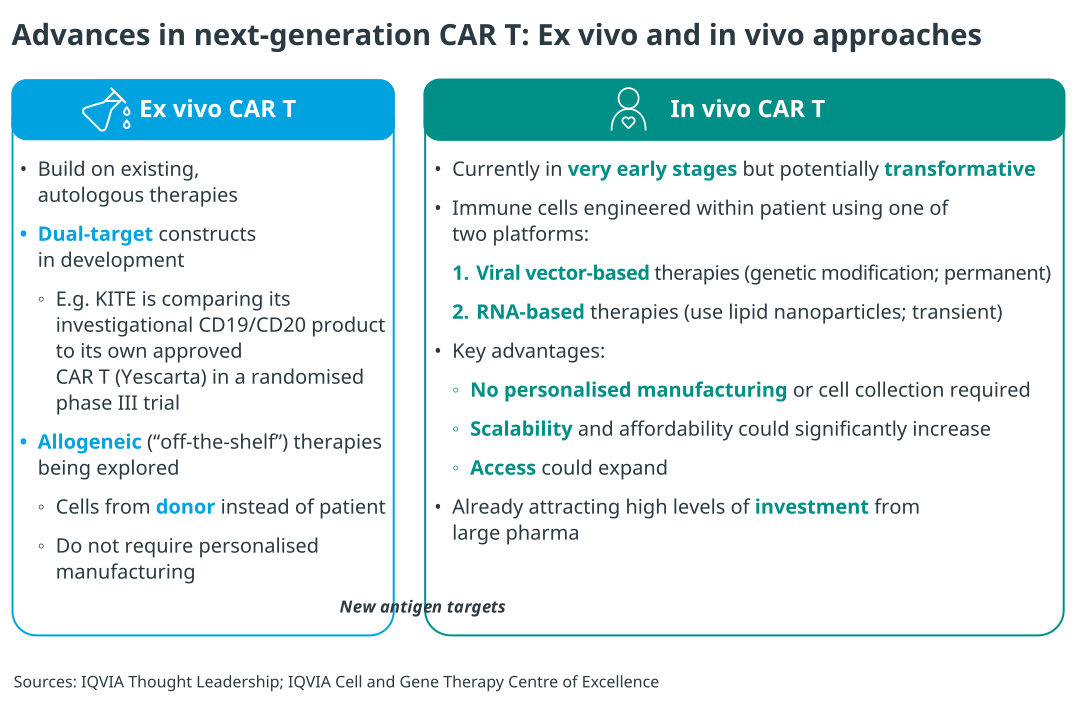
Many next-generation CAR T-cell therapies are already in development, and these are generally expected to outperform existing ones. Key areas of focus include new antigen targets and/or dual-target constructs; advances in ex vivo approaches; and the first in vivo CAR T-cell therapies, which offer a lot of promise despite being very early-stage.
All CAR T-cell therapies currently approved by the FDA and EMA target either CD19 or BCMA. These antigens featured in 55% and 17% of the phase I-III CAR T haematological cancer clinical trials started between 2016-2025 respectively,13 as illustrated in Figure 3, but a substantial share of clinical development is directed at alternative antigens such as CD22, CD20 and CD7. These could extend CAR T to additional haematological cancers and provide options for patients who relapse after treatments that target CD19 or BCMA.
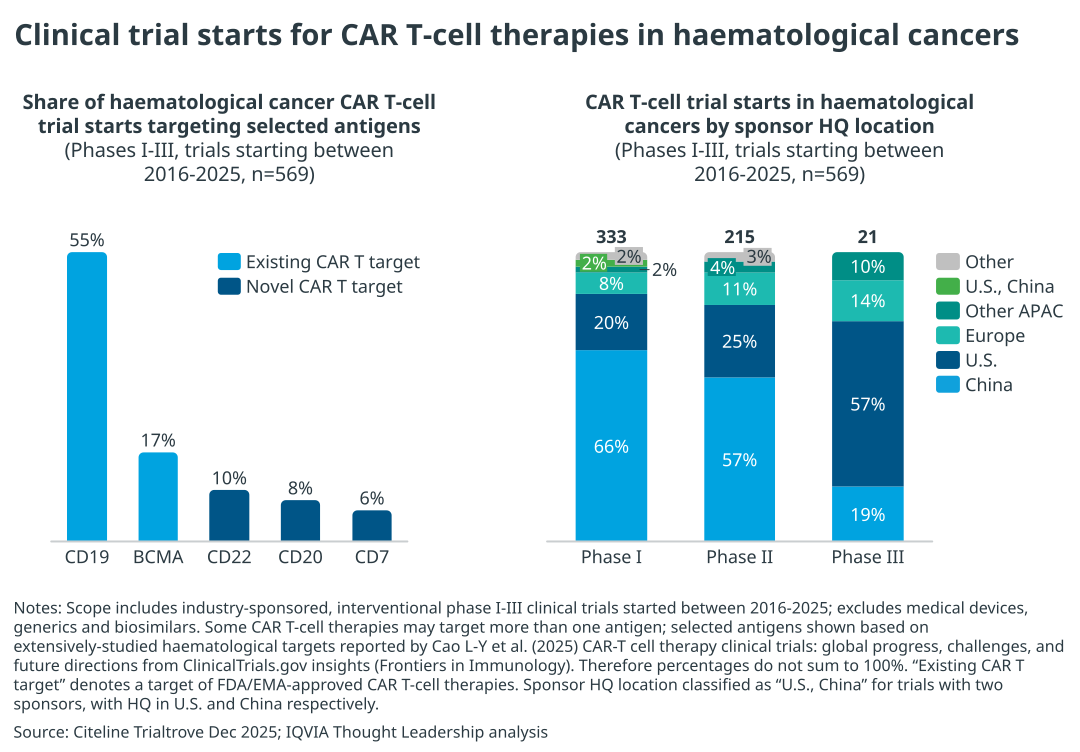
In China, the first CAR T directed at an antigen other than CD19 or BCMA was approved in June 2026.15 This CLDN18.2-directed therapy, developed by the Chinese company CARsgen Therapeutics, is also the world’s first CAR T to be approved for a solid tumour, and exemplifies a broader trend: China is becoming a major source of CAR T innovation. Figure 3 shows that a large proportion of haematological cancer CAR T trials are being sponsored by China-headquartered companies, particularly in phases I and II. However, most of this trial activity remains domestic: across all therapy areas, 88% of clinical trials sponsored by China-headquartered companies are conducted only in China.16 Therefore while China-headquartered sponsors could account for a significant share of the next generation of CAR T-cell therapies, it remains to be seen in which markets these will gain approval and launch.
Innovation in ex vivo CAR T
Within ex vivo CAR T, several avenues of innovation are being pursued. These include dual-target therapies, directed at both CD19 and CD20 for example, which aim to minimise the risk of antigen escape and relapse. Kite’s decision to compare its investigational rapidly-manufactured dual-target therapy, KITE-753, to its own approved product, Yescarta (axicabtagene ciloleucel), in a randomised phase III trial, signals high expectations for this approach.17 KITE-753 is designed to not only improve efficacy through dual targeting, but also to preserve younger, perhaps fitter T-cells through accelerated manufacturing, with the potential to reduce toxicity.18 Allogeneic (off-the-shelf) CAR T-cell therapies are also in development, such as Allogene Therapeutics’ cema-cel, currently in a pivotal phase II trial.19 These remove the need for patient-specific manufacturing, thereby simplifying logistics, reducing delays and potentially reducing costs.
Innovation in in vivo CAR T
While the emerging field of in vivo CAR T is currently in its very early stages, if successful, it has the potential to entirely redefine CAR T. Unlike ex vivo approaches, in vivo CAR T seeks to engineer immune cells directly within the patient’s body, eliminating the need for cell collection and personalised manufacturing. In vivo approaches also typically avoid lymphodepleting chemotherapy, which is used to prepare patients for autologous CAR T but can cause severe side effects, particularly infections.20 In vivo CAR T could therefore remove many of the barriers currently faced by CAR T, including reliance on specialised laboratory infrastructure and lengthy manufacturing processes. As a result, it could dramatically improve scalability and expand access across geographies.
Two distinct technological platforms are currently being investigated, each with very different clinical development processes:
Despite being very early in development, in vivo CAR T is already attracting high levels of interest and investment from many large pharmaceutical companies. For example, Eli Lilly acquired Kelonia Therapeutics in April 2026, due to the promising early-stage clinical data for Kelonia’s phase I asset KLN-1010.21 High-value acquisitions of other early-stage assets which may have no clinical data yet, including by companies with no prior experience in CAR T or even cell and gene therapies, signal widespread excitement about the future potential of in vivo CAR T.
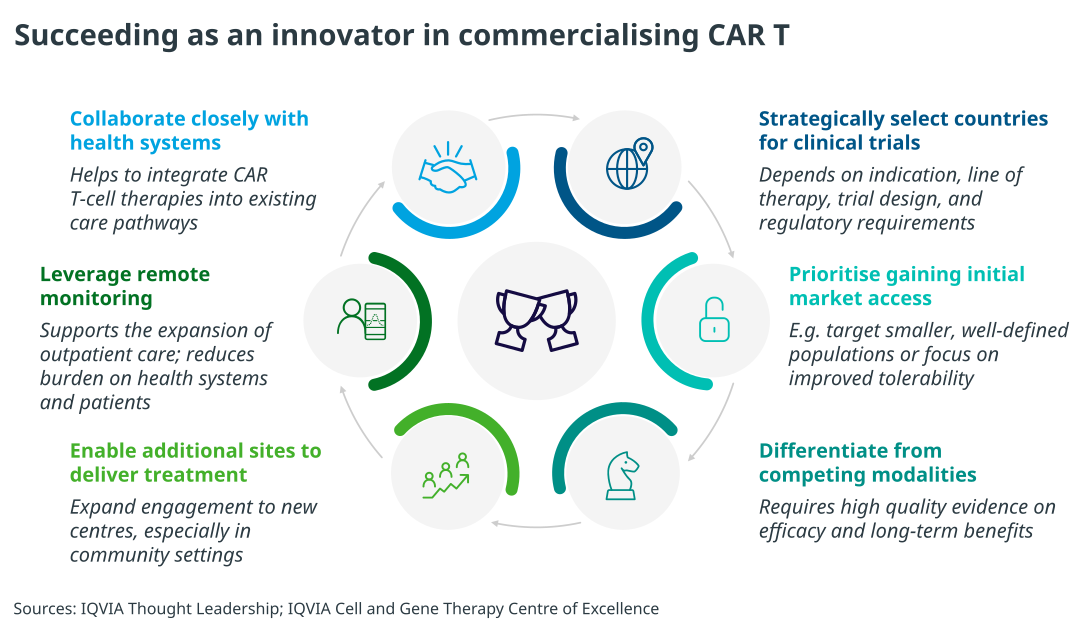
Successful CAR T development and commercialisation require careful, strategic planning, incorporating a number of key considerations.
CAR T-cell therapies will continue to have a critical role in the treatment of haematological cancers. Ongoing scientific innovation, including with new antigen targets, dual-target constructs, allogeneic approaches, and in vivo therapies, could help to overcome some of the existing clinical and commercial challenges, especially those that stem from the personalised nature of current CAR T-cell therapies.
However, as the treatment landscape becomes more crowded, especially in multiple myeloma and lymphoma, progress must extend beyond scientific innovation alone. CAR T-cell therapies face fierce competition from other novel modalities such as bispecific antibodies, and remaining competitive will require access and delivery to evolve. This could involve supporting new sites, especially in community settings, and expanding outpatient care.
The defining advantage of CAR T-cell therapies remains their potential as a one-off, curative intervention. Overcoming barriers to access and demonstrating clear advantages over competing therapies will both be essential to their future success.
The main barriers include:
IQVIA’s CAR T-Cell Monitor Q1 2026 Report found that in the US, 27% of patients referred to specialty CAR T centres do not go on to receive the therapy.
In vivo CAR T engineers immune cells directly inside the patient’s body, meaning that patient cell collection and personalised manufacturing are not required. It also typically avoids lymphodepleting chemotherapy. This could greatly improve scalability and widen access across geographies. Two platforms are being investigated:
The field is still at a very early stage but is attracting significant pharma investment.
1 Children’s Hospital of Philadelphia, May 2022: https://www.chop.edu/news/emily-whitehead-first-pediatric-patient-receive-car-t-cell-therapy-celebrates-cure-10-years
2 National Institute for Health and Care Research, August 2026: https://www.nihr.ac.uk/story/world-first-lupus-trial-uk-delivers-life-changing-car-t-therapy
3 IQVIA Cell and Gene Therapy Centre of Excellence expertise
4 Grischke TK, Cooperrider JH, Pula A, Sneider A, Yates S, Jakubowiak AJ, et al. Brain-to-vein and vein-to-vein times and outcomes in CAR T-cell therapy in myeloma. Blood Cancer J. 2025; 15(1): 47. doi:10.1038/s41408-025-01262-4
5 Mukherjee S. The hidden scale-out problem behind CAR-T's growth. BioPharma Dive, September 2026: https://www.biopharmadive.com/news/the-hidden-scale-out-problem-behind-car-t-growth/829405/
6 IQVIA CAR T-Cell Monitor: Referral Module, Q1 2026: https://www.iqvia.com/library/fact-sheets/iqvia-CAR T-cell-monitor
7 Furqan F, Bhatlapenumarthi V, Dhakal B, Fenske TS, Farrukh F, Longo W, et al. Outpatient administration of CAR T-cell therapies using a strategy of no remote monitoring and early CRS intervention. Blood Adv. 2024; 8(16): 4320-4329. doi:10.1182/bloodadvances.2024013239
8 IQVIA Cell and Gene Therapy Centre of Excellence expertise
9 FDA Eliminates Risk Evaluation and Mitigation Strategies (REMS) for Autologous Chimeric Antigen Receptor (CAR) T Cell Immunotherapies, US FDA safety communication, June 2025: https://www.fda.gov/vaccines-blood-biologics/safety-availability-biologics/fda-eliminates-risk-evaluation-and-mitigation-strategies-rems-autologous-chimeric-antigen-receptor
10 Orosco-Ttamina AL, Arana Yi C, Tsang M, Hilal T, Rosenthal A, Munoz J. Eliminating REMS for CAR T-Cell Therapies: An Opportunity to Improve Access. Cancers. 2025. PMID:41097742. https://doi.org/10.3390/cancers17193216
11 Cox T, Carelock T, Zahradka N, Tees M, Majhail NS, Battiwalla M, et al. Remote Patient Monitoring (RPM) Technology with Centralized Virtual Nurse Monitoring for Safe Delivery of Outpatient Chimeric Antigen Receptor T-Cell (CAR-T) Therapy across Multiple Sarah Cannon Transplant and Cellular Therapy Network Programs. Transplant Cell Ther. 2024; 30(2 Suppl): S216-S217 https://doi.org/10.1016/j.jtct.2023.12.281
12 Tees M, Agrawal T, Martin C, Zoghi B, Majhail NS, Battiwalla M, et al. Outpatient Administration of Chimeric Antigen Receptor T-Cell (CAR-T) Therapy for Non-Hodgkin Lymphoma (NHL), in a Large Multi-Center Network. Transplant Cell Ther. 2024; 30(2 Suppl): S215-S216. https://doi.org/10.1016/j.jtct.2023.12.280
13 IQVIA Thought Leadership analysis of Citeline Trial Trove data, 2025
14 Cao LY, Zhao Y, Chen Y, Ma P, Xie JC, Pan XM, et al. CAR-T cell therapy clinical trials: global progress, challenges, and future directions from ClinicalTrials.gov insights. Front Immunol. 2025; 16: 1583116. https://doi.org/10.3389/fimmu.2025.1583116
15 Company press release, CARsgen Therapeutics, June 2026: https://www.carsgen.com/en/news/20260622/
16 Global R&D Trends 2026, IQVIA Institute report, March 2026: https://www.iqvia.com/insights/the-iqvia-institute/reports-and-publications/reports/global-r-and-d-trends-2026
17 ClinicalTrials.gov, NCT07479797: Study Evaluating the Efficacy of KITE-753 Versus Axicabtagene Ciloleucel in Participants With Relapsed or Refractory Large B-Cell Lymphoma After First-Line Therapy, accessed July 2026: https://clinicaltrials.gov/study/NCT07479797
18 Murakami JL, Guevara CI, Cai Q, Tsai HC, Banerjee S, Ou DM, et al. KITE-753: An Autologous Rapid Manufactured Anti-CD19/CD20 CAR-T Product for the Treatment of B-Cell Malignancies. Blood. 2024; 144(Suppl 1): 3481. https://doi.org/10.1182/blood-2024-208394
19 ALPHA3, Allogene Therapeutics, accessed September 2026: https://allogene.com/alpha3/
20 Lickefett B, Chu L, Ortiz-Maldonado V, Warmuth L, Barba P, Doglio M, et al. Lymphodepletion - an essential but undervalued part of the chimeric antigen receptor T-cell therapy cycle. Front Immunol. 2023; 14: 1303935. doi:10.3389/fimmu.2023.1303935
21 Company press release, Eli Lilly and Company, April 2026: https://investor.lilly.com/news-releases/news-release-details/lilly-acquire-kelonia-therapeutics-advance-vivo-car-t-cell
Related solutions
Unravel the complexities of cancer treatment with patient-level data-driven solutions.
Explore our end-to-end, full service clinical development capabilities including Therapeutics expertise, Development Planning, Phase I early clinical development, Phase IIb/III and Phase IV Trials, Regulatory Submission and Post-Launch Studies.