
.svg)




Complete Consent
IQVIA Complete Consent is the user-friendly, flexible, and feature-rich electronic informed consent solution built to support diverse protocols at a global scale














Health literacy is often described as the ability to find, understand, and use health information to make informed decisions. But as a caregiver, I’ve learned that understanding the information is only part of the challenge.
Sometimes, you first have to get the information in a way you can actually absorb it.
My perspective on informed consent comes from two very different moments in my caregiving journey—six years apart, with two different parents. Yet despite how much technology has advanced during that time, the experience feels surprisingly similar.
 Amy's parents during the COVID pandemic, when healthcare decisions often had to be navigated from a distance.
Six years ago, during COVID, I was helping my mom navigate her healthcare journey with cancer when we were presented with the opportunity to consider participation in a clinical study.
COVID restrictions meant I couldn't simply sit beside her and have a conversation with the study team. Instead, I was trying to understand an incredibly important decision over the phone on speaker.
I didn't have the consent form sitting in front of me. I didn't even have a PDF that I could follow along with.
I listened.
I tried to process unfamiliar information as it was being explained.
I tried to remember my questions.
And, like caregivers so often do, I tried to make sure I understood enough to help someone I loved make the right decision for her.
Think about that for a moment.
Informed consent is intended to support understanding and informed decision-making. Yet I was trying to become informed without having the information physically—or digitally—in front of me.
Fast-forward six years.
Today, I'm navigating another potential clinical research opportunity—this time as a caregiver for my dad, who is living with Alzheimer's and resides in a full-time memory care facility.
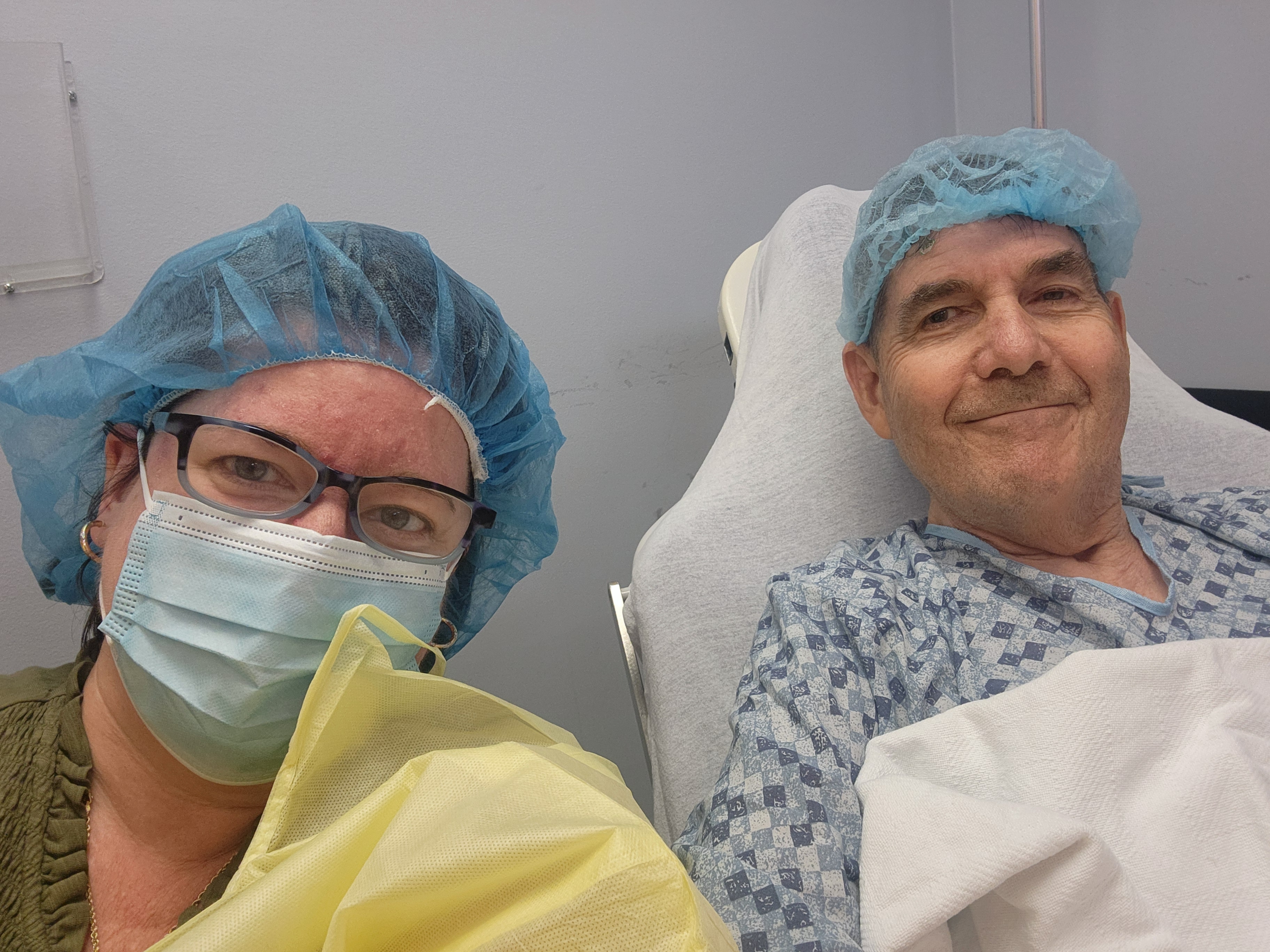 Today, Amy helps support her dad through ongoing healthcare decisions, giving her a firsthand perspective on the challenges patients and caregivers face when navigating complex information.
The circumstances are different. The technology available to us is dramatically different.
Yet my experience with consent?
I'm looking at a PDF.
More than 40 pages of predominantly straightforward text that I'm expected to read, understand, retain, and use to prepare thoughtful questions about a potentially important decision.
Technically, I have access to the information this time.
But access isn't the same as understanding.
And that distinction is at the heart of health literacy.
When you're a caregiver, you're rarely reading an informed consent form under ideal circumstances. You're processing it alongside appointments, medications, care decisions, work, family responsibilities—and the emotions that come with supporting someone you love.
Add Alzheimer's or another condition that may affect cognition, and consent becomes even more complex. The caregiver may need to help reinforce information, formulate questions, understand expectations, and support the individual throughout the decision-making process.
Forty pages of static text may contain everything we're required to know.
That doesn't necessarily mean it's helping us understand what we need to know.
Imagine instead receiving a digital consent experience before that conversation.
I could review the information on my own time.
Complex concepts could be explained through short videos, graphics, or interactive educational content.
Important information could be broken into manageable sections rather than presented as dozens of pages of continuous text.
I could revisit the sections I didn't understand.
I could write down questions as they occurred to me.
And when I spoke with the study team, our conversation wouldn't have to begin with trying to absorb the information.
It could begin with understanding, questions, and meaningful dialogue.
Importantly, technology wouldn't replace the human conversation.
It could make that conversation better.
 Amy with her parents as a child. Years later, her experiences supporting both parents would shape her perspective on health literacy and informed consent.
I sometimes think about how different my experience with my mom might have been if digital consent had been available to us.
During COVID, it could have allowed me to participate more meaningfully from outside the hospital walls—to see the same information, review it at my own pace, and come to the conversation better prepared.
Six years later, I find myself asking essentially the same question while supporting my dad:
Why are patients and caregivers still expected to navigate some of healthcare's most complicated decisions primarily through pages and pages of text?
We have the technology to do better.
Digital consent can provide accessible information, multimedia education, opportunities to revisit content, comprehension support, remote access, and a shared resource that patients and caregivers can return to throughout the journey.
But perhaps its greatest potential is much simpler: It can give people a better opportunity to understand.
During Health Literacy Month, we talk a lot about making health information understandable.
My experiences as a caregiver have taught me that this requires more than simplifying words.
We also need to think about how, when, and where people receive information—and what may be happening in their lives when we're asking them to understand it.
A patient isn't just a participant.
A caregiver isn't just the person sitting beside them.
And an informed consent form shouldn't simply be documentation that information was provided.
It should be an experience designed to help people understand their choices, formulate their questions, and participate confidently in decisions about their healthcare.
Six years. Two parents. Two very different healthcare journeys.
And one lesson I keep coming back to:
Providing information is not the same as creating understanding.
If we're serious about health literacy, we should design consent for the people sitting on the other side of the decision.
Global, compliant eConsent that improves enrollment, patient understanding, and study execution
IQVIA Complete Consent is the user-friendly, flexible, and feature-rich electronic informed consent solution built to support diverse protocols at a global scale
Technology informed by unparalleled Decentralized Trials (DCT) operational experience and delivered at global scale.
Power your decentralized trial with an agile randomization and trial supply management solution that supports supply flexibility and optimization as well as adaptable direct to patient options.