
.svg)




Patient Engagement Suite
Technology informed by unparalleled Decentralized Trials (DCT) operational experience and delivered at global scale.



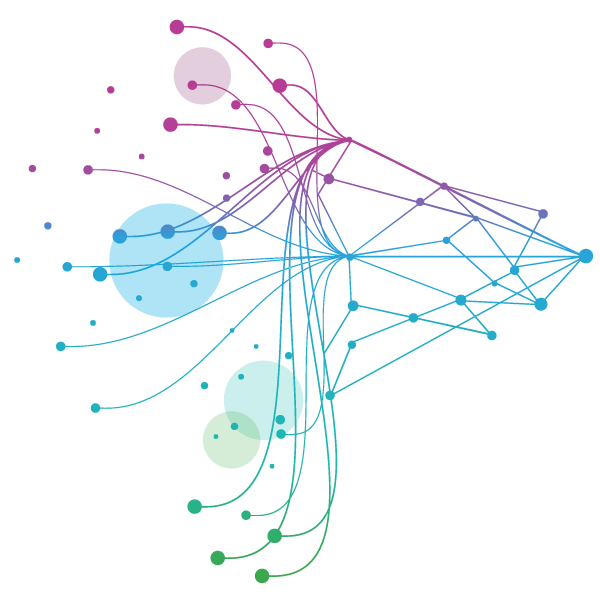










Clinical trials depend on the ability to capture, interpret and act on many different signals. Yet the technologies supporting those activities don't always work as one experience.
Patients may move between separate applications, questionnaires, devices and study instructions. Sites may manage multiple workflows, logins and handoffs while trying to focus on participants. Sponsors must bring information from different sources together to understand study performance and maintain confidence in the endpoints that will ultimately determine success.
The challenge is not simply the number of technologies involved. It's the fragmentation between them.
Addressing that fragmentation requires a different way of thinking about clinical trial technology: not as a collection of individual tools, but as a connected foundation for generating more trustworthy evidence.
A clinical trial is not successful just because it reaches completion. Its findings must also be supported by reliable measurements, high-quality data and evidence that can withstand scientific and regulatory scrutiny.
That is why endpoint assurance should begin at the outset of a study, rather than being treated as a final data-quality exercise. The measures selected, the way data is collected, the experiences of patients and sites, and the ability to identify issues all influence the integrity of an endpoint.
Within the IQVIA Clinical Trial Intelligence Platform, this endpoint confidence at the center. It brings together measurement science, patient and clinician data capture, connected experiences and intelligence to support a more continuous approach to evidence generation.
The goal is straightforward: confidence in every signal and trust in every endpoint.
Strong endpoints begin with knowing what to measure, why it matters and how to measure it consistently.
This requires more than digitizing an assessment. It calls for scientific and operational expertise across instrument selection, implementation, scoring, monitoring and interpretation. It also requires processes that can be applied consistently while accommodating the needs of different protocols and patient populations.
The intelligence platform approach can embed this rigor more deeply within study workflows. Established methodologies, scoring knowledge, quality practices and operational expertise can become part of a repeatable technology foundation, making scientific discipline more consistently available across studies.
This creates an unbroken connection between the intent of the protocol, the participant or clinician interaction and the evidence used to evaluate the endpoint.
Clinical trial data is increasingly multimodal. Patient-reported outcomes, clinician assessments, connected-device data and operational information may all contribute to the understanding of a therapy.
The value of that information increases when it can move through a connected flow.
Rather than relying on disconnected inputs and extensive downstream reconciliation, a shared data foundation can support greater accuracy, completeness and context from the moment information is captured. Study teams can then interrogate and interpret data more effectively, identify signals that require attention and build a more comprehensive picture of trial performance.
Over time, this approach can also support more scalable analytics, richer measures and intelligent workflows. The purpose is not simply to collect more data. It is to make every relevant data point more useful to the current study while creating a stronger foundation for future research.
Scientific rigor and a simpler experience should reinforce one another.
When technology is fragmented, patients may struggle to understand what they need to do next. Sites spend valuable time navigating systems and resolving administrative issues. Sponsors face additional integrations, handoffs and reconciliation.
A more unified experience can reduce those seams.
For patients, that means clearer paths through study activities, information and data collection. For sites, it means greater operational visibility and more consistent workflows. For sponsors, it means working from a more connected view of study activity and evidence.
This simplicity matters because trial experiences affect trial outcomes. When participation is clearer and less burdensome, patients and sites are better positioned to complete study activities consistently. That consistency helps strengthen the data on which endpoint decisions depend.
The future of clinical trial technology will not be defined by the number of tools available. It will be defined by how effectively science, data and experiences work together.
By connecting measurement science with intelligent data collection and more coherent patient, site and sponsor experiences, clinical research can move toward a model in which assurance is built into the study journey.
That means simpler participation. More actionable information. Stronger evidence. And ultimately, greater confidence in the endpoints that help promising therapies move forward.
Do you want to see how? Connect with us today to learn more about the IQVIA Clinical Trial Intelligence Platform.
Technology informed by unparalleled Decentralized Trials (DCT) operational experience and delivered at global scale.