Life sciences organizations invest heavily in both patient support programs (PSPs) and real-world evidence (RWE) studies, yet these functions often struggle to work in concert. While PSPs focus on improving medication adherence and patient experiences, and RWE studies measure the clinical impact of those improvements, most organizations run them as separate initiatives with disconnected budgets, teams and data systems. This disconnect becomes costly as consumerism rises in healthcare and companion digital support tools become standard, making integrated patient experiences essential.
Leading organizations are transforming how they approach patient engagement and evidence generation, recognizing that traditional boundaries between these functions are unnecessary barriers to value creation. When organizations integrate these capabilities from the outset, patient support programs become strategic evidence assets that deliver value for all stakeholders, especially the patient.
The cost of operating in silos
Fundamental organizational realities foster the disconnect between PSPs and RWE teams. Different teams manage and fund these functions to serve distinct business objectives. Commercial organizations execute patient support programs to meet specific market needs, so a PSP in the UK looks nothing like one in Germany, India or Japan. Large-scale longitudinal real-world evidence studies, however, are often procured centrally and operate within research frameworks affecting products globally.
These distinctions in business objectives create costly inefficiencies. PSPs generate rich longitudinal patient data, including demographics, treatment patterns, adherence metrics and patient-reported outcomes. With proper permissions and validated infrastructure designed for research-grade evidence collection, this data could be even richer. Consider a specialty medication PSP that has tracked thousands of patient adherence patterns over three years. This cohort would be invaluable for an outcomes study, but the original consent covered only support services. The organization now faces the choice of starting a separate RWE study from scratch or losing access to years of relevant data.
Organizations cannot retroactively access this data, which was consented only for support services and not for research participation. The result is separate recruitment efforts, disjointed patient experience and the inability to track individuals from program enrollment through long-term outcomes. This fragmentation diminishes both the depth and validity of the evidence base.
Designing programs for dual purpose
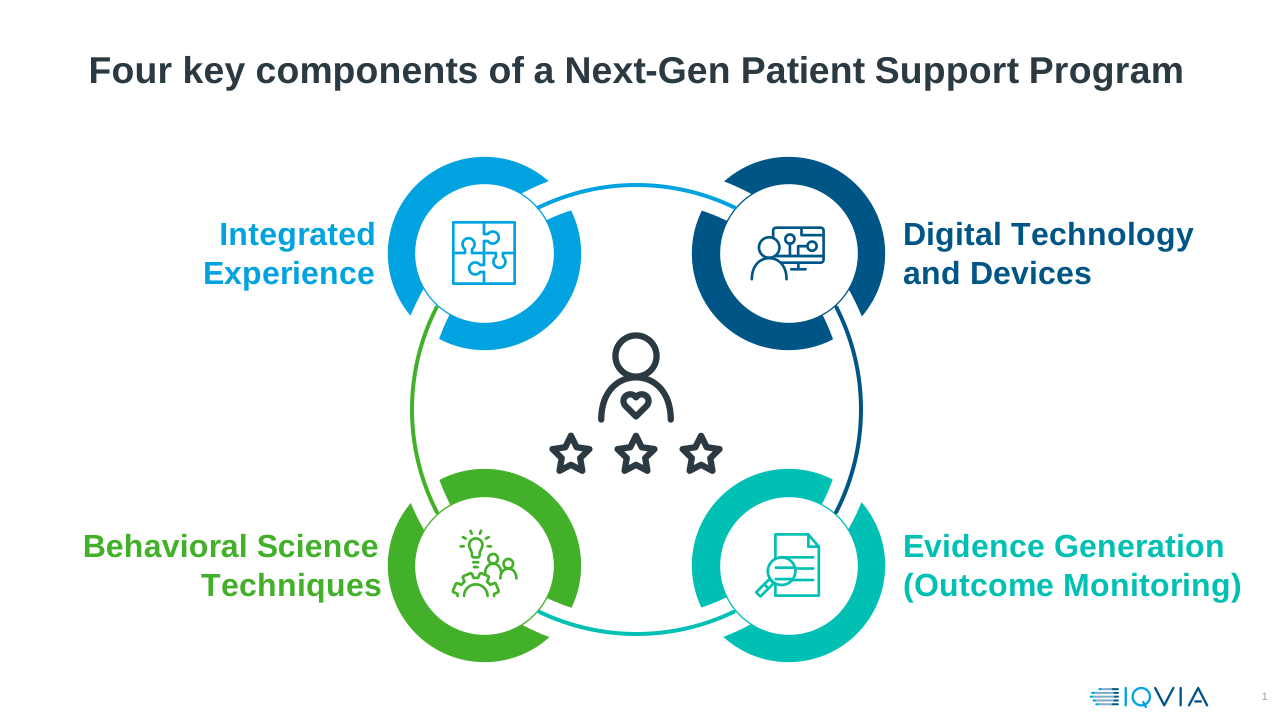
The fundamental shift from fragmentation to cohesion requires prospective design with dual-purpose intent from the outset. This approach recognizes that patient support programs and evidence generation can strengthen each other when thoughtfully integrated from inception.
When designed correctly from the start, PSPs can generate rich, patient-centric real-world data that enables seamless data linkage across the patient journey.1-3 Most importantly, they create compounding longitudinal value. Each additional day of program operation adds to the evidence base.
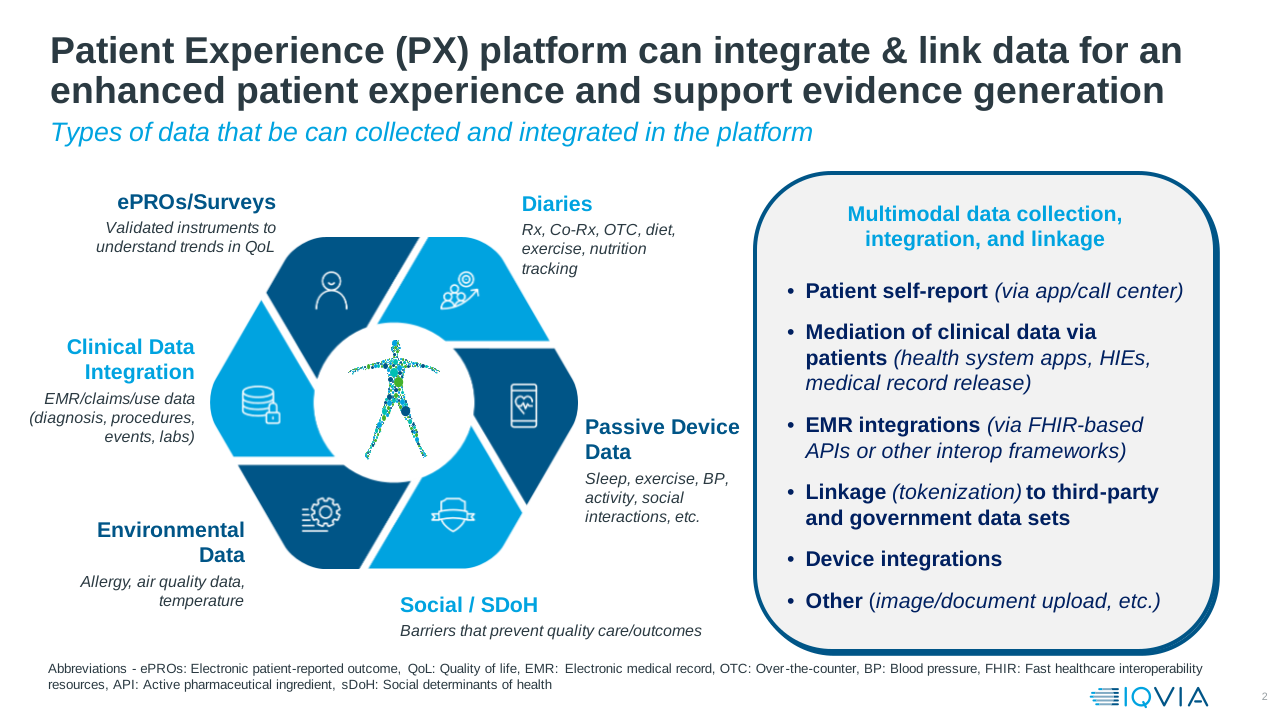
For example, a patient using a connected injection device and completing monthly symptom diaries contributes data points that, over months, reveal patterns no single clinic visit could capture. When aggregated across thousands of patients, this ongoing data collection creates an evidence asset that grows richer with each program month.
The technology foundation proves equally critical. Platforms must meet both patient support and research-grade data standards, including validated electronic patient-reported outcomes (ePROs) and instruments that capture patient voice based on specific outcomes and domains being measured. Organizations need infrastructure that captures data in formats compatible with future evidence generation while delivering personalized support experiences. Connected devices, symptom diaries and EMR integration expand measurement possibilities without adding patient burden.1 These capabilities transform support programs into comprehensive data collection engines.
Navigating consent architecture
To simplify the process of generating RWE from PSPs, we propose examining two models for obtaining patient consent. Each offers distinct advantages and trade-offs that organizations must weigh against their strategic priorities.
The first approach, the dual consent model, collects permission at enrollment for both PSP participation and for secondary use of patient data for research.1 This approach enables concurrent program and research activities from day one. Patient data immediately becomes available for both support operations and real-world evidence generation. Organizations can link information across the complete patient journey without requiring a separate real-world study.
The second approach requests permission at enrollment to recontact the patient for future research opportunities.1 This simpler initial consent can improve enrollment efficiency while preserving flexibility for future evidence generation. Historical PSP data becomes accessible if patients later consent to research participation. The trade-off is that organizations must conduct separate recruitment of these PSP patients for research studies. There’s no guarantee that PSP participants will opt in to research when contacted, potentially limiting the research cohort size.
Choosing a consent model depends on several factors. Organizations with defined evidence strategies and high confidence in specific research questions benefit from the immediate integration of dual consent. Those who prioritize program enrollment and maintain strategic flexibility often prefer the recontact framework. Decisions are often influenced by therapeutic area, regulatory environment and the organization’s readiness.
Overcoming implementation barriers
Despite clear benefits, organizations face predictable resistance when attempting to integrate evidence collection into patient support programs. Compliance teams may have concerns about regulatory risk and worry that data collection for research purposes might be conflated with promotional activities. Cross-functional silos can persist without frameworks for collaboration between patient services, evidence teams and compliance.
Building alignment requires early and active collaboration. Evidence generation, patient services and compliance teams must engage at the onset of the design phase, not after program architecture is set. Organizations must clearly distinguish between evidence generation and marketing activities to ensure that regulatory oversight understands the separation. Demonstrating industry precedent can also help.3 Sharing real-world examples of successful integration, as well as the safeguards employed, can build confidence across compliance functions.
Organizations must also navigate regional nuances, from ministry approvals to varying data privacy requirements. While these complexities differ by market, proper frameworks and patient consent can successfully address most regulatory concerns across geographies.
The business case for integration
When a PSP includes recontact permissions or dual consent from the start, future research — and the value it provides — looks fundamentally different.
Rather than launching a standalone recruitment campaign to find eligible patients, research teams can draw from an existing cohort of engaged participants who already have a relationship with the program.1 What might otherwise take months or years of recruitment can happen in weeks. Additionally, shared infrastructure means organizations aren’t paying twice for similar capabilities. Combined recruitment eliminates redundant outreach.2-3 Patients benefit too; instead of navigating separate touchpoints for support and research, they maintain a single relationship with the organization.
As integrated programs mature, the evidence base compounds.1 Each additional month of operation adds longitudinal depth that makes the data set progressively more useful for understanding treatment patterns, outcomes and opportunities for publication.
Charting the path forward
Organizations should evaluate their patient support programs through an evidence generation lens and recognize that these programs can serve as more than a patient service. The transformation begins with practical steps: early cross-functional collaboration to align stakeholders, thoughtful consent design that balances enrollment and research needs, and the development of an appropriate technology infrastructure that meets both program and research requirements.
The first step for organizations just beginning this journey is straightforward: Review existing PSP consent contracts for permission to recontact. Engage providers with research-grade platforms and infrastructure designed for dual purposes. Start building the organizational alignment and regulatory understanding required for integrated approaches. The opportunity to convert support programs into strategic evidence assets requires action. Organizations that move first will establish competitive advantages in patient support quality, innovation and evidence generation capability.
References
- IQVIA. Digital patient support: Improving outcomes and generating evidence. Webinar. 2025 Jul 8.
- Brixner D, Rubin DT, Mease P, Mittal M, Liu H, Davis M, Ganguli A, Fendrick AM. Patient support program increased medication adherence with lower total health care costs despite increased drug spending. J Manag Care Spec Pharm. 2019 Jul;25(7):770-779. Epub 2019 May 11. Available from: doi:10.18553/jmcp.2019.18443; PMID: 31081461; PMCID: PMC10398065.
- Wills A, Mitha A, Cheung WY. Data collection within patient support programs in Canada and implications for real-world evidence generation: The authors’ perspective. J Pharm Pharm Sci. 2023 Oct 13;26:11877. Available from: doi:10.3389/jpps.2023.11877; PMID: 37901362.; PMCID: PMC10603246.
About the authors
Chloe Robins
Product Offering Manager, Patient Engagement and Support, Global Commercial Solutions, IQVIA
Chloe Robins is an offering manager within IQVIA’s Global Patient Engagement and Support group, where she supports the development of products and solutions that improve the patient experience and outcomes. Chloe has been with IQVIA for over five years and previously worked within IQVIA’s Real World Solutions team, designing strategies to enhance patient-mediated data collection and patient engagement in real-world research.

Shyam Sakhrani
Senior Director, Patient Engagement and Support, Global Commercial Solutions, IQVIA
As a senior director at IQVIA, Shyam leads the development of patient engagement products and offerings globally. He holds a strong commitment to innovation and bridging the gap between technology, data insights and healthcare to support patient outcomes. He has worked across health care and life sciences for more than 10 years and has a history of leading strategic partnerships and collaborations.
 Ian Bonzani
Senior Principal, Patient Insights, Experience, and Registry Solutions, Global Real World Solutions, IQVIA
Ian Bonzani is a senior leader in Global Real World Solutions at IQVIA. In this role, Bonzani leverages his scientific background and healthcare consulting experience to design and implement large-scale real-world data and registry platforms that provide value across stakeholders by optimizing specialty care coordination, quality improvement and research delivery. Ian has been with IQVIA for 15 years, managing large, global projects for pharmaceutical companies, providers and other healthcare organizations.





.svg)