IQVIA is using vast quantities of data in powerful new ways. See how we can help you tap into information from past trials, patient reported outcomes and other sources to accelerate your research.


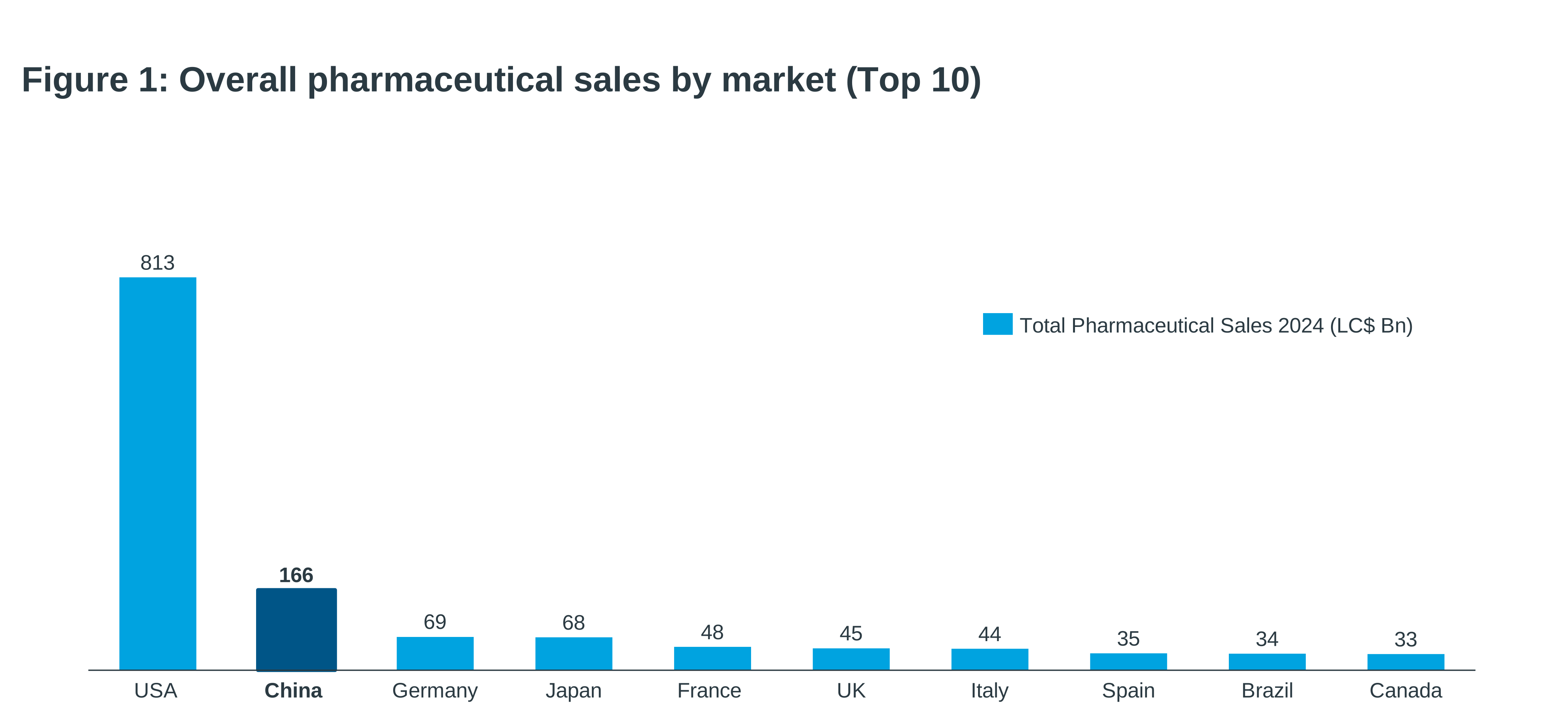
As the second largest pharmaceutical market by value after the US, China is a critical component of a product’s global launch and commercialisation strategy (see Figure 1 for overall pharmaceutical market size in 2024). Securing access to the country’s ~1.4Bn population represents a tremendous opportunity for manufacturers, but it can be challenging, opaque, and complex for P&MA teams to navigate. To fully realise market potential, global and local teams must evaluate the role and opportunity offered by multiple, sometimes interconnected and synergistic access routes, and understand how best to execute in a vast, diverse, and segmented subnational ecosystem. To further complicate matters, access dynamics and optimal strategies to address them are highly dependent on product type, situation (i.e. competitive dynamics), and therapy area, with no ‘one size fits all’ approach. As a result, successful entry into the Chinese market requires careful cross-functional planning, robust scenario and trade-off analysis, and comprehensive strategy development at both the national and subnational levels.
Note: Total sales represented as local currency converted to US dollars. Source: IQVIA MIDAS Data
This blog will explore China’s prominent access routes and the key strategic considerations related to each. Subsequent blogs in this series will take a closer look at key topics and components of the Chinese access landscape, including:
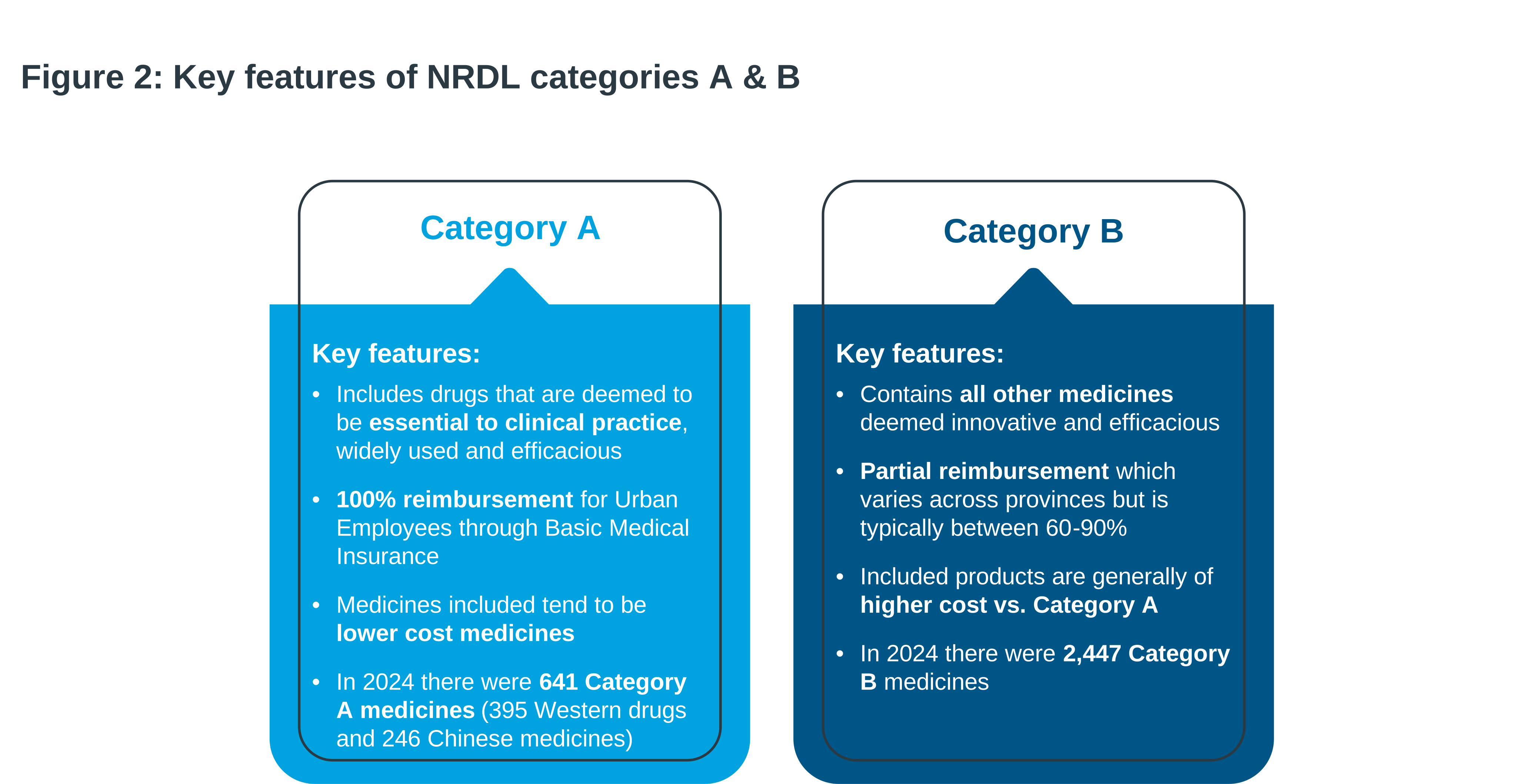
Most readers will be familiar with the NHSA’s National Reimbursed Drugs List (NRDL), formed in 2000, as the principal access route for Western medicines in China. While other access pathways exist, the NRDL is the only form of national reimbursement, which provides access to innovative medicines for ~95% of the Chinese population covered by Basic Medical Insurance (BMI). The NRDL is updated each year, with manufacturers submitting applications in June for inclusion in January of the following year. Until this year, the NRDL had been formed of two categories, A and B (see Figure 2):
In February of this year (2025), the NHSA announced the introduction of a third category, ‘Category C’, which is officially called the ‘Commercial Health Insurance Innovative Drug List’ (CHIIDL). This new category is intended for products not meeting criteria for national funding under Category B, but for which therapeutic value is recognised. At this stage it does not appear that Category C designation will bring with it any national level funding or reimbursement but rather provide endorsement for product coverage (not mandatory) under City Supplementary Insurances (CSIs), a form of locally provided, low-cost private insurance.
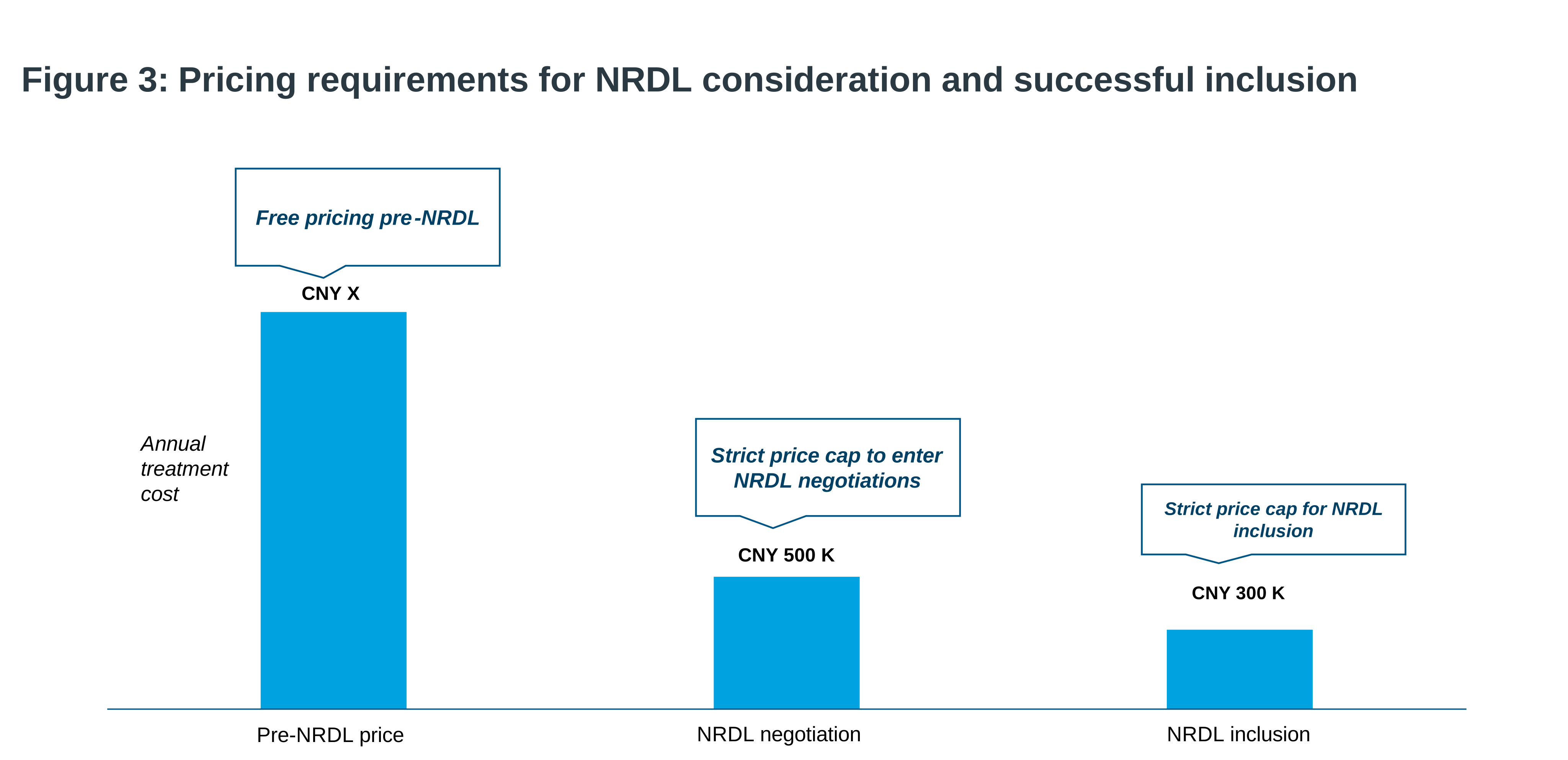
Successful NRDL Category B inclusion requires robust demonstration of clinical and economic value, as in other established markets, although NHSA assessment mechanics remain somewhat of a ‘black box’ in terms of specific evaluation criteria and decision-drivers. The opacity of this assessment creates challenges for manufacturers in determining the likelihood of a positive outcome and resulting widespread reimbursed access. In addition to the rigorous assessment of value, NRDL inclusion comes with strict price caps and tough pricing negotiations. While not formal, nor publicly available, these caps are estimated to be ~¥500k/year (~€60k/$68k) simply to enter NHSA price negotiations, and below ~¥300k/year (~€36k/$41k) for successful NRDL inclusion (see Figure 3). In recent years, the typical discount applied to products successfully gaining NRDL B inclusion has been substantial at ~63% (~51% for rare disease products, and ~58% for oncology products).
Source: IQVIA Expertise
Despite the significant volume potential associated with NRDL listing, the relatively low-price potential can pose a key challenges and limit overall commercial opportunity, particularly for higher cost innovative medicines such as oncologics and rare disease products. As a result, manufacturers must carefully assess the merits of NRDL inclusion and the price/volume trade-offs for individual assets across the available alternative access pathways. This assessment which does not always favour the NRDL. Indeed, we see prominent examples of manufacturers opting to pursue market entry through alternative, private channels such as CSI and CHI. This has been the case for global oncology blockbuster Keytruda (prembrolizumab), Opdivo (nivolumab), various CAR-T products, and for rare disease products such as Hemlibra (emicizumab) in Haemophilia. Manufacturers of these products have chosen to bypass the NRDL in favour of alternative access routes where price potential is higher. In the extreme case, the limited pricing opportunity can even render the Chinese market unattractive for launch, where resources and supply (especially if finite) may deliver a better return on investment elsewhere on the global stage.
Successful NRDL Category B inclusion is a pivotal milestone in a product’s launch execution. However, while a significant achievement, NRDL inclusion represents only the first piece of a complex puzzle, as while NRDL inclusion opens the door, it does not automatically secure access to patients, nor guarantee uptake. A robust sub-national access and commercial strategy is vital to realise the full benefits of listing, and to optimise patient access and uptake. The subnational universe in China is vast, highly fragmented, and heterogeneous, with complex dynamics and myriad considerations. As a result, developing and executing a local access strategy can be a key challenge for market access teams. That said, there are a number of critical elements manufacturers must consider to be successful, some of which will be explored in the subsequent blogs in this series:
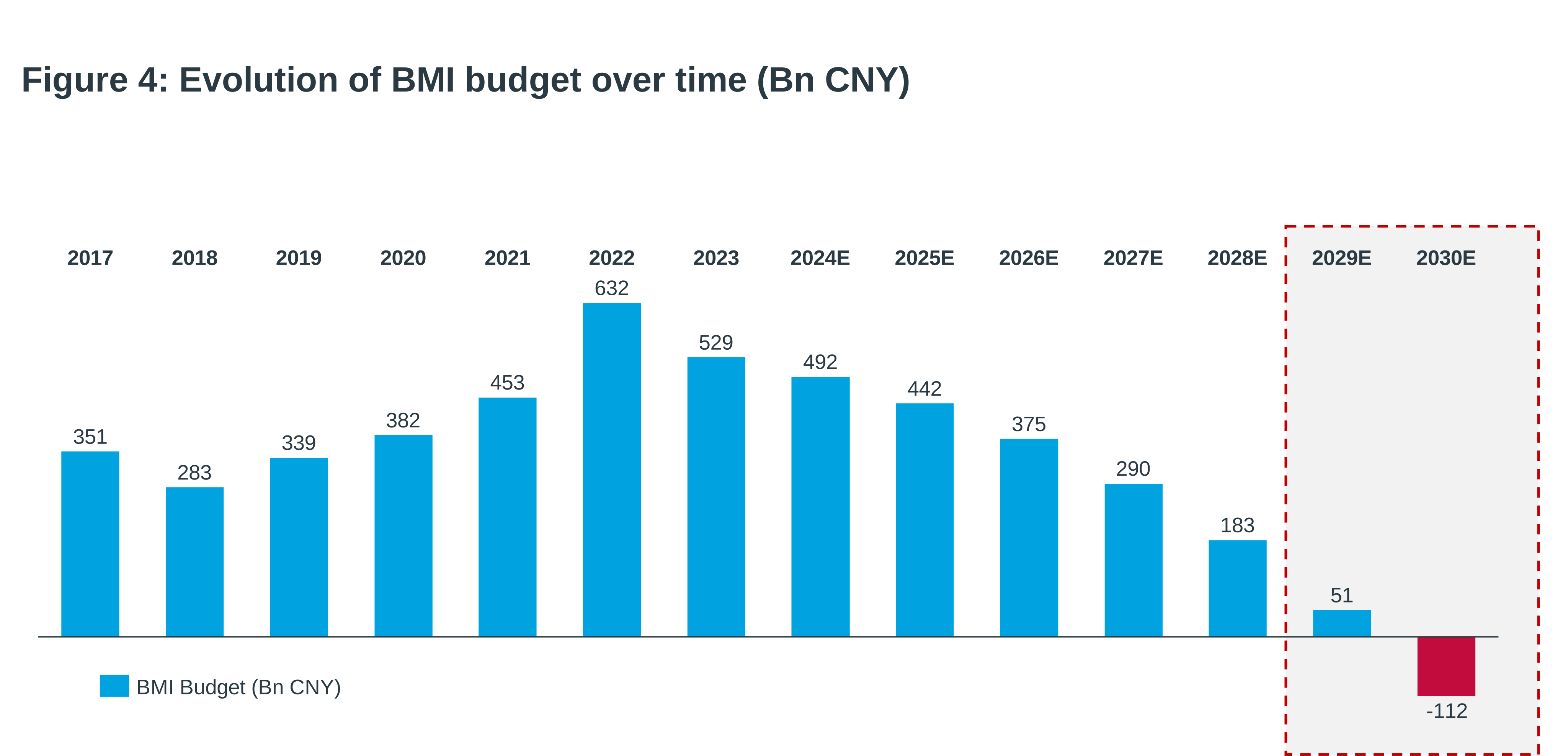
As the number of products included on the NRDL, and demand for services under the BMI has surged, pressure on the BMI budget has increased dramatically. Since 2022, the BMI Fund’s balance has been declining, and is set to be in a ~¥112Bn deficit by 2030 (see Figure 4). This creates new challenges for payers, politicians, and policy makers, who are likely to seek methods to contain spiralling costs.
Note: Forecast of total BMI budget 2017-2030 (CNY, Bn). The BMI fund is projected to break even in 2029, and fall into a deficit of 112 Bn CNY in 2030 ; Source: 2020-2024 Medical Insurance Development Statistical Bulletin and IQVIA analysis.
As authorities grapple with an ever-dwindling budget, it is reasonable to predict that NRDL listing (Category B) will become more challenging, with increased scrutiny and price pressure as payers adhere more strictly to standards, and new legislation/policy is introduced in an effort to contain costs. Indeed, we are already observing potential evidence of this with a declining NRDL success rate over recent years. Since 2022, the expert review pass rate has declined from 62% to 47% in 2024, and the rate of successful price negotiations from 88% to 76% in 2024. Additionally, as we will discuss later, we have seen an unprecedented move in the introduction of a third category, Category C (aka CHI Innovative Drug List), which seeks to encourage access to innovative and efficacious products, but without any national funding responsibility for the NHSA/BMI. Such changes and an increasingly high bar for entry could result in more products actively seeking, or being forced to consider, alternative access and reimbursement channels, necessitating a different mindset, strategy and approach.
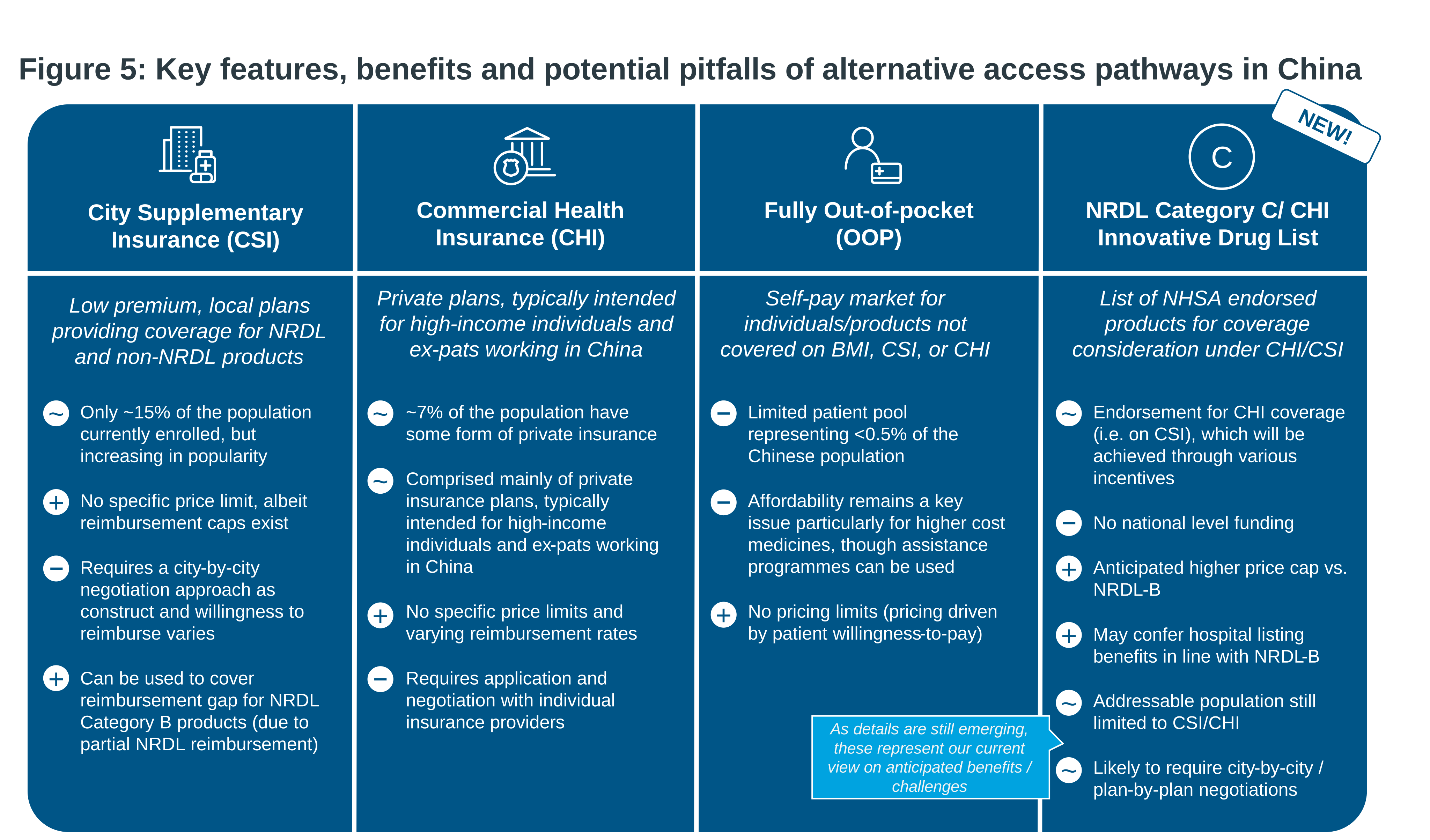
So what are the options? In the event a manufacturer finds themselves in a ‘no NRDL-B’ scenario - either due to being denied NRDL Category B entry or choosing not to apply in the first place - a number of alternative options exist, each with their own benefits and potential pitfalls. It should be noted that these options are not mutually exclusive and may be utilised in parallel as part of a holistic access strategy. This is true even under an ‘NRDL in’ scenario where manufacturers may also seek coverage through private insurance channels, and where CSI can be used in a complementary fashion to further aid reimbursement and patient affordability. The prominence of these channels, their potential benefits, and the manner in which they are used will vary substantially depending on NRDL status, and product characteristics/situation. The principal access routes to be considered beyond the NRDL include City Supplementary Insurances (CSI), Commercial Health Insurance plans, a fully out-of-pocket approach, or inclusion in the new NRDL Category C/ CHIIDL. The key features and potential benefits/challenges of these channels are outlined below in Figure 5.
Source: IQVIA expertise
Overall, while alternative access pathways typically confer a higher price potential vs. NRDL Category B, they harbour a number of potential pitfalls which can hamper their attractiveness as primary access routes, and require careful consideration by market access teams. In summary, available alternative access pathways are:
Should an NRDL-based strategy not be viable, manufacturers must weigh up these alternative access options to determine which are optimal, and fundamentally, if any are sufficient to ensure commercial viability of a launch in China.
Successful navigation of the Chinese market is a critical component of global launch success, presenting significant opportunities for manufacturers due to its sheer size. However, a host of complex challenges exist for market access teams which require deep expertise, and careful, in-depth planning on both a national and sub-national level. NRDL (Category B) listing remains a critical access route for most products due to its unmatched volume potential; however, successful listing is becoming increasing challenging due to dwindling budgets and often requires steep discounting which can harm overall opportunity.
As a result, manufacturers may need to look beyond the traditional NRDL-centric approach at alternative access routes— such as private insurance, CSIs, and the emerging NRDL Category C/CHIIDL— which offer higher pricing potential with the trade-off of more limited reach. However, it is imperative that market access teams develop a clear understanding of price–volume trade-offs to determine the optimal approach, and overall viability of a ‘non-NRDL’ strategy.
Regardless of the chosen path, a successful market access strategy relies on an intimate understanding and effective navigation of this vast, highly complex and heterogeneous market. Whether to capitalise on NRDL-B listing, ensure viability of launch through alternative access channels, or to optimally utilise multiple complementary channels, market access teams must develop and execute robust national and subnational strategies to ensure success. These strategies are inherently complex and challenging to construct as they must take account of rapidly evolving policy and market dynamics, a diverse mix of stakeholders, requirements, and access pathways to ensure product availability, advocacy, affordability, uptake, and optimal allocation of finite local resources.
IQVIA has deep expertise and proven experience to support your market access ambitions in China. Our dedicated in-market consulting teams combine intimate market knowledge, forward-looking strategic thinking, and hands on launch experience to develop robust and tailored access strategies to optimise for success.
If you are interested in learning more about our services and capabilities related to P&MA in China, or wish to discuss any of the topics in this article, please don’t hesitate to reach out by completing the ‘contact us’ form on this page.
Next in this series of blogs on China we will explore more closely the key strategic considerations related to development of a subnational access strategy, and the role of CSIs under and NRDL or ‘no-NRDL’ approach.
Source: IQVIA expertise, 2020-2024 Medical Insurance Development Statistical Bulletin, CHSA official website, NMPA official website.

IQVIA is using vast quantities of data in powerful new ways. See how we can help you tap into information from past trials, patient reported outcomes and other sources to accelerate your research.