





.svg)











The events of 2026, including the launch of two novel oral obesity medicines (OMs) and the loss of exclusivity of semaglutide, in some countries, have demonstrated that the OM market continues to evolve rapidly. However, even now, it is possible to pick up signals of what might shape the market for obesity management over a longer-term period, out to 2035. This blog examines the outlook for obesity across four key themes: policy and access, commercial and pipeline innovation, consumerisation of obesity care, and advances in diagnostics.
With the approval of the novel OM, Wegovy, in the US in 2021, obesity has evolved from a relatively niche therapeutic area into one of the fastest growing healthcare markets in value and volume terms. Alongside this market development, the global burden of obesity continues to increase, creating significant challenges for healthcare systems and economies worldwide. While obesity prevalence has begun to plateau in many high-income countries (HICs), rates continue to rise across many low- and middle-income (LMICs) markets1. Reflecting the scale of this challenge, the World Obesity Federation estimates that the global economic impact of obesity could exceed $4 billion annually by 20352, highlighting the need for both effective and scalable treatment strategies.
Looking ahead, the trajectory of the obesity market remains uncertain. Will policies, innovation in diagnostics and pipeline expansion accelerate access to OMs and improve population health outcomes? Across each of these themes, we explore a range of future scenarios and the factors that may determine the pace at which the obesity market evolves over the next decade.
Will policy and evidence unlock broader access to OMs?
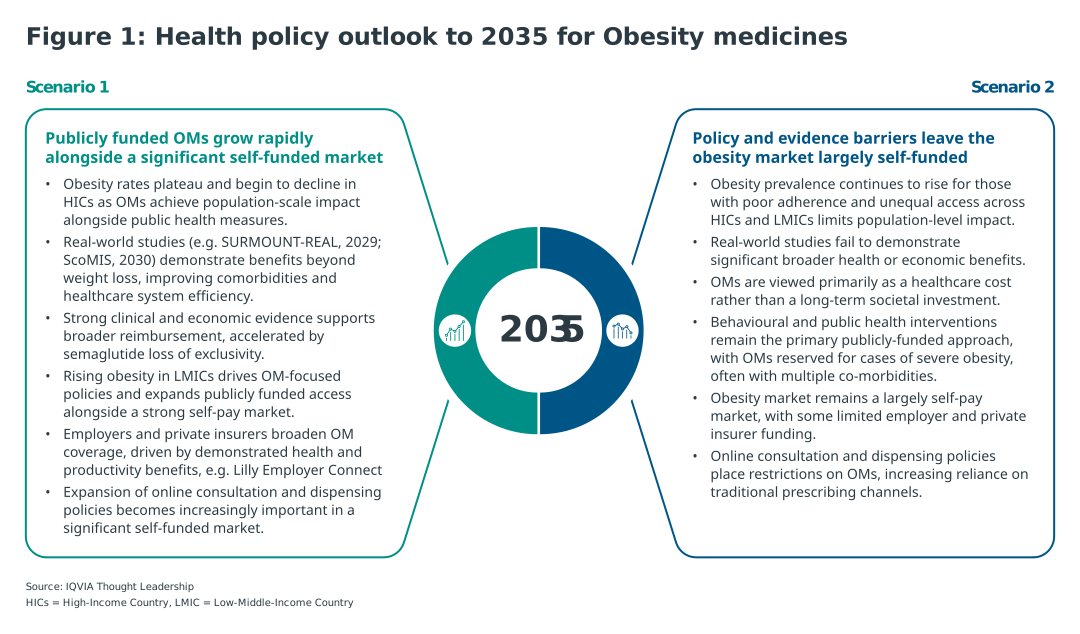
By 2035, obesity health policy, at the funding level, could evolve across a range of scenarios (Figure 1). In the most optimistic scenario, OMs achieve population-scale impact alongside public health measures which include public funding of OMs at scale for those that cannot afford to self-fund, helping obesity rates plateau and begin to decline in high-income countries and beyond into middle and lower income countries1. Supported by growing real-world evidence demonstrating benefits beyond weight loss, policymakers under this scenario increasingly view obesity management as a long-term investment rather than a healthcare expense. As costs fall following semaglutide loss of exclusivity, access expands through a combination of public reimbursement, employer-sponsored programmes, private insurance and self-funded channels enabled by expanded telehealth and e-pharmacy services. A potential example is Canada, a high income country with a publicly funded health system where, unusually, lower cost generic semaglutide, will be available in 2026, and could strengthen the economic case for public funding of obesity treatment. By 2035, reduced drug costs may enable broader coverage, expanding access beyond the self-funded market.
At the other end of the spectrum, policy and evidence barriers prove harder to overcome. While OMs continue to deliver meaningful weight loss for individuals, real-world studies fail to demonstrate the broader health, economic and healthcare system benefits needed to drive large-scale policy change. Obesity continues to rise among populations with poor adherence, and unequal access across HICs and LMICs limits population-level impact. As a result, public reimbursement remains limited, with self-funding continuing as the dominant access model despite loss of exclusivity. Market growth is driven primarily by consumer demand, while expanding online consultation and dispensing services become increasingly important routes to access. The reality of future obesity country policy maturity is likely to lie somewhere between these two scenarios, with countries and progressing at different rates.
Commercial and pipeline: from single assets to obesity portfolios
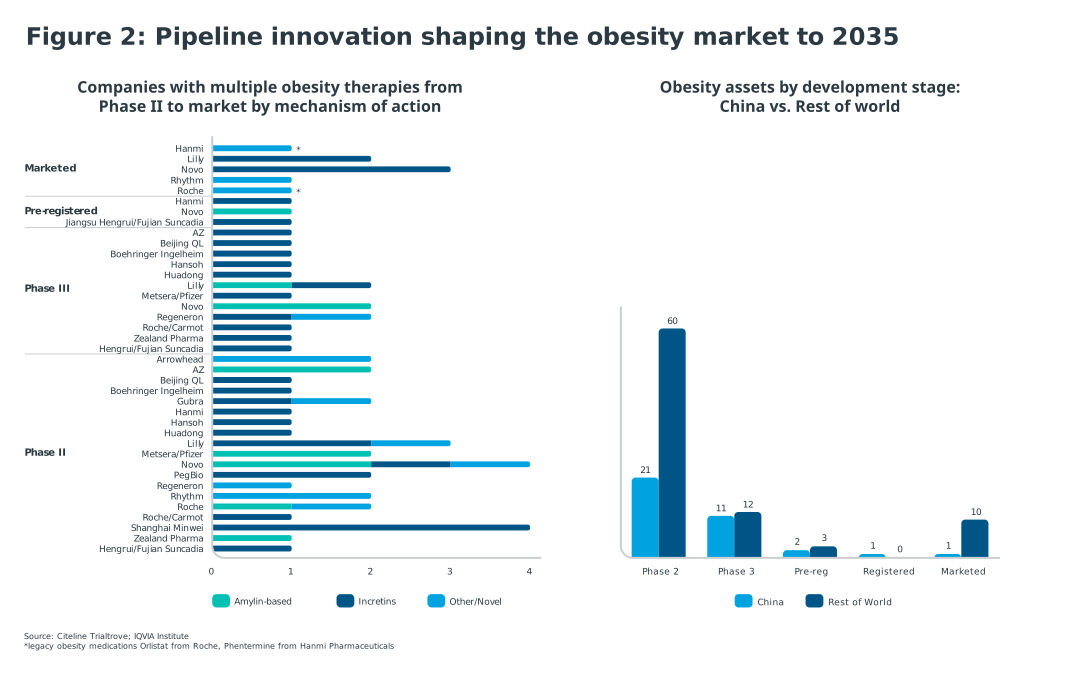
By 2035, the obesity market will look very different from the GLP-1-led market of today. Competition is likely to extend beyond individual products, with success increasingly determined by portfolio breadth and management of the individual across a potentially lifelong journey, as well as therapeutic differentiation. As illustrated in Figure 2, most companies are moving from single assets towards diversified obesity portfolios spanning multiple mechanisms of action. While incretins remain dominant, amylin-based therapies and further novel mechanisms are becoming increasingly prominent across the pipeline. This reflects a growing recognition that obesity management will require more than weight loss alone. Future treatment paradigms may centre on an incretin-based backbone for weight loss, complemented by therapies targeting weight maintenance, muscle preservation, MASH, cardiovascular risk and other comorbidities. Recent developments such as Eli Lilly's brenipatide programme, a Phase III dual GIP/GLP-1 agonist being investigated across a range of neurological and addiction-related conditions, highlights the growing expansion of GLP-based innovation beyond traditional weight management3. Competitive advantage may therefore depend less on a single breakthrough therapy and more on the ability to build a differentiated portfolio of complementary pharmacotherapies.
Alongside this evolution, Chinese companies are emerging as an increasingly important source of obesity innovation. Figure 2 also highlights the growing contribution of Chinese companies to late-stage obesity innovation. Over 47% of Phase III obesity assets are currently being developed by Chinese-headquartered companies, while OMs such as mazdutide and ecnoglutide have the potential to expand beyond their domestic market over the next decade. By 2035, multinational pharmaceutical companies may increasingly look to China as a source of differentiated obesity assets, fuelling a new wave of licensing agreements, co-development partnerships and acquisitions.
Consumerisation: reshaping the obesity patient journey
Managing obesity in 2035 will be increasingly “consumerised”, meaning heavily influenced by patient choices, whilst still most likely a prescription only market for Obesity medicines themselves. It will be driven by evolving patient narratives, the growth of direct-to-patient (DTP) care models, expanding use of digital health technologies and greater awareness of the environmental impact of OM delivery systems (Figure 3).
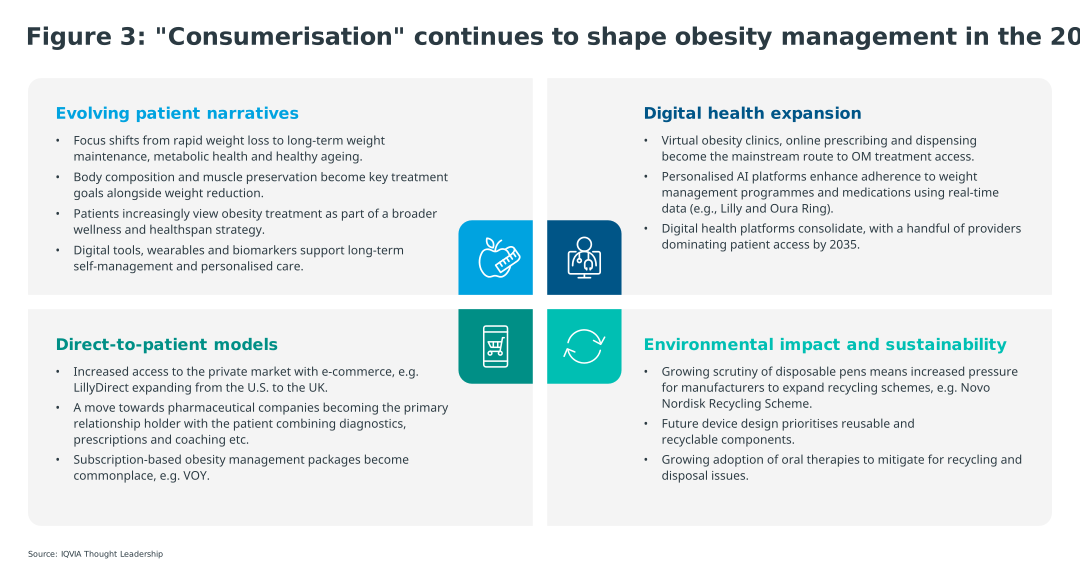
As access expands beyond specialist clinics and primary care, patients are likely to engage with OMs through integrated digital tools that combine diagnosis, AI enabled-prescribing, coaching and long-term monitoring. While DTP advertising is already established in certain countries, a broader shift towards DTP service models is emerging through initiatives such as Eli Lilly’s LillyDirect in the US and UK, with the latter involving digital health partners. Over the next decade, these models could become a mainstream route to treatment, particularly in markets where reimbursement remains limited and self-funding continues to account for a significant proportion of demand.
Patient expectations of OMs are also likely to evolve, moving beyond rapid weight loss towards long-term weight maintenance, metabolic health and comorbidity prevention. As highlighted in a previous IQVIA blog4, the quality of weight loss is increasingly being recognised as an important consideration alongside the quantity of weight lost. A growing pipeline of pharmacotherapies designed to preserve lean muscle mass is already in development and could enter the market by 2035. As evidence continues to build, body composition optimisation may become an increasingly important treatment goal alongside reductions in body weight. Non-pharmacotherapeutic solutions have already established significant markets in response to these evolving needs - for example, Nestlé is developing nutrition products for GLP-1 users that support muscle preservation and overall nutritional health5. More broadly, as explored in previous IQVIA blogs, OMs are reshaping consumer health behaviours and driving innovation across areas such as personalised nutrition, dietary supplements and nutricosmetics that support evolving wellness and body composition goals6,7.
Recent developments including Eli Lilly’s equity investment in Oura and LillyDirect's collaboration with the company highlight how obesity management is expanding beyond medication alone8,9. By combining access to GLP-1 therapies with wearable technology that tracks metrics such as sleep, activity and recovery, these models seek to provide more personalised support and a broader view of health outcomes beyond weight loss. This reflects a wider shift towards integrated obesity care which combines medication, digital health tools and online coaching to improve engagement and long-term outcomes.
Diagnostics: moving towards personalised obesity care
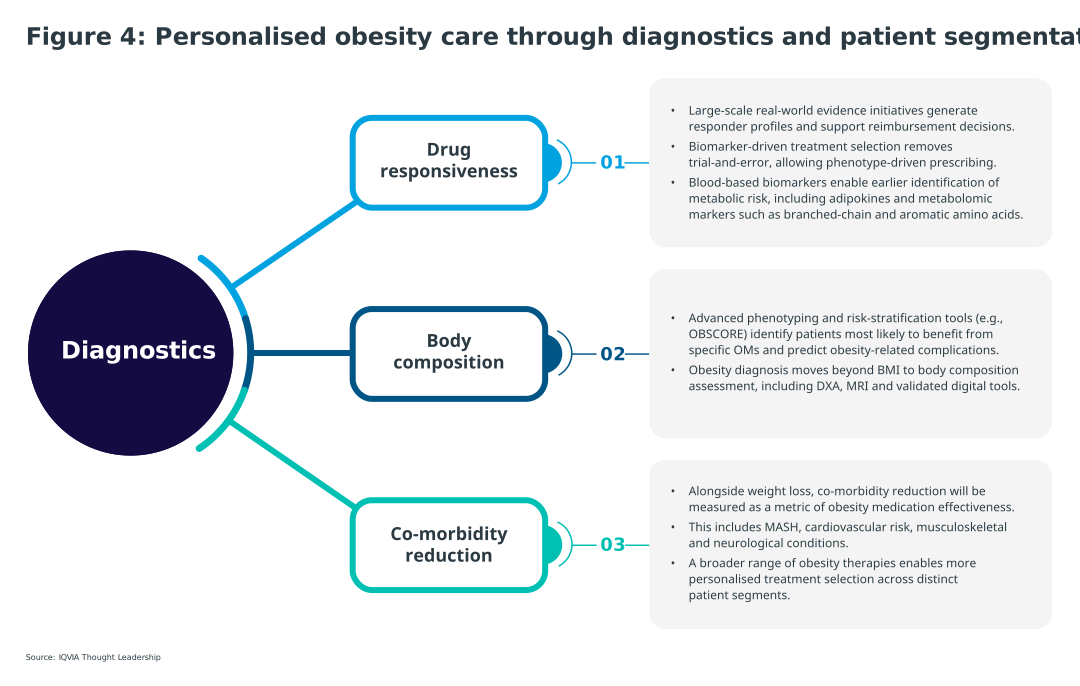
By 2035, advances in diagnostics could fundamentally change how obesity is assessed and treated, with an emphasis on responsiveness to pharmacotherapy, body composition and co-morbidity reduction (Figure 4). Today, treatment decisions are largely guided by body mass index (BMI) and the presence of comorbidities. In the future, obesity management may become increasingly precision-driven, supported by biomarker testing, advanced phenotyping and risk stratification tools that identify which patients are most likely to benefit from specific OMs. This could develop alongside an increasing maturity of publicly funded health system engagement, or willingness of at least some strata of self-funded users of OMs to also pay for more sophisticated diagnostics and monitoring for their obesity management journey.
As understanding of obesity biology advances, blood-based biomarkers may play a larger role in identifying metabolic risk and guiding treatment selection. Adipokines, inflammatory markers and metabolomic signatures could help distinguish between obesity phenotypes and predict responsiveness to therapies with different mechanisms of action. Prescribing decisions may increasingly incorporate factors such as age, sex, ethnicity and underlying metabolic characteristics, reducing reliance on trial-and-error approaches and improving long-term outcomes.
Advances in body composition assessment and digital health technologies could shift obesity diagnosis beyond BMI, incorporating tools such as DXA and MRI into routine clinical decision-making. Machine learning-based risk prediction tools such as OBSCORE10 could help identify patients at a greater risk of obesity-related complications. Even if widespread access to advanced imaging remains limited, predictive algorithms using routinely collected clinical and digital health data may still significantly improve risk stratification.
Alongside weight loss, reductions in obesity-related co-morbidities such as MASH, cardiovascular disease, musculoskeletal conditions and neurological disorders may become increasingly important measures of treatment effectiveness. As evidence grows across multiple disease areas, diagnostics may help match patients to therapies based not only on weight-loss potential, but also on the complications most relevant to their long-term health outcomes.
Final thoughts
The modern OMs market of 2035 will have evolved dramatically over the preceding 15 years and, if our upper-case scenarios prove correct, will in turn have had a profound global impact on both population health and healthcare systems. If public health integration is successfully combined with continued self-funded market growth, increasingly sophisticated, consumerised use of OMs, enhanced diagnostics and monitoring, and a broadening portfolio of pharmacotherapy innovations, then the OMs market could become the cornerstone of a new healthspan management market. These developments would help take the pharmaceutical industry into a new era of preventative therapy.
With thanks for the contributions from Imperial Students: Fayowa Adesomoju, Ohemaa Owusu Sampah, Sarah Azeta and Baba Odumeru.
References
1 NCD Risk Factor Collaboration (NCD-RisC). Obesity rise plateaus in developed nations and accelerates in developing nations. Nature 653, 510–518 (2026). https://doi.org/10.1038/s41586-026-10383-0
2 Economic impact of overweight and obesity to surpass $4 trillion by 2035. World Obesity Federation website, accessed 18 Aug 2026: https://www.worldobesity.org/news/economic-impact-of-overweight-and-obesity-to-surpass-4-trillion-by-2035
3 A Study of Brenipatide in Adult Participants With Bipolar Disorder (RENEW-Bipolar-1); Lilly website, accessed 15 Aug 2026: https://trials.lilly.com/en-US/trial/674575
4 Beyond weight loss: Preserving muscle during pharmacotherapy of obesity; IQVIA blog: July 2025: https://www.iqvia.com/locations/emea/blogs/2025/06/beyond-weight-loss
5 Nestle looks to develop new products to serve users of weight-loss drugs; Nestle website, accessed 18 Aug 2026: https://www.reuters.com/legal/litigation/nestle-looks-develop-new-products-serve-users-weight-loss-drugs-2026-08-17/
6 The new shape of consumer health; IQVIA blog: May 2026: https://www.iqvia.com/blogs/2026/05/the-new-shape-of-consumer-health
7 Beyond Beauty: Why GLP-1s Are Prompting a Nutricosmetics Evolution; IQVIA blog: July 2026: https://www.iqvia.com/blogs/2026/07/beyond-beauty
8 ŌURA and LillyDirect to Expand Support for People Using GLP-1 Therapies with New Tools and Savings Options; ŌURA’s ‘The Pulse Blog’ accessed 18 Aug 2026: https://ouraring.com/blog/oura-lilly-direct-glp-1-therapies/
9 Lilly Makes an Equity Investment in Oura, Supporting Oura’s Vision for More Connected Care; ŌURA’s ‘The Pulse Blog’ accessed 19 Aug 2026: https://ouraring.com/blog/lilly-equity-investment/
10 Demircan, K., Carrasco-Zanini, J., Williamson, A. et al. Data-driven prioritization of high-risk individuals for weight loss interventions. Nat Med 32, 2117–2127 (2026). https://doi.org/10.1038/s41591-026-04353-2