






.svg)











Introduction
The global obesity market is entering a new phase. If 2024 was the transition year and 2025 the year of consolidation, 2026 is shaping up to be the year of acceleration. Clinical breakthroughs, shifting policies, and changing market dynamics are converging to redefine obesity care globally. The question is no longer if obesity pharmacotherapy will transform obesity management, but how fast and how far it will go.
The past two years have seen unprecedented momentum: GLP-1 therapies moved from niche to mainstream, supply issues arose then abated, and asset pipelines expanded beyond weight loss to whole-body medications. Recent signals underscore this shift: Eli Lilly became the first pharmaceutical company to surpass a $1 trillion market capitalization [1] buoyed by global demand for obesity medications. As we look to 2026, the story becomes one of defining firsts: the debut of oral GLP-1s, the first loss of exclusivity for a GLP-1 receptor antagonist, and landmark coverage decisions such as obesity medications entering Medicare formularies for obesity as a standalone indication. These milestones will redefine how obesity care is delivered, marking a turning point that will shape the market’s trajectory for 2026 and the years to come.
2025 in Review: Solidifying the Era of Obesity Treatment
2025 marked a pivotal moment for obesity care. The year delivered progress across clinical evidence, policy, and changing market dimensions, reinforcing obesity as a chronic disease requiring structured, long-term management.
Clinical Frameworks: Defining Obesity Beyond Body Mass Index (BMI)
An important milestone of 2025 was the publication of The Lancet Diabetes & Endocrinology Commission on the Definition and Diagnostic Criteria of Clinical Obesity. This global initiative reframed obesity as a chronic, systemic disease rather than a mere risk factor. The report highlighted the limitations of BMI, and instead the Commission recommends combining BMI with waist circumference, waist-to-height ratio, and clinical markers of organ dysfunction to diagnose obesity accurately. Yet, the practical impact has been minimal. Most health systems still struggle to capture a single, simplistic metric like BMI, let alone implement more complex diagnostic measurements despite the Lancet Diabetes & Endocrinology Commission’s recommendations. Evidence from German clinical practice in an IQVIA study underscores this gap: BMI documentation was recorded for only 10.8% of patients [2] highlighting that comprehensive measurements of obesity are not being translated to clinical practice. Further solidifying 2025 as the year of updates to clinical frameworks, the European Association for the Study of Obesity released a new pharmacotherapy framework [3]. The framework prioritised semaglutide and tirzepatide as first-line treatments, based on evidence of ≥15% weight loss and benefits in complications such as cardiovascular disease and sleep apnoea. Similarly, the American Association of Clinical Endocrinology introduced its Adiposity-Based Chronic Disease model, replacing BMI-centric classification with a staging system based on obesity-related complications [4]. The guidelines also prioritise obesity medications like semaglutide and tirzepatide for their proven efficacy in preventing major adverse cardiovascular events and improving metabolic health.
Market Dynamics: From Shortages to Price Pressures
After prolonged supply constraints, the FDA officially declared US GLP-1 shortages resolved in April 2025, removing semaglutide and tirzepatide from its shortage list and ending enforcement discretion for compounded versions by May 2025. However, compounders continue to operate, offering personalised versions of these medicines through non-traditional direct-to-consumer channels . The new US Administration‘s broader policy goals to rebalance prices between the US and rest of world brought new challenges in the UK: in September 2025, Eli Lilly implemented a UK-wide list price increase of up to 170% for Mounjaro paid for out-out-pocket, where the UK will be a £2bn+ market by the end of 2025. Eli Lilly’s first nine months of 2025 underscored the scale of the GLP-1 surge: Mounjaro and Zepbound generated $39.5 billion in revenue and surpasses Merck’s Keytruda as the world’s best-selling medicine[5]. This performance reflects unprecedented demand despite earlier supply constraints and sets the stage for pricing and reimbursement debates as the market matures.
Clinical Evidence: Expanding the Evidence Base
2025 was rich in clinical evidence on obesity medications. The SURMOUNT-5 trial confirmed tirzepatide’s superiority over semaglutide in levels of weight loss [6]. Other head-to-head trials added clinical momentum to the obesity space throughout 2025. SURPASS-CVOT meanwhile, provided new evidence on the cardiovascular benefits of tirzepatide, although conducted in a type 2 diabetes population and comparing tirzepatide to dulaglutide [7]. Meanwhile, orforglipron demonstrated significant weight loss efficacy [8] consistent with injectable GLP-1 medicines. The GLP-1/GIP dual agonist, HRS9531, from Hengrui, reported positive Phase 3 results in weight loss, and is the second (after Innovent) Chinese company to submit marketing authorisation for an obesity asset.
In 2025 we saw label expansions for semaglutide and tirzepatide, underscoring a trend toward whole-body health. Semaglutide gained FDA approval for MASH, as well as FDA and EMA approval in chronic kidney disease. Tirzepatide gained FDA approval for sleep apnoea. Importantly, semglutide’s approval for MASH marks a watershed moment as it is the second ever MASH-specific therapy to be approved, and the first GLP-1 receptor antagonist, giving it momentum to significantly disrupt the MASH treatment market. At the end of 2025 we saw Eli Lilly’s Phase 3 TRIUMPH-4 trial for retatrutide read out. Retatrutide reported up to 28.7% average weight loss and pain reduction of up to 75.8% on the WOMAC scale in adults with obesity and knee osteoarthritis [9]. Regulatory submission for retatrutide is expected in 2026. These developments underscore a broader trend where obesity medicines are evolving into whole-body therapies with implications across multiple disease states.
Policy and Global Health
Policy advances in 2025 laid critical groundwork for the next phase of obesity care.
In Global Health policy, the World Health Organisation (WHO) issued its first global guideline on the use of GLP-1 medicines in treating obesity in December 2025. This landmark policy change recognises obesity as a chronic disease and recommends that GLP-1 antagonists are used by adults for the long-term treatment of obesity. These guidelines mark a significant step toward formalising obesity treatment within global health policy. In addition, WHO included GLP-1 therapies on its Essential Medicines List (EML); however, this was for diabetes indications and GLP-1s were not included on the EML for obesity.
Adding to this momentum, the United Nations Fourth High-level Meeting on Non-Communicable Diseases (NCDs) in September 2025 [10] marked a major milestone. Heads of State adopted a new Political Declaration under the 2030 Agenda for Sustainable Development - to reduce premature NCD mortality by one-third by 2030. This update elevates obesity within the global noncommunicable disease agenda and sets a clear mandate for action.
At the European level, progress continued with the European Union Cardiovascular Health Plan, which is expected to be published in December 2025, outlining a framework for integrated chronic disease prevention. The European Cardiovascular Health Plan Roadmap from the European Alliance was published earlier in 2025 and calls for comprehensive approaches to incorporate the recognition of obesity as a trigger for cardiovascular disease. Additionally, Members of the European Parliament held their inaugural meeting, signalling political commitment and initiating dialogue on obesity priorities across member states.
Italy became the first country in the world to officially recognise obesity as a chronic, recurring disease through a new law, a landmark step even as reimbursement policies across Europe remain fragmented.
Unrealised Expectations
Despite progress, several anticipated 2025 milestones did not come to fruition:
- Regulatory progress stalled: FDA’s obesity drug guidance, published in draft form in January 2025, remains unfinalised, whilst EMA has yet to update its 2016 guideline.
- GLP-1s were added to the Essential Medicines List for diabetes but not for obesity, despite WHO’s obesity treatment guidelines, published in December 2025, recommending their use. This disconnect underscores ongoing questions about prioritisation and access.
- No country newly announced public reimbursement, although Italy become the first country to legally recognise obesity as a chronic, progressive, and relapsing disease. However, there was progress in the UK where the government announced Scotland CardioMetabolic Impact Study (SCoMIS) , a pioneering Real-World study, which will provide Wegovy to between 3,000-5,000 people living with Obesity in Scotland’s poorest areas free of charge during a three year study [11]
- Despite FDA phasing out enforcement discretion that allowed GLP-1 compounding during shortages - and setting May 2025 deadlines for compounding to cease - compounding has continued beyond this deadline [12].
Themes continuing from 2025 into 2026
As the obesity market moves into its acceleration phase, several trends that gained traction in 2025 will continue to influence strategies and market dynamics in 2026:
- As the obesity market evolves, there is a growing recognition that use of obesity medications to maintain weight will be critical for many people. Whilst the current focus remains on induction, themes will begin to shift towards how long-term use can be supported. This includes early thinking around strategies such as dose splitting and micro-dosing, alongside the potential role of oral formulations in making maintenance more practical and affordable.
- In November 2025, the Trump administration announced landmark agreements with Eli Lilly and Novo Nordisk reducing the monthly price of GLP-1 weight-loss drugs from over $1,000 to as low as $245 for eligible patients. Starting in mid-2026, Medicare will begin covering these drugs for select patient groups and state Medicaid programs have the option to adopt similar coverage at these discounted rates. Looking ahead, the influence of US policy and Most Favoured Nation (international reference) pricing will remain a central trend that shaped obesity care in 2025 and will continue to do so into 2026 and beyond.
2026: Acceleration and Market Transformation
The coming year promises rapid evolution across innovation, policy, and market access. Several forces will shape this trajectory:
Patent Expiry and Pricing: Semaglutide’s Loss of Exclusivity
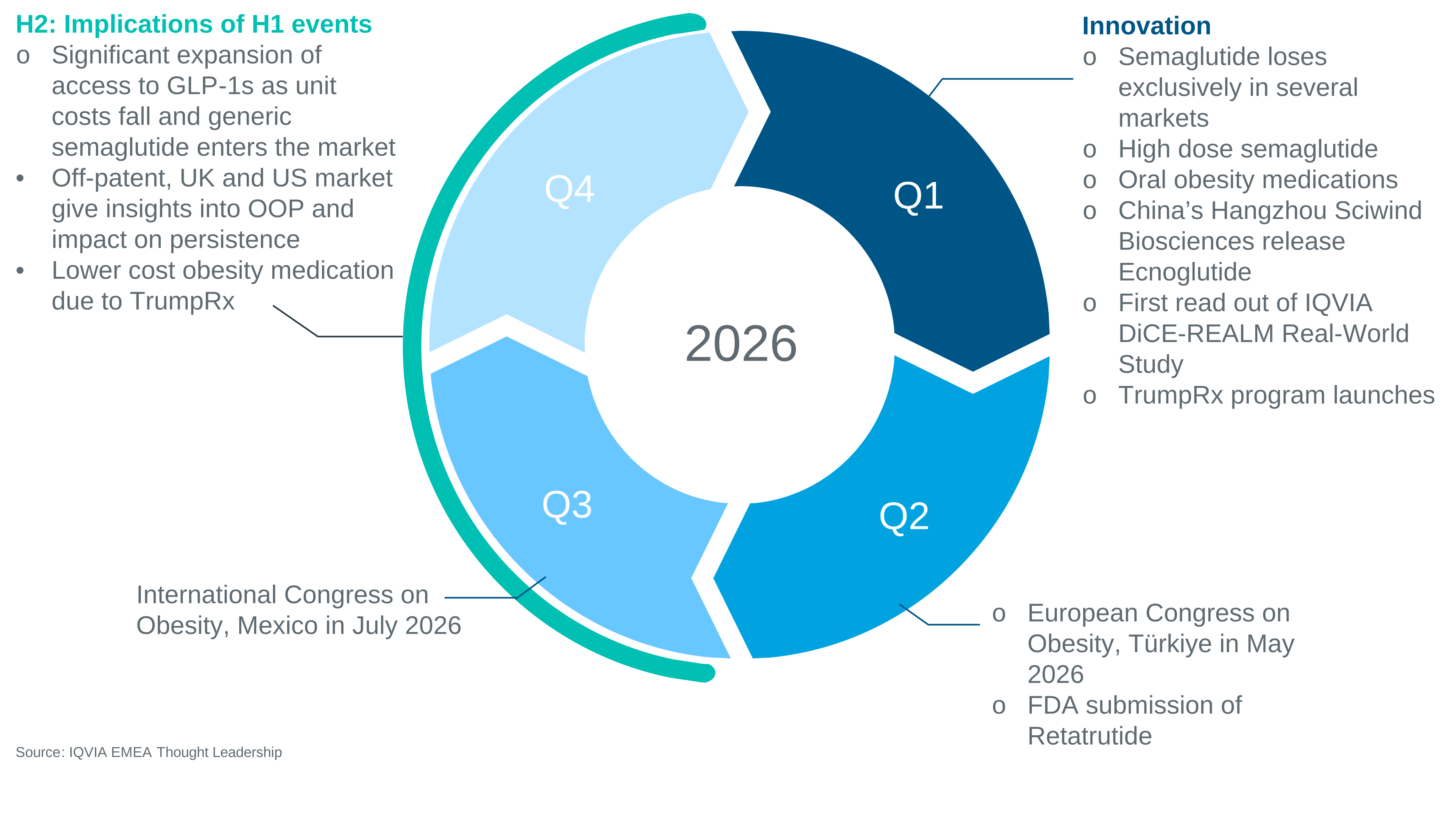
Off-patent semaglutide will be a defining event in 2026 as it begins to come off patent in several countries. This includes large countries such as India, Canada, China, Brazil and Turkey which make up 40% of the world’s population and an estimated 33% of the world’s population of adults living with obesity [13]. As generics enter the market, price dynamics will reshape affordability and access. For users this could segway into an expansion of the private market and for payers this could provide an affordable entry point for public reimbursement.
In November 2025 Novo Nordisk filed for submission to the FDA for a higher dose of semaglutide, 7.2mg. Thanks to the FDA’s National Priority Voucher program Novo Nordisk should see the FDA's decision within one to two months, resulting in high dose semaglutide availability in 2026.
The Year of Orals: Convenience Meets Innovation
2026 is set to be the ‘year of the orals’, marking a major inflection point in obesity medication accessibility and patient preference. After a few years of injectable dominance, oral formulations are emerging as a game-changer for adherence and ease of use thanks to their lack of cold-chain requirement, but also a game-changer for their ability to unlock the long-term maintenance opportunity [14].
Novo Nordisk will lead first with its oral semaglutide, with regulatory approvals granted by the FDA late December 2025 and full commercial rollout in early 2026. Meanwhile, Eli Lilly is advancing orforglipron, the first small-molecule GLP-1 receptor agonist for obesity. FDA approval is anticipated in 2026, through the FDA's national priority voucher program, positioning Lilly to compete aggressively in the oral segment. Futhermore, 2025 results from the ATTAIN-MAINTAIN trial demonstrated orforglipron’s ability to compete in the maintenance segment. Top-line results showed that on average, people who switched to orforglipron from semaglutide had a superior percent maintenance of body weight reduction, showing that subjects held onto their earlier weight loss compared to those who previously reached a body weight plateau.
Beyond these frontrunners, the pipeline is expanding:
- Novo Nordisk filed for FDA approval of CagriSema in 2025, the first once-weekly combination of GLP‑1 and amylin analogue.
- Amycretin, Novo Nordisk’s oral dual GLP-1/amylin agonist, showed 13% weight loss in early trials, signaling a move toward multi-pathway oral therapies.
- Structure Therapeutics’ GSBR-1290 and Viking’s VK2735 are advancing differentiated mechanisms, while Roche and other players explore next-generation oral obesity medications.
For patients, oral therapies promise greater convenience, improved adherence, and broader access, particularly for those reluctant to use injectables. For manufacturers, this shift opens new competitive battlegrounds, where efficacy, tolerability, and pricing strategies will determine leadership in a new market dimension.
Pipeline Innovation: Beyond Weight Loss
The obesity pipeline remains robust, and IQVIA estimated there are over 193 assets in development as of October 2025, an increase from 181 assets in development in May 2025. Alongside an expanding pipeline, innovation is accelerating through new mechanisms of action (e.g., GIP/GLP-1 dual agonists, amylin analogs, and small molecules like orforglipron) and diversified routes of administration such as orals and ultra-long acting injectables.
The marketed obesity medications are entering a transformative era. Notably, innovation is moving beyond weight loss into a multi-system therapeutic frontier. Beyond label expansion, real-world studies have shown emerging evidence pointing to benefits in respiratory disorders, curbing addiction, and improving fertility [15]. The highly anticipated phase 3 EVOKE trial readout found that semaglutide did not significantly reduce progression of Alzheimer's disease.
Beyond new mechanisms, the next wave of innovation is reshaping how obesity medicines are delivered. Oral formulations are set to dominate headlines in 2026, offering convenience and eliminating cold-chain requirements - attributes that could make long-term obesity care more practical and unlock the maintenance opportunity. At the same time, ultra-long-acting injectables are emerging as another theme of innovation. Metsera’s pipeline includes MET-097i, a GLP-1 receptor agonist designed for once-monthly dosing, and MET-233i, an amylin analog being developed for monthly administration. These assets aim to move beyond the current weekly injection paradigm, signalling a future where extended dosing intervals could become central to maintenance strategies [16].
Market Competition and M&A
The obesity market’s deal-making frenzy shows no signs of slowing. 2025 set the tone with high-profile battles like the Metsera bidding war between Pfizer and Novo Nordisk which finally closed, with Pfizer winning, for $10bn [17], underscoring the strategic value of next-generation assets such as Metsera’s long-acting injectable asset, MET-097i. Roche bet big on amylin analogs, partnering with Zealand Pharma to co-develop petrelintide. These deals underscore intense competition for differentiated assets in a crowded market. The question remains: are we witnessing the peak of obesity-driven M&A, or is this just the beginning of a decade-long race for dominance?
Policy and Reimbursement: Closing the Access Gap
Policy developments will be a trend across 2026. We anticipate changes at the national level as more countries formally recognise obesity as a chronic disease and move toward structured reimbursement frameworks for obesity medications. In 2025 Spain co-hosted a side event at the 78th World Health Assembly, “How the WHO Acceleration Plan to Stop Obesity is Unlocking Country Action” where the Minister of Health announced that Spain will host the 2026 Global Stocktaking Summit on Obesity. While Spain’s current focus is on prevention, policy discussions now include treatment access, signalling movement toward integrating obesity medications into national plans. At the same time, US policy changes introduced under the Trump administration will continue to influence global benchmarks and shape payer negotiations.
Compounding and Digital Health
Digital health platforms such as Hims & Hers and Zava are advancing compounded and personalized therapies - a trend expected to migrate from the US into European markets. In 2025, compounding surged in the US as a workaround during GLP-1 shortages, with telehealth providers stepping in to meet demand. A major signal of this trend moving into Europe came in June 2025, when Hims & Hers announced its acquisition of Zava, a European telehealth platform with operations in the UK, Germany, France, and Ireland. As Hims & Hers and other telehealth companies expand into the European market, we expect personalisation to gain momentum through 2026 and beyond.
Real-World Evidence: From Trials to Practice
As obesity care moves from randomised clinical trials to everyday practice, real-world evidence is becoming more valuable for payers, providers, and policymakers. Real-world studies such as SURMOUNT-REAL, a five-year real-world observational program, are designed to answer questions that randomised trials cannot. Unlike traditional clinical-trials, SURMOUNT-REAL will evaluate tirzepatide in routine care settings, tracking outcomes across diverse populations and health systems. In the UK, SCoMIS has been announced in 2025, a landmark government-funded and IQVIA-run study will enrol thousands of patients, including those from Scotland’s most deprived areas, to assess the impact of obesity treatments in real-world settings. We will also see the first read out from DiCE-REALM, a pioneering real-world study, again run by IQVIA, of private patient experience with GLP1s using data from UK Digital Health Provider Platforms (DiCE). Looking ahead, 2026 is expected to mark a significant expansion of more real-world trials, demonstrating evidence from everyday clinical practice.
Conclusion
2026 sets to build on the transformative era for obesity care. Market dynamics will shift as patent expiries and oral formulations redefine affordability and access. At the same time, a wave of innovation - spanning multi-pathway therapies and whole-body indications, underscored by M&A activity - will accelerate progress beyond weight loss toward comprehensive chronic disease management. These changes won’t stop at 2026; they will set the stage for a decade of disruption, where obesity treatment becomes a cornerstone of global health strategy. For stakeholders across healthcare, the challenge is clear: keep ahead of the obesity market changes, adapt strategies, and seize opportunities in this rapidly evolving landscape.
Thank you for reading. Discover IQVIA’s bespoke Obesity Forecast Modelling capabilities, IQVIA draws together out unmatched patient and obesity medicine use data, with epidemiology and depth pipeline and future event insight, to build detailed, evidence based scenario forecasting for the obesity market at global, regional and country level, tailored to your scope requirements and forecasting needs.
References:
[1] Eli Lilly becomes first drugmaker to hit trillion-dollar m-cap on weight-loss demand boom, November 2025: https://m.economictimes.com/markets/stocks/news/eli-lilly-becomes-first-drugmaker-to-hit-trillion-dollar-m-cap-on-weight-loss-demand-boom/amp_articleshow/125489542.cms
[2] Orozco-Ruiz et al. Annual prevalence and factors associated with body mass index documentation in German general practices – A retrospective cross-sectional study. Diabetes Obes Metab. 2025 May;27(5):2463-2472. doi: 10.1111/dom.16243. Epub 2025 Feb 10.
[3] Busetto et al. A new framework for the diagnosis, staging and management of obesity in adults. Nat Med 30, 2395–2399 (2024). https://doi.org/10.1038/s41591-024-03095-3
[4] Nadolsky et al. American Association of Clinical Endocrinology Consensus Statement: Algorithm for the Evaluation and Treatment of Adults with Obesity/Adiposity-Based Chronic Disease - 2025 Update Endocr Pract. 2025 Nov;31(11):1351-1394. doi: 10.1016/j.eprac.2025.07.017. Epub 2025 Sep 16.
[5] Eli Lilly’s weight loss and diabetes drug tops Keytruda as world’s best-selling medicine, October 2025: https://www.statnews.com/2025/10/30/eli-lilly-zepbound-mounjaro-bestselling-obesity-drug/#:~:text=Lilly's%20tirzepatide%2C%20marketed%20as%20Mounjaro,date%20sales%20to%20$23.3%20billion.
[6] Aronne et al. Tirzepatide as Compared with Semaglutide for the Treatment of Obesity. N Engl J Med 2025;393:26-36
[7] Kruger et al. Cardiovascular outcomes of semaglutide and tirzepatide for patients with type 2 diabetes in clinical practice. Nat Med. 2025 Nov 9. doi: 10.1038/s41591-025-04102-x.
[8] Wharton et al. Orforglipron, an Oral Small-Molecule GLP-1 Receptor Agonist for Obesity Treatment. N Engl J Med 2025;393:1796-1806
[9] Lilly's triple agonist, retatrutide, delivered weight loss of up to an average of 71.2 lbs along with substantial relief from osteoarthritis pain in first successful Phase 3 trial, December 2025: Lilly's triple agonist, retatrutide, delivered weight loss of up to an average of 71.2 lbs along with substantial relief from osteoarthritis pain in first successful Phase 3 trial | Eli Lilly and Company
[10] Fourth High-level Meeting of the UN General Assembly on the prevention and control of NCDs and the promotion of mental health and wellbeing (HLM4), September 2025: https://www.who.int/news-room/events/detail/2025/09/25/default-calendar/fourth-high-level-meeting-of-the-un-general-assembly-on-the-prevention-and-control-of-ncds-and-the-promotion-of-mental-health-and-wellbeing-(hlm4)
[11] Thousands of patients from Scotland’s poorest areas to benefit from landmark UK government-funded obesity study, November 2025: Thousands of patients from Scotland’s poorest areas to benefit from landmark UK government-funded obesity study - GOV.UK
[12] Non-Traditional Channels: The Compounded GLP-1 Market; IQVIA Blog, October 2025: https://www.iqvia.com/locations/united-states/blogs/2025/10/non-traditional-channels-the-compounded-glp-1-market
[13] Off-patent semaglutide in 2026: the next revolution in anti-obesity medications; IQVIA blog, August 2025: IQVIA blog, August 2025: https://www.iqvia.com/locations/emea/blogs/2025/07/off-patent-semaglutide
[14] Oral obesity therapies: Holding the keys to the future; IQVIA blog, August 2024: https://www.iqvia.com/locations/emea/blogs/2024/10/oral-obesity-therapies-holding-the-key-to-the-future
[15] The Everything Drugs: from weight loss to whole body medicines; IQVIA blog, September 2025: https://www.iqvia.com/locations/emea/blogs/2025/08/the-everything-drugs-from-weight-loss-to-whole-body-medicines
[16] Maintaining momentum: The next frontier of the obesity market; IQVIA Blog, January 2025: https://www.iqvia.com/locations/emea/blogs/2025/10/maintaining-momentum-the-next-frontier-of-the-obesity-market
[17] Pfizer wins $10 billion bidding war for Metsera as Novo Nordisk exits, November 2024: https://www.reuters.com/business/healthcare-pharmaceuticals/pfizer-sweetens-offer-metsera-bidding-war-against-novo-bloomberg-news-reports-2025-11-08/#:~:text=Summary,IN%20A%20BIOTECH%20BIDDING%20WAR