












Commercial Solutions
Data, AI, and expertise empower Commercial Solutions to optimize strategy, accelerate market access, and maximize brand performance.
This blog is part of an ongoing series, A Brave New World: State of the Industry.
Payer channels have become a primary mechanism through which commercial value is created, constrained, or redirected in the U.S. market. For much of the past decade, channel mix evolved slowly enough that manufacturers could plan against relatively stable assumptions on access, utilization, and risk. Since 2020, that equilibrium has broken. Growth is no longer accruing evenly, and accelerated channel divergence points to a structural reset rather than a temporary distortion. As a result, channel mix now serves as an operating signal for where access will tighten, where affordability pressure will rise, and where financial risk will shift between plans and manufacturers. The sections that follow break down how value is moving by channel, where therapeutic pressure is building, and what that means for commercial planning.
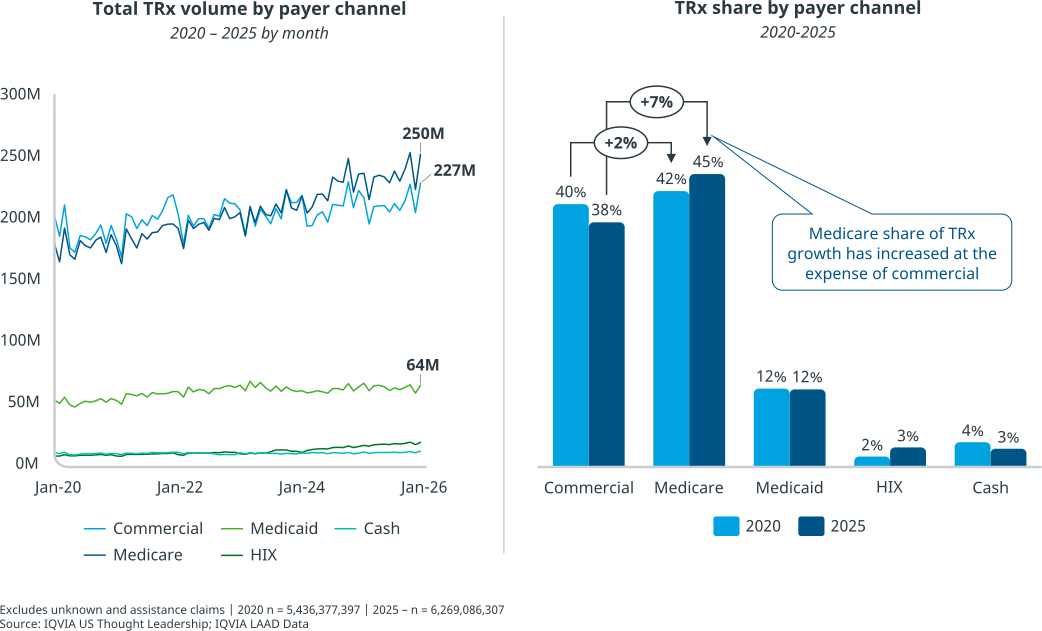
The significance of payer channel divergence lies less in the fact that channels differ, and more in how those differences reshape exposure to access controls, pricing pressure, and utilization management. Commercial and Medicare together continue to account for over 80% of total prescription volume, but the forces driving growth within each channel are different. Commercial coverage remains tied to employer-sponsored populations, where rising patient cost exposure and tighter employer management increasingly shape modern markets. In Medicare, growth is driven by demographic expansion and higher utilization intensity, especially in chronic and specialty categories. This moves more value into public program economics and increases exposure to payer-managed access. This divergence between Commercial and Medicare has direct implications for forecasting, contracting, and patient support because channel mix increasingly shapes access conditions and gross-to-net risk.
Since 2020, Medicare has outpaced Commercial in total prescription growth. The growth rate gap widened from about 2 percentage points in 2020 to about 7 points in 2025, driven by benefit design and policy dynamics, as well as sustained demand from an aging population. As more patients age into Medicare and remain on chronic therapies, utilization growth is increasingly anchored in public coverage rather than employer-sponsored plans. Medicaid volume is also expanding, driven by enrollment dynamics and therapeutic concentration, while the ACA Marketplace/Exchange (HIX) and Cash remain smaller but relevant as pressure valves for coverage gaps and cost-sharing exposure. Importantly, these changes are happening quickly.
Coverage expansion in Medicare and Medicaid is being paired with tighter benefit design and more active utilization management, improving affordability for patients while shifting financial risk upstream to plans and manufacturers. As a result, payers are intervening earlier through formulary positioning, cost sharing, and utilization controls, reshaping how patients access therapy and how risk is managed across channels. For commercial teams, channel mix indicates where access will tighten first and where gross-to-net risk will concentrate.
With channel divergence setting the access environment, the next questions are which therapeutic areas are driving that shift and where is pressure likely to concentrate.
Channel growth is not evenly distributed across therapeutic areas. Instead, distinct class-level patterns are emerging that reflect differences in coverage policy, patient demographics, and payer tolerance for cost growth. Looking across channels, branded volume growth since 2020 has been led by a small set of therapeutic areas, most notably diabetes, obesity, immunology, migraine, and oncology. However, the contribution and impact of these classes vary meaningfully by payer channel.
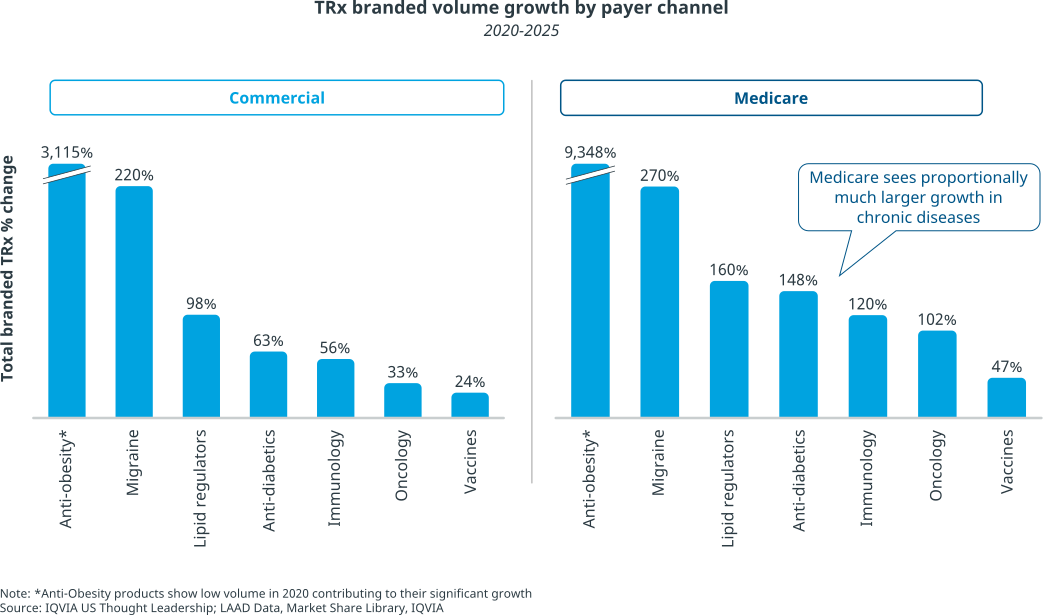
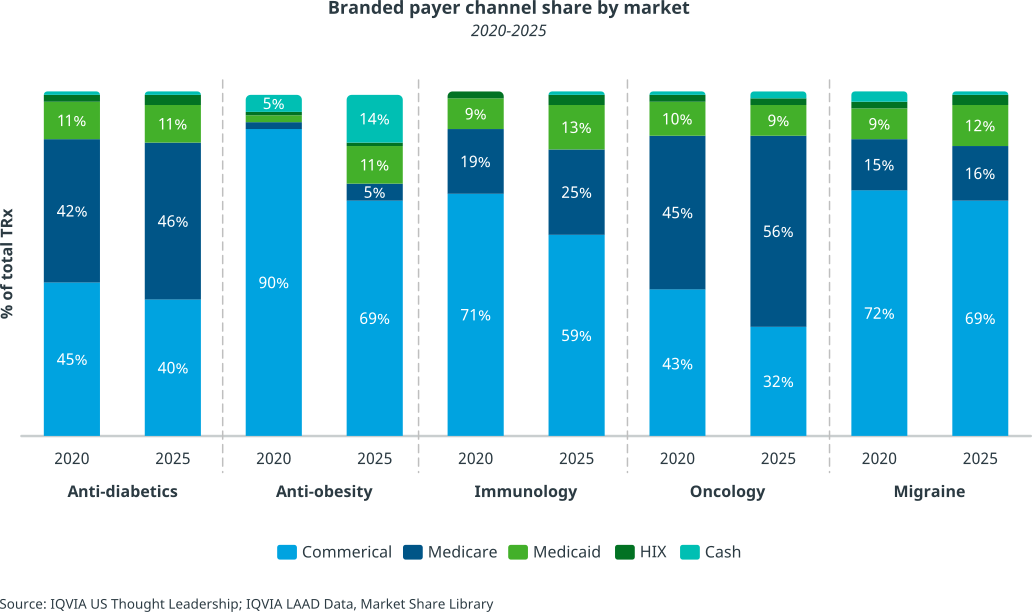
In Commercial, GLP-1-driven anti-obesity growth has been a key volume accelerant, highlighting both demand expansion and relatively broader access compared to public programs. In contrast, Medicare where coverage for weight loss treatments is limited, growth is more prominent in chronic and specialty classes such as lipid regulators, immunology, and oncology, reflecting an older population with higher treatment intensity and sustained utilization over time. Medicaid growth remains concentrated in fewer therapeutic areas, with classes like antithrombotics playing structurally important roles despite more modest growth rates, underscoring the channel’s distinct patient mix and policy-driven coverage priorities.
Therapeutic mix increasingly determines how cost pressure manifests within each channel. High-growth specialty classes, particularly oncology and immunology, may represent smaller patient populations but exert outsized impact on spend and utilization management. As a result, channel-specific class dynamics offer early signals of where payer scrutiny is likely to intensify and where commercial strategies will face the greatest friction.
Looking at the fastest-growing products adds another layer of insight into how payer channel dynamics are evolving. These products do more than drive short-term growth. They act as early indicators of where utilization, affordability pressure, and access scrutiny are likely to concentrate next. Notably, three of the top five products driving absolute dollar growth are GLP-1 therapies, underscoring how rapidly demand can reshape channel economics when innovation aligns with broad unmet need. The concentration of growth among a small number of high-impact brands reflects a broader pattern. Products gaining momentum tend to sit at the intersection of chronic disease, specialty care, and long treatment duration, characteristics that amplify their downstream impact on payer budgets.
As growth concentrates in a few brands, the commercial risk builds alongside it. Fast-growing products reveal how quickly pressure can shift once scale is reached. As volumes expand, products that initially benefit from relatively open access increasingly draw utilization management and pricing scrutiny, particularly as they move deeper into Medicare and Medicaid populations. This dynamic is now reinforced by policy. Under the Inflation Reduction Act (IRA), high-spend, single-source drugs face direct price negotiation through Medicare’s Maximum Fair Price (MFP) framework, while inflation rebates further constrain price increases over time. These mechanisms shorten the runway between commercial success and pricing intervention, especially for products that scale rapidly in public programs.
For manufacturers, rapid growth functions as a leading indicator of future pricing and access pressure. Early momentum can hasten utilization controls, compress net price, and reshape contracting leverage sooner than traditional lifecycle models suggest. As IRA negotiation and reference benchmarking reshape the market, the locus of growth increasingly dictates how quickly value is regulated.
The post-2020 market reflects a shift not only in how growth occurs, but in how it is allocated, with material implications for performance durability. Against this backdrop, several commercial implications stand out:
For commercial leaders, the critical questions are: Where will demand land, and how will that channel convert growth into controls? These are the new key considerations for interpreting market momentum. Contact IQVIA to learn more about how changing channel dynamics are impacting commercial strategy and the coverage landscape.

This series revisits the industry fundamentals needed to make sense of today’s evolving life sciences market. IQVIA’s thought leaders clarify the dynamics shaping the environment, align on key terms and frameworks, and reinforce the foundational knowledge that supports strong decision making. The goal is to build a shared baseline and promote consistency in how teams interpret market context, evaluate opportunities, and communicate value as conditions shift, translating fundamentals into practical, durable approaches that carry into day-to-day work and move your organization forward.
Data, AI, and expertise empower Commercial Solutions to optimize strategy, accelerate market access, and maximize brand performance.
Grow your brand, now and through patent expiry
Gain high value access and increase the profitability of your brands