





.svg)











Stay ahead with the EMEA Thought Leadership insights: your source for industry-leading expertise and analysis
Blog
Longevity unlocked: From lifespan to healthspan extension
Apr 15, 2026
Ageing and health. Two words that typically are not often mentioned in the same breath. Ageing is inevitable, and many assume that declining health is its unavoidable companion. Or is it? This long-held assumption is now being challenged by scientists around the world who increasingly see that age-related diseases and perhaps ageing itself can be reduced, slowed or even reversed one day. The urgency of this question is impossible to ignore. According to the WHO, the proportion of people 60 years and older will nearly double by 20501. As a result, the prevalence of chronic diseases will rise in parallel, placing unprecedented stress on already resource-constrained health systems. However, the real problem is not rising life expectancy itself but that we are spending more of those years in poor health. Healthy life expectancy or healthspan has not kept pace with life expectancy. In fact, the gap between healthspan and lifespan is widening and now averages 9.5 years globally with the top 8 pharma markets ranging between 9 and 12.5 years (Figure 1). This is not only a public health concern. A Nature study found that a slowdown of ageing that increases life expectancy by 1 year is worth $38 trillion over the lifetime of the current population2.
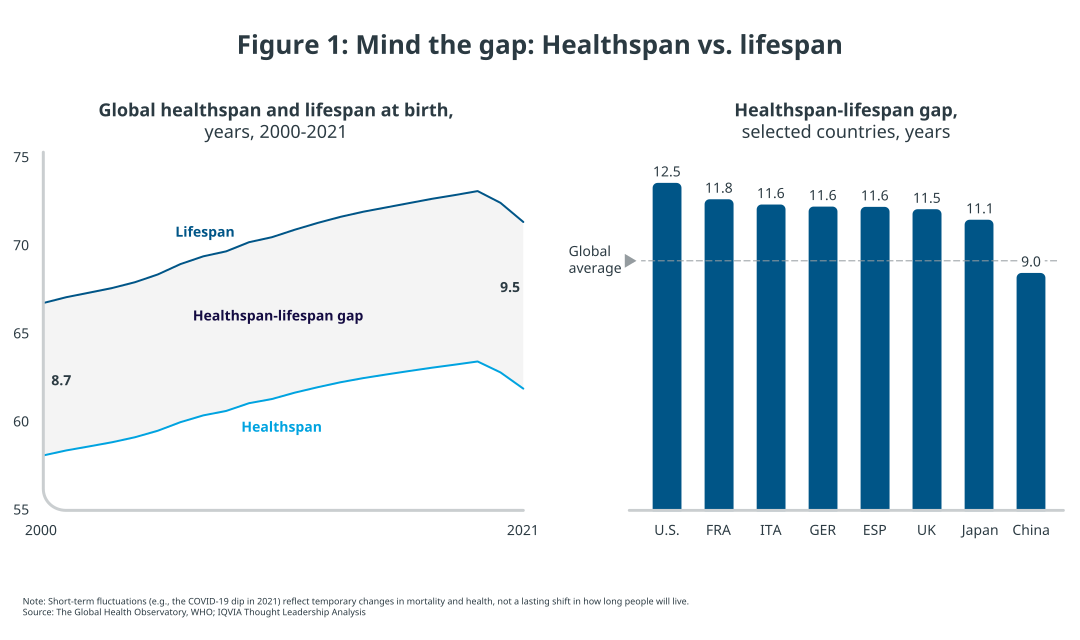
Figure 1: Healthspan and lifespan gap; Source: The Global Health Observatory, WHO; IQVIA Thought Leadership Analysis. Note: Short-term fluctuations (e.g., the COVID-19 dip in 2021) reflect temporary changes in mortality and health, not a lasting shift in how long people will live.
Modern medicine does not recognise ageing itself as a disease. Instead, we treat individual age-related conditions like Alzheimer's or cancers rather than addressing the underlying biological processes. New research suggests that this approach is incomplete. Geroscientists have identified a set of ageing hallmarks that drive cellular and functional decline across tissues and organ systems3. Initially described as twelve core mechanisms, this framework was expanded in 2025 to reflect a more integrated understanding of ageing that also acknowledges psychosocial isolation4. What if we could modulate these determinants of ageing directly? This is where longevity drugs enter the conversation.
The term “longevity” has, however, become increasingly blurred. It evokes images of biohackers taking long lists of supplements, billionaires deploying capital into longevity start-ups, social media shaping health decisions and purchasing behaviour, and wearable devices tracking heart rate, heart rate variability, and blood glucose in real time. Consumers are increasingly willing to invest out-of-pocket in optimising their health, seeking greater control over their long-term wellbeing. This trend is likely to extend beyond the traditional wellness market as public healthcare systems face growing pressure from ageing populations, private and self-pay prescription channels are gaining traction5.
Scientific progress, AI and obesity medicines as catalysts of the longevity field
Underneath all the noise of marketing claims and longevity influencers, the foundation of longevity science has advanced significantly in the past years. Ageing is far better understood and recognised as a measurable biological process. The evolving framework of ageing hallmarks is a case in point. In parallel, well-established physiological biomarkers allow scientists to measure how fast individuals are ageing independent of their birthdays. Moreover, scientists use organ clocks to determine the biological age of an individual’s organs. The implications are substantial. Studies suggest that people can be ‘super agers’ for individual organs but not body-wide6,7,8. While slowing systemic ageing altogether will remain a formidable challenge, targeting age-related organ dysfunction is far more realistic.
Many of these advances are underpinned by artificial intelligence (AI). Ageing clocks depend on the integration of high-dimensional data from next-generation sequencing, proteomics, imaging, and longitudinal health records. Multimodal AI models are increasingly capable of detecting patterns that precede clinical symptoms, enabling earlier disease risk prediction, more precise diagnosis, and improved risk stratification. Emerging evidence suggests that such models may identify conditions like Alzheimer’s disease or certain cancers years before conventional diagnostic thresholds are reached9. Beyond prediction, AI is also accelerating target discovery and drug design. Together, these capabilities position AI not merely as a tool, but as a foundational enabler of improved healthspan.
Beyond advances in science, data and AI, recent therapeutic successes have demonstrated what targeting core metabolic pathway can mean in practice. Obesity medicines (OMs) – initially developed for type-2-diabetes – target upstream biology and have shown benefits that extend far beyond weight loss to cardiovascular and other systemic outcomes10. Their success illustrates that addressing drivers of chronic diseases can reduce multi-morbidity and years lived in poor health.
The Emerging Evidence for Longevity Interventions
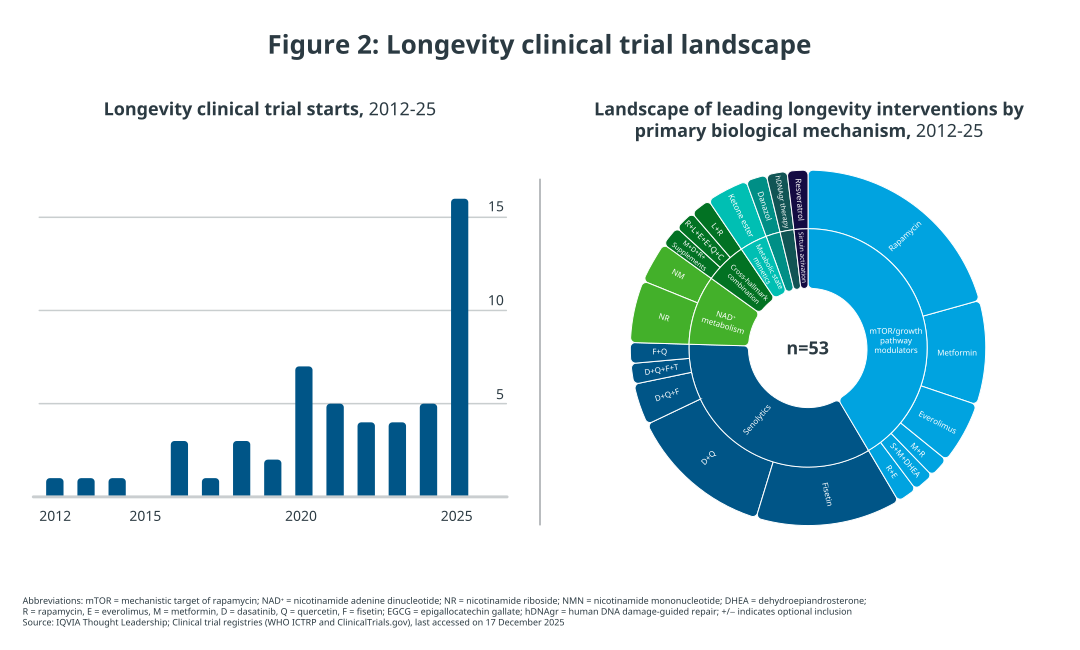
Figure 2: Longevity clinical trial landscape; Source: IQVIA Thought Leadership; Clinical trial registries (WHO ICTRP and ClinicalTrials.gov), last accessed on 17 December 2025. Abbreviations: mTOR = mechanistic target of rapamycin; NAD⁺ = nicotinamide adenine dinucleotide; NR = nicotinamide riboside; NMN = nicotinamide mononucleotide; DHEA = dehydroepiandrosterone; R = rapamycin, E = everolimus, M = metformin, D = dasatinib, Q = quercetin, F = fisetin; EGCG = epigallocatechin gallate; hDNAgr = human DNA damage‑guided repair; +/− indicates optional inclusion
Figure 2 illustrates a clear shift: what was once a small, hypothesis-driven field has evolved into a more active and diverse clinical landscape. Here, we defined longevity trials as in-human studies designed to slow, reverse, or measure biological ageing using recognised biomarkers or healthspan endpoints.
Between 2012 and 2015, only one or two longevity‑focused trials launched each year. Activity accelerated modestly from 2016 onward, then sharply increased in 2020 - 2022, culminating in a pronounced spike in 2025, a single year accounting for nearly one‑third of all trials conducted to date (n=53)11. This inflection is unlikely to be coincidental. It reflects growing pharmaceutical engagement with ageing biology, increased policy support, and rising investor and public interest in healthspan as both a scientific and economic priority.
Despite this momentum, the field remains predominantly academic, with around 92% of trials conducted in university and research settings. This concentration underscores its early-stage nature and reflects limited commercial incentives, as many studies focus on widely available or generic compounds.
As the longevity approaches have scaled, its definition of success has also matured. Endpoints have shifted from molecular proxies toward clinically meaningful measures of healthspan. Since 2020, studies increasingly incorporate functional and patient-relevant outcomes—such as gait speed, short physical performance battery (SPPB), and VO₂ max—alongside senescence markers, signalling a move toward demonstrating tangible improvements in physical function and quality of life.
This expansion also reflects growing mechanistic breadth. Early studies were narrow, built around isolated pathways such as mitochondrial activity or nutrient‑sensing gene expression. Over time, this evolved into a broader focus on senescence, mTOR signalling, metabolic regulation, and gene-based interventions.
A substantial portion (~42%) of longevity drugs falls under metabolic and nutrient‑sensing pathways, driven largely by metformin and rapamycin, which together represent approximately 30% of the registered trials. Their prominence stems from long‑standing hypotheses that modulating caloric‑restriction pathways could delay age‑related decline.
Metformin emerged as one of the most widely discussed longevity drug candidates largely because early signals seemed encouraging. In large observational studies of people with type 2 diabetes, those taking metformin lived longer than patients on other glucose-lowering‑ therapies with metformin delaying the onset of diabetes by 18% over 10-15 years compared with placebo12. These results generated substantial interest in studying metformin in non‑diabetic and pre‑diabetic populations. Yet across longer lasting randomised trials, the results were mixed13,14.
The proposed TAME (Targeting Ageing with Metformin) trial was designed to address this gap. With over 3,000 participants across 14 US centres, it aims to test whether metformin can improve outcomes in healthy older adults using composite, clinically meaningful endpoints developed with FDA input. Yet the trial remains unfunded and has not begun enrolment—highlighting how limited definitive evidence still is15.
Few candidates are as biologically compelling as rapamycin, supported by consistent effects in animal models. Human trials have grown accordingly, though results to date are concentrated in immune and skin‑related endpoints, and the largest ageing trial, PEARL, was negative on its primary measure16. Recent efforts have shifted toward more selective mTORC1 inhibition, aiming to retain potential ageing-related benefits while avoiding metabolic side effects associated with mTORC2. Early programmes, such as Aeovian’s AV078, reflect this approach, though clinical validation is still pending17.
A smaller segment of the trial landscape focuses on senolytics, targeting the accumulation of senescent cells and their inflammatory secretions. Early human data, such as small trials in pulmonary fibrosis18, diabetic kidney disease19, and bone health show directional improvements20. However, progress is constrained by the lack of robust biomarkers, as current measures do not reliably distinguish harmful senescent cells from those involved in tissue repair. As a result, senolytics remain at an earlier stage of clinical maturity than more established approaches.
Epigenetic and cellular reprogramming represent the newest and most ambitious direction in longevity science, aiming to restore cells to a more youthful operating state by adjusting patterns of gene activity rather than treating downstream damage. While early clinical efforts are underway, evidence remains limited. But the field is moving fast: Shift Bioscience is developing single‑gene rejuvenation programs21, Altos Labs is advancing pulsed OSK strategies with significant funding22, and NewLimit and Life Biosciences are progressing toward clinical‑ready mRNA‑ and OSK‑based interventions23,24.
The breadth of approaches in the longevity space reflects the field’s high level of ambition. Yet scientific aspiration, commercial momentum, and clinical validation are not moving at the same pace.
Separating promise from proof in longevity science
To provide greater clarity, we mapped selected longevity intervention classes across two dimensions: strength of clinical evidence and healthspan impact (Figure 3). This framework distinguishes where robust outcome data already exist, where biological rationale is compelling but clinical evidence remains limited, and where enthusiasm currently outpaces proof.
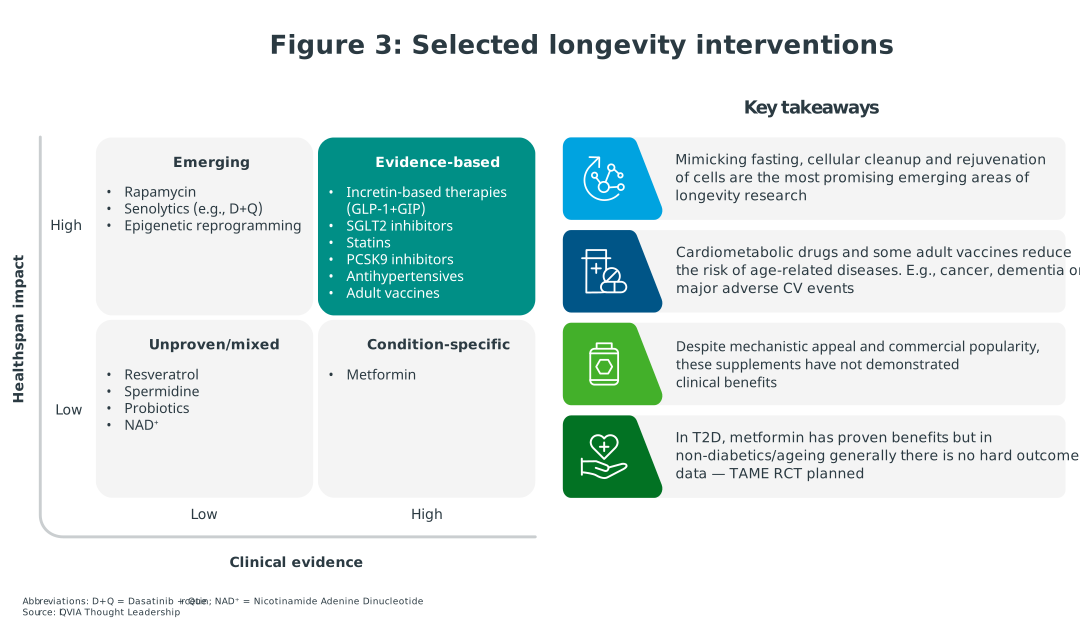
Figure 3: Selected longevity interventions. Abbreviations: D+Q = Dasatinib + Quercetin; NAD⁺ = Nicotinamide Adenine Dinucleotide; Source: IQVIA Thought Leadership
The evidence-based quadrant contains therapies supported by large, randomised outcome trials demonstrating reductions in major adverse cardiovascular events, disease progression, and in some cases all-cause mortality. This includes GLP-1 receptor agonists, SGLT2 inhibitors, statins, antihypertensives, PCSK9 inhibitors, and selected adult vaccines. These agents were developed for defined indications, but their impact on upstream cardiometabolic risk translates into measurable reductions in age-related morbidity.
The emerging quadrant includes interventions designed to directly target hallmarks of ageing, such as rapamycin analogues, senolytics, and epigenetic reprogramming approaches. The biological rationale is supported by preclinical data and early-phase human studies. However, consistent evidence demonstrating durable improvements in validated functional endpoints or mortality in broad populations is not yet established.
The unproven / mixed quadrant comprises compounds with mechanistic plausibility and, in some cases, small clinical studies, but without robust randomized data showing meaningful healthspan extension. Examples include resveratrol, spermidine, NAD⁺ precursors, and various probiotics. Current evidence does not demonstrate sustained improvements in hard clinical outcomes.
The condition-specific quadrant reflects therapies with established benefits within defined disease populations but without evidence for generalised ageing or healthspan effects beyond those indications. Metformin is the primary example. Its cardiovascular and metabolic benefits in type 2 diabetes are well documented, while data in non-diabetic populations remain limited.
The way forward
Drug development targeting the fundamental biology of ageing is still in its infancy. Extending healthspan, however, is not. Approved and commercially available cardiometabolic therapies already reduce major adverse events and, in some populations, all-cause mortality. They add years lived without disabling disease. The frontier now lies in whether interventions designed to target ageing biology itself can demonstrate comparable outcome data. In this white space, food supplements and unproven drug interventions promoted by ‘medfluencers’ continue to thrive.
For the field to move from scientific promise to approved therapies, an operational ageing indication is essential. The TAME trial represents a concrete step in that direction by testing a composite, ageing-related endpoint framework, and it is significant that the FDA agreed to this design. At the same time, initiatives such as ARPA-H signal growing institutional commitment to translating ageing biology into approvable interventions.
Ageing is inevitable. Declining health does not have to be. Extending the years lived in good functional health is a realistic objective, but only if longevity research meets the standards of modern medicine: hard outcomes, regulatory legitimacy, and demonstrable value for health systems. If those conditions are met, ageing and health may no longer be seen as opposites, but as variables that can be shaped.
1 https://www.who.int/news-room/fact-sheets/detail/ageing-and-health
2 Scott, A.J., Ellison, M. & Sinclair, D.A. The economic value of targeting ageing. Nat Ageing 1, 616–623 (2021). https://doi.org/10.1038/s43587-021-00080-0
3 López-Otín C, Blasco MA, Partridge L, Serrano M, Kroemer G. Hallmarks of ageing: An expanding universe. Cell. 2023 Jan 19;186(2):243-278. doi: 10.1016/j.cell.2022.11.001. Epub 2023 Jan 3. PMID: 36599349.
4 Kroemer G, Maier AB, Cuervo AM, Gladyshev VN, Ferrucci L, Gorbunova V, Kennedy BK, Rando TA, Seluanov A, Sierra F, Verdin E, López-Otín C. From geroscience to precision geromedicine: Understanding and manageing ageing. Cell. 2025 Apr 17;188(8):2043-2062. doi: 10.1016/j.cell.2025.03.011. PMID: 40250404; PMCID: PMC12037106.
5 IQVIA White Paper: The Potential for the Private Prescription Market in Europe
6 Talbi, K., Melk, A. Not every organ ticks the same. Nat Rev Nephrol 20, 431–432 (2024). https://doi.org/10.1038/s41581-024-00842-0
7 Plasma-based organ-specific ageing and mortality models unveil diseases as accelerated ageing of organismal systems
Ludger J.E. Goeminne, Alec Eames, Alexander Tyshkovskiy, M. Austin Argentieri, Kejun Ying, Mahdi Moqri, Vadim N. Gladyshev
medRxiv 2024.04.08.24305469; doi: https://doi.org/10.1101/2024.04.08.24305469
8 Plasma proteomics in the UK Biobank reveals youthful brains and immune systems promote healthspan and longevity
Hamilton Se-Hwee Oh, Yann Le Guen, Nimrod Rappoport, Deniz Yagmur Urey, Jarod Rutledge, Anne Brunet, Michael D. Greicius, Tony Wyss-Coray
bioRxiv 2024.06.07.597771; doi: https://doi.org/10.1101/2024.06.07.597771
9 Eric J. Topol ,Medical forecasting.Science384,eadp7977(2024).DOI:10.1126/science.adp7977
10 IQVIA blog; The everything drugs: from weight loss to whole body medicines
11 IQVIA Thought Leadership; Clinical trial registries (WHO ICTRP and ClinicalTrials.gov), last accessed on 17 December 2025
12 The Diabetes Prevention Program Research Group. The Diabetes Prevention Program (DPP): description of lifestyle intervention. Diabetes Care. 2002;25(12):2165–2171. doi:10.2337/diacare.25.12.2165.
13 Goodwin PJ, Chen BE, Gelmon KA, Whelan TJ, Ennis M, Lemieux J, Ligibel JA, Hershman DL, Mayer IA, Hobday TJ, Bliss JM, Rastogi P, Rabaglio‑Poretti M, Mukherjee SD, Mackey JR, Abramson VG, Oja C, Wesolowski R, Thompson AM, Rea DW, Stos PM, Shepherd LE, Stambolic V, Parulekar WR. Effect of metformin vs placebo on invasive disease‑free survival in patients with breast cancer: the MA.32 randomized clinical trial. JAMA. 2022;327(21):2165‑2176. doi:10.1001/jama.2022.7612.
14 Petrie JR, Chaturvedi N, Ford I, Brouwers MCGJ, Greenlaw N, Tillin T, Hramiak I, Hughes AD, Jenkins AJ, Klein BEK, Klein R, Ooi TC, Rossing P, Stehouwer CDA, Sattar N, Colhoun HM; REMOVAL Study Group. Cardiovascular and metabolic effects of metformin in patients with type 1 diabetes (REMOVAL): a double‑blind, randomised, placebo‑controlled trial. Lancet Diabetes Endocrinol. 2017;5(8):597‑609. doi:10.1016/S2213‑8587(17)30194‑8.
15 https://www.afar.org/tame-trial
16 Moel M, Harinath G, Lee V, Nyquist A, Morgan SL, Isman A, Zalzala S. Influence of rapamycin on safety and healthspan metrics after one year: PEARL trial results. Ageing (Albany NY). 2025;17(4):908–936. doi:10.18632/ageing.206235.
17 Aeovian Pharmaceuticals Raises $55 Million to Advance First‑in‑Class Selective mTORC1 Inhibitor for Tuberous Sclerosis Complex‑Related Epilepsy, BusinessWire, 16 December 2025: https://www.businesswire.com/news/home/20251216261885/en/Aeovian-Pharmaceuticals-Raises-$55-Million-to-Advance-First-in-Class-Selective-mTORC1-Inhibitor-for-Tuberous-Sclerosis-Complex-Related-Epilepsy
18 Justice JN, Nambiar AM, Tchkonia T, LeBrasseur NK, Pascual R, Hashmi SK, Prata L, Masternak MM, Kritchevsky SB, Musi N, Kirkland JL. Senolytics in idiopathic pulmonary fibrosis: results from a first‑in‑human, open‑label, pilot study. eBioMedicine. 2019;40:554–563. doi:10.1016/j.ebiom.2018.12.052.
19 Hickson LJ, Prata LGP, Bobart SA, Evans TK, Giorgadze N, Hashmi SK, Herrmann SM, Jensen MD, Jia Q, Jordan KL, Kellogg TA, Khosla S, Koerber DM, Lagnado AB, Lawson DK, LeBrasseur NK, Lerman LO, McDonald KM, McKenzie TJ, Passos JF, Pignolo RJ, Pirtskhalava T, Saadiq IM, Schaefer KK, Textor SC, Victorelli SG, Volkman TL, Xue A, Wentworth MA, Gerdes EOW, Zhu Y, Tchkonia T, Kirkland JL. Senolytics decrease senescent cells in humans: preliminary report from a clinical trial of dasatinib plus quercetin in individuals with diabetic kidney disease. eBioMedicine. 2019;47:446–456. doi:10.1016/j.ebiom.2019.08.069.
20 Farr JN, Atkinson EJ, Achenbach SJ, Volkman TL, Tweed AJ, Vos SJ, Ruan M, Sfeir J, Drake MT, Saul D, Doolittle ML, Bancos I, Yu K, Tchkonia T, LeBrasseur NK, Kirkland JL, Monroe DG, Khosla S. Effects of intermittent senolytic therapy on bone metabolism in postmenopausal women: a phase 2 randomized controlled trial. Nat Med. 2024;30(9):2605–2612. doi:10.1038/s41591-024-03096-2.
21 Shift Bioscience identifies novel single‑gene target for safer cellular rejuvenation therapeutics, Shift Bioscience, 9 June 2025: https://shiftbioscience.com/shift-bioscience-identifies-novel-single-gene-target-for-safer-cellular-rejuvenation-therapeutics/
22 ESGCT 2025: Altos Labs’ Scientific Founder Targets ‘Mesenchymal Drift’ in Efforts to Combat Diseases of Ageing, Genetic Engineering & Biotechnology News (GEN), 9 October 2025: https://www.genengnews.com/insights/esgct-2025-altos-labs-scientific-founder-targets-mesenchymal-drift-in-efforts-to-combat-diseases-of-ageing/
23 NewLimit raises an additional $45 million, The Pharma Letter, 21 October 2025: https://www.thepharmaletter.com/biotechnology/newlimit-raise-an-additional-45-million
24 Life Biosciences Announces FDA Clearance of IND Application for ER‑100 in Optic Neuropathies, Life Biosciences, 9 June 2025: https://www.lifebiosciences.com/life-biosciences-announces-fda-clearance-of-ind-application-for-er-100-in-optic-neuropathies/
Everything you need to know about longevity drugs
Lifespan refers to how long a person lives, while healthspan describes how many of those years are spent in good health, free from serious disease or disability. Today, people are living longer, but not necessarily healthier, creating a growing gap between lifespan and healthspan. Longevity research increasingly focuses on closing that gap by extending healthy, functional years of life.
The most effective ways to support healthy ageing today are evidence-based and focus on reducing risk of chronic disease. These include maintaining a healthy weight, regular physical activity, good metabolic health, and appropriate medical interventions such as lipid-lowering therapies, blood pressure control, and diabetes treatments where needed. While research into slowing biological ageing is advancing, the strongest impact today comes from preventing or delaying age-related diseases.
Several therapies already have strong clinical evidence for improving outcomes linked to ageing. These include GLP-1 receptor agonists, SGLT2 inhibitors, statins, antihypertensives, PCSK9 inhibitors, and certain adult vaccines. Large clinical trials show these interventions can reduce major adverse events, slow disease progression, and in some cases lower all-cause mortality—effectively extending healthspan.
Some widely discussed longevity compounds show promise, but most are not yet proven to extend lifespan or healthspan in the general population. Metformin is well-established for diabetes, while rapamycin and related drugs have strong biological rationale but limited human data. Other compounds such as NAD+ boosters, resveratrol, or spermidine currently lack robust evidence from large clinical trials showing meaningful long-term health benefits.
Artificial intelligence is accelerating longevity research by analysing complex biological and clinical data at scale. It is used to develop biological ageing clocks, improve early disease detection, and identify new therapeutic targets. AI also helps integrate data across genomics, proteomics, imaging, and real-world health records, supporting a more precise and personalised approach to extending healthspan.