
.svg)




Commercialization
Take advantage of the latest tools, techniques, and deep healthcare expertise to create scalable resources, precision insights, and actionable ideas.













IQVIA customers will be able to access these reports at no cost via discount codes. If you are an existing customer, please contact your account representative or send a request for the code to Info@IQVIAInstitute.org.
These reports are view-only via browser or app, and may be viewed on up to ten personal devices.
This report is licensed for individual use only. It may not be shared, reproduced, distributed, or transferred in any form to any other person or entity without prior written consent. This report is subject to the terms and conditions of the IQVIA Licensing and Services Agreement General Terms and Conditions (April 2022) available at (https://ogc.iqvia.com/Contracts/LSA-0422). By purchasing this report, you agree that your use of the report is bound by these General Terms.
Increasing usage of medicines, and the associated amount being spent, have become central issues in health policy and international trade discussions in recent years, including the potential reshaping of global markets and drug pricing that is being proposed by the U.S. administration. The policies many countries are pursuing are reshaping access, usage and pricing, with implications for hundreds of millions of patients globally. In addition, the continuation of historic trends in disease treatment and adoption of innovation result in a steady rise in the level of medicine use globally.
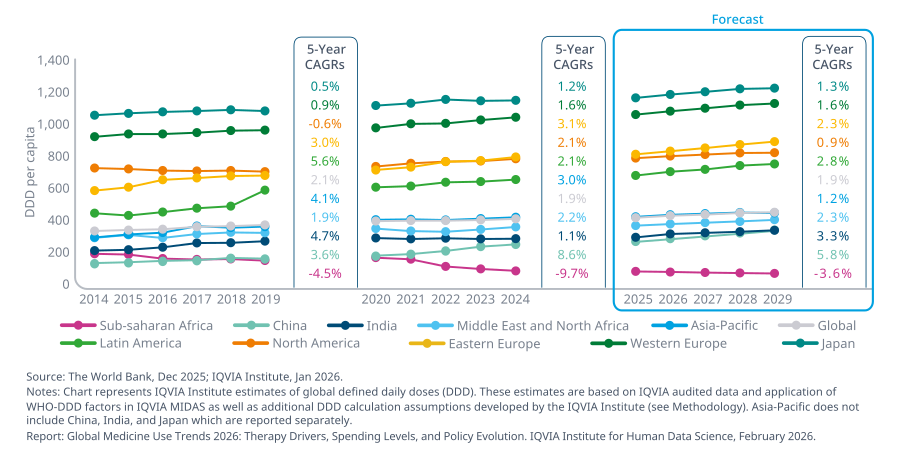
By the end of the decade, total usage is expected to approach 4 trillion defined daily doses, significantly expanding patient use of medicines globally. China has been the fastest growing market since 2020 and is expected to maintain this momentum, nearly doubling its usage relative to 2020 and reaching an index of 196 (against a baseline of 100 in 2020) by 2030. In contrast, higher income regions such as North America, Western Europe, and Japan are anticipated to grow more slowly, reflecting the stabilization typical of mature healthcare systems.
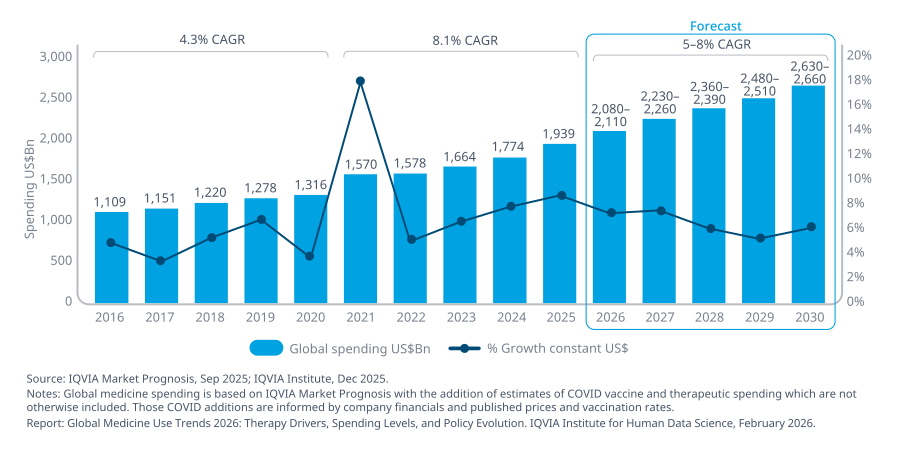
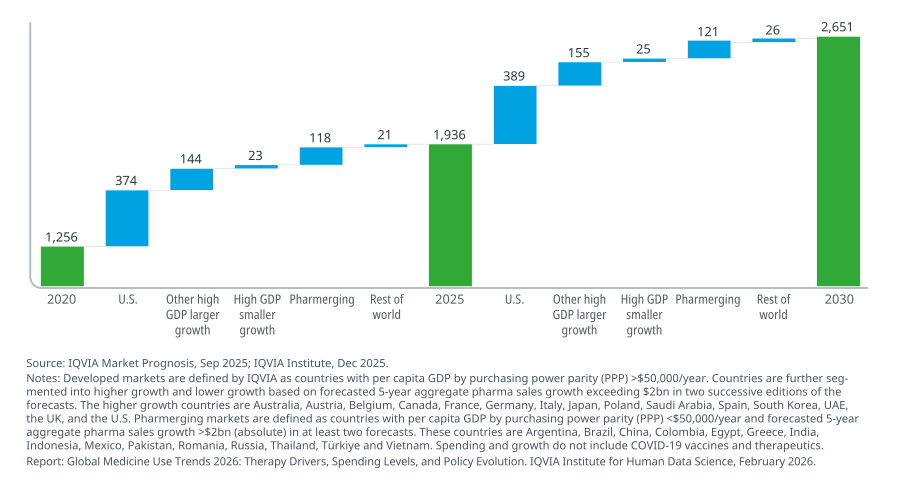
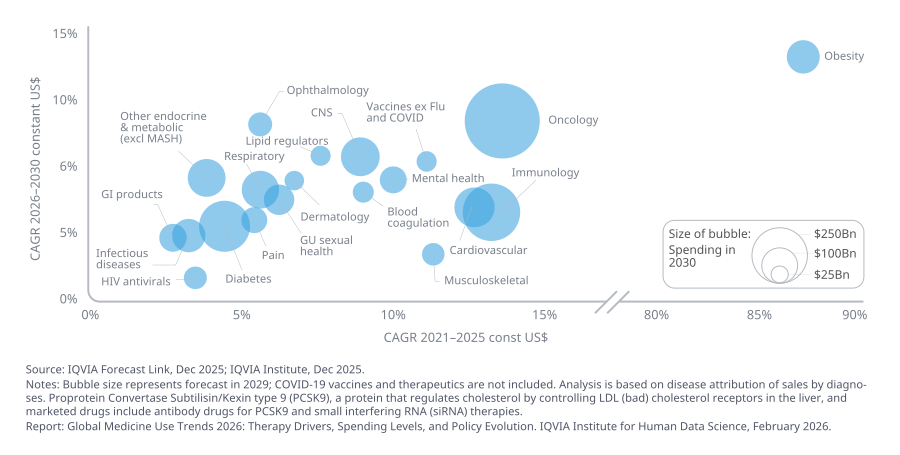
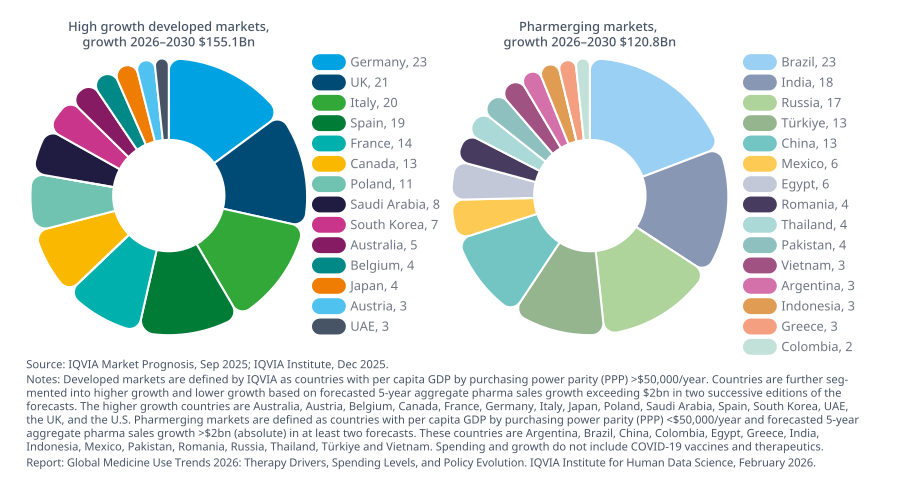
The largest drivers of medicine spending growth through the next five years will continue to be the use in developed markets of innovative therapeutics especially in oncology, immunology, diabetes and obesity.
In addition, the mix of spending growth between volume-driven growth and mix-driven changes in the cost of therapy are showing that most geographies are shifting to more expensive therapies, reflecting the broader availability and patient access to medicines with higher costs.
In this report, we quantify the impact of these dynamics and examine the spending and usage of medicines in 2025 and the outlook to 2030, globally and for specific therapy areas and countries or regions. We intend to provide an evidence-based foundation for meaningful discussion by all stakeholders around the value, cost, and role of medicines over the next five years in the context of overall healthcare spending.
Take advantage of the latest tools, techniques, and deep healthcare expertise to create scalable resources, precision insights, and actionable ideas.
IQVIA is using vast quantities of data in powerful new ways. See how we can help you tap into information from past trials, patient reported outcomes and other sources to accelerate your research.
Meet the challenge of changing stakeholder demands and increasing cost constraints with IQVIA's integrated technology services and analytics-driven offerings.