





.svg)











Stay ahead with the EMEA Thought Leadership insights: your source for industry-leading expertise and analysis
Blog
Biopharma M&A: Outlook for 2026
A strong H2/2025 close sets the scene for continued optimism for the year ahead
Jan 19, 2026
In our first blog of 2026 on biopharma M&A trends, we provide an outlook for the year ahead, following a recap of 2025 highlights.
Recap: Biopharma dealmaking and funding trends in 2025
After sluggish M&A activity in 2024, at the lowest level since 2021, momentum rebounded decisively in 2025, despite some jitters in Q2 following major US policy announcements, including tariffs and drug pricing.
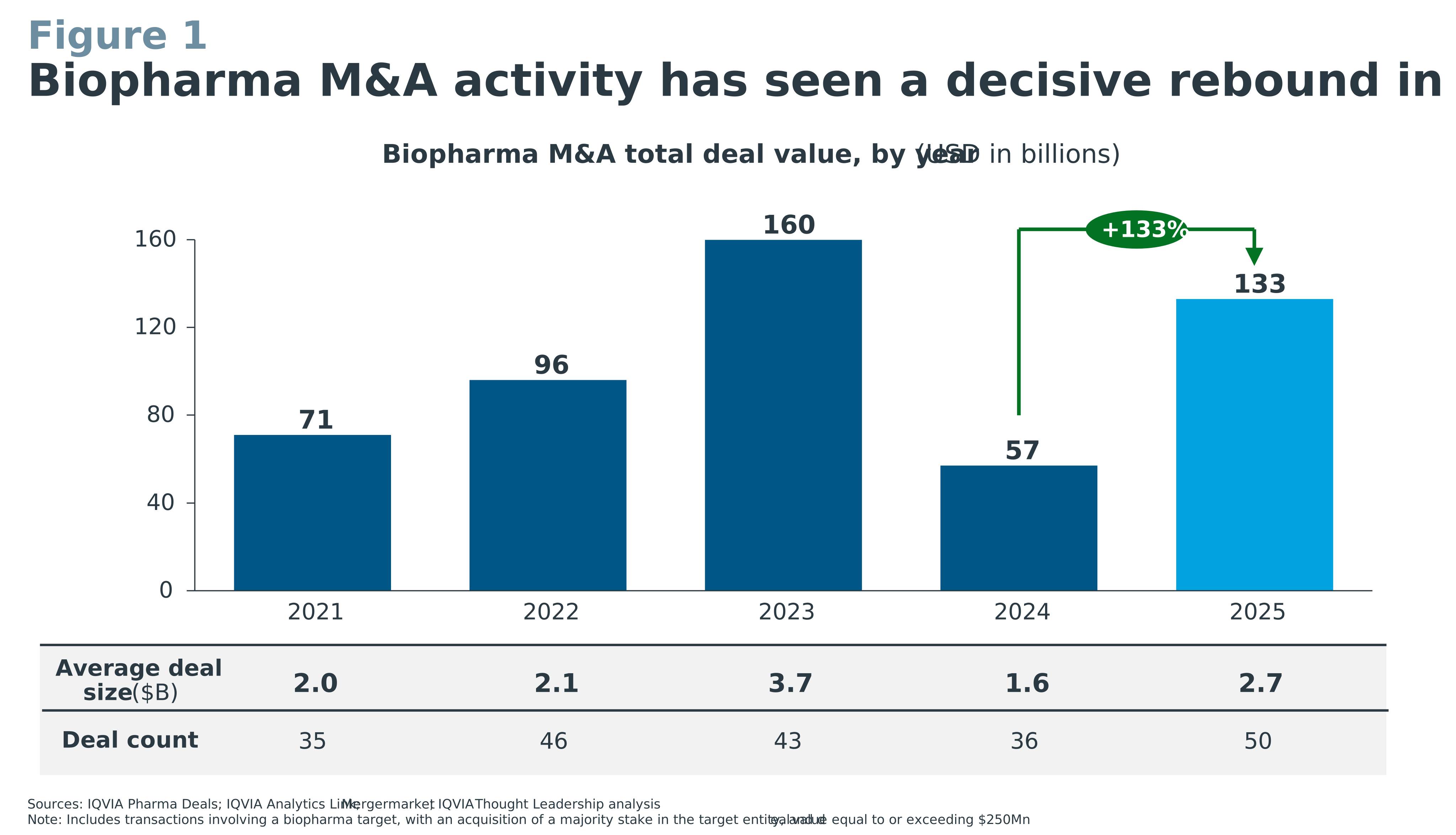
Aggregate M&A deal value in 2025 more than doubled, jumping by +133% vs. 2024, to reach $133Bn for the full year, the second highest level for the past 5 years. Meanwhile, M&A deal count increased to 50 in 2025, the highest number since 2021, equating to an average deal size of $2.7Bn, the second highest since 2021 (see Figure 1).
Note, this analysis only includes transactions involving a biopharma target, with an acquisition of a majority stake in the target entity, and a deal value equal to or exceeding $250m.
As in 2024, mega-mergers, defined as involving an acquisition target >$30Bn, were absent in 2025. However, we did see four deals with values ≥$10Bn, including J&J/Intra-Cellular ($14.6B), Novartis/Avidity ($12.7Bn), Merck/Verona ($11.1Bn) and Pfizer/Metsera ($10Bn), alongside several other sizeable deals, e.g., Sanofi/Blueprint ($9.6Bn), Merck/Cidara ($9.2Bn) or Genmab/Merus ($8.4Bn). This picture stands in stark contrast to 2024 when no individual biopharma deal exceeded $5Bn.
We also witnessed a high-profile bidding war in 2025, with Pfizer and Novo Nordisk vying for Metsera’s portfolio of differentiated obesity assets. After Metsera initially agreed to a $4.9Bn up-front deal with Pfizer, Novo Nordisk made a $6.5Bn counter-offer, prompting Pfizer to increase its offer to $10Bn, including contingent value rights (CVRs), which was sufficient for securing the deal. Such fierce competition for sought after assets is a reflection of the current frenzy surrounding obesity.
The deal structure of the Pfizer-Metsera transaction exemplifies a growing trend in the use of CVRs as a means to balance risk-reward and bridge a value perception gap between buyers and sellers by tying payouts to milestone achievement. In 2025, about two-thirds of biotech M&A transactions used CVRs. Other prominent recent examples of deals with CVRs include the acquisitions of Akero by Novo Nordisk, 89bio by Roche, Blueprint Medicines by Sanofi and Anthos Therapeutics by Novartis. On average, CVRs accounted for over one third of the total deal value of those transactions that deployed this instrument in 2025.
In 2025, the top 5 therapy areas in focus of M&A, by value share, included CNS (23%), cardiovascular-renal-metabolic (CVRM, 22%), oncology (20%), respiratory (15%) and immunology (10%). Of note, the high value share of CNS was driven by the two largest deals of the year, J&J/Intra-Cellular ($14.6B) and Novartis/Avidity ($12.7Bn). As such, the pre-eminence of CNS in 2025 does not constitute a broad-based trend. Conversely, the strong showing of CVRM in second place, ahead of perennial favourite oncology, reflects a wider cardiometabolic renaissance.
In a reversal of M&A deal patterns seen in 2024, focus on commercial-stage targets re-emerged, at 49% value share the single largest category, followed by transactions focused on phase 3 at 28% of total deal value. Collectively, those two deal categories held a combined value share of over three quarters (see Figure 2).
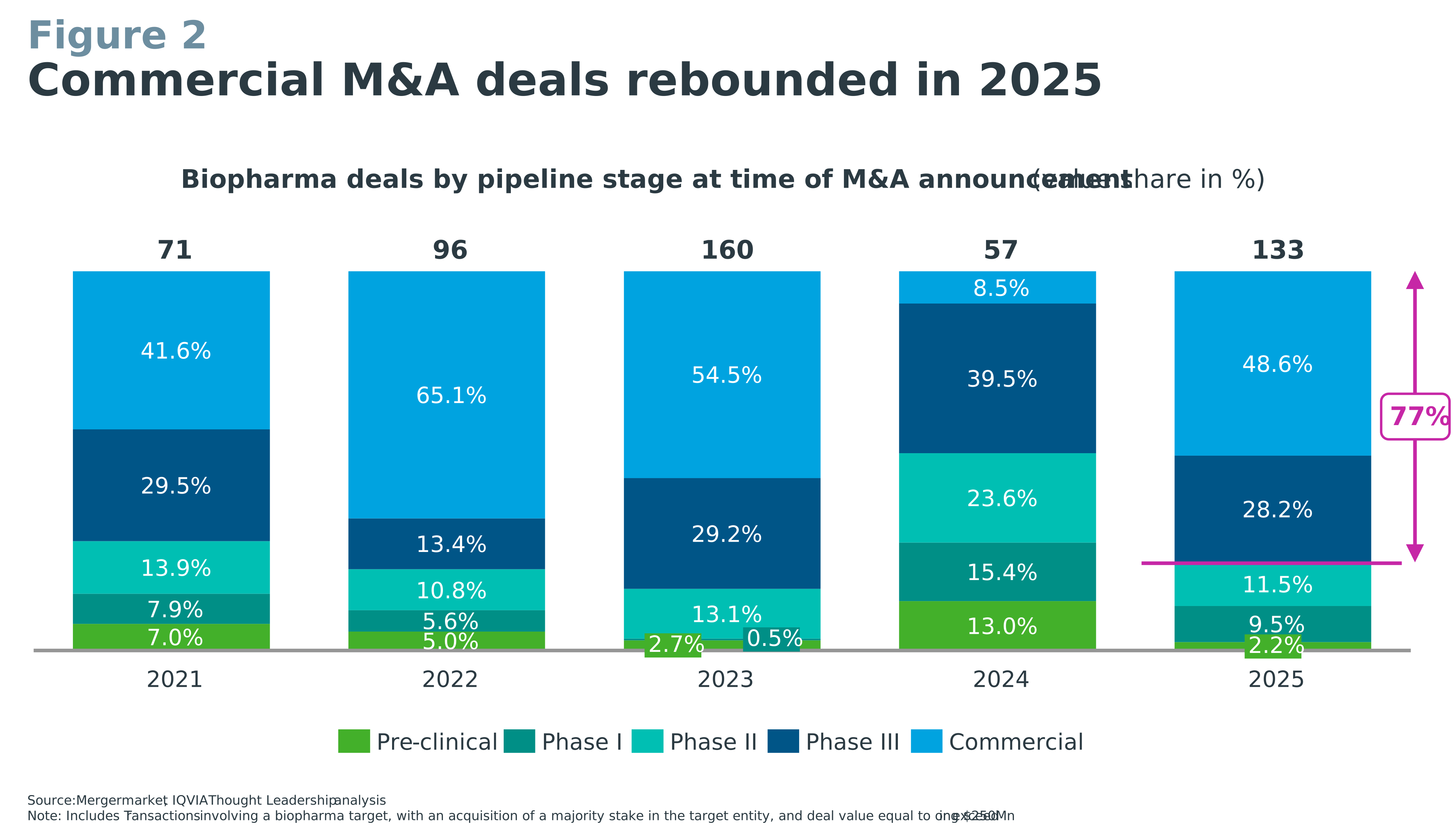
After the hiatus of 2024, M&A momentum roared back in 2025, and with it returned acquirers’ strong preference for de-risked assets, a pattern more closely aligned with historical trends.
Licensing: Hitting a 10-year high while the rise of China continues
Licensing played a critical role in 2025 as an alternative route to outright acquisition for accessing external innovation, with licensing total deal value reaching a 10-year high of $232Bn.
Extending a major trend already observed in 2024, China consolidated its position as a key source of biopharmaceutical innovation, including high quality, best-in-class/first-in-class assets. In 2025, 40% of all assets in-licensed by big pharma had a Chinese licensor, up by a third from just under 30% in 2024. Aggregate total value of therapeutic in-licensing deals, excluding AI-focused partnerships, that involve Chinese-originated assets more than doubled from $45Bn in 2024 to $105Bn in 2025.
Examples include Pfizer obtaining ex-China rights to 3SBio’s cancer immunotherapy, PD-1/VEGF bispecific antibody SSGJ-707, for up to $6Bn total deal value, including a record-setting $1.25Bn upfront payment; or GSK’s broad alliance with Hengrui spanning 12 programmes across oncology, immunology and respiratory, with a $500m upfront payment for a deal potentially worth up to $12Bn.
While oncology remained the dominant therapy area for China-to-big pharma out-licensing deals in 2025, at 49% share of deal count, immunology and CVRM (cardiovascular-renal-metabolic, including obesity) emerged as major focus areas and accounted for 22% and 20% of Chinese licensing deals, respectively.
Funding environment: IPO winter, subdued VC as volatile biotech stocks surge
Biotech venture funding in the U.S. and Europe slowed in 2025 to $24Bn across 410 rounds, a decline of 14% in total annual VC investment vs. 2024, the second lowest level in the past 6 years. Cautious investors exercised greater capital discipline in an environment of heightened political, regulatory and market uncertainty.
The IPO winter continued in 2025, with the number of IPOs hitting a new low as only 11 biotech companies went public with listings at US exchanges, a 55% drop from the 24 IPOs in 2024. This is the lowest level of IPO activity for the past 6 years and a long way from the highs of 2020 and 2021, which saw 79 and 104 IPOs, respectively.
Helped by lower interest rates and a rotation into growth stocks, the XBI biotech index rose by 35% over the course of a volatile 2025, ending a four-year period in the doldrums and significantly outperforming the wider stock market. This momentum has yet to fully translate into sustained investor confidence in order for the biotech IPO window to reopen at last.
Nevertheless, we may be getting close to that turning point – the first biotech IPO of 2026 saw radiopharmaceuticals developer Aktis Oncology raise an outsized $318M, the third largest public offering since the beginning of 2024.
Outlook for 2026
Looking ahead to 2026, the fundamentals in support of dealmaking are strong:
- Deal capacity: Big pharma’s deal capacity has steadily grown in recent years and is estimated at $1.3Tn today. Despite a rebound in dealmaking in 2025, much of this dry powder is still available to fund future transactions.
- Patent cliff: Over $230Bn of biopharma industry revenue will face LoE exposure by 2030, putting up to 65% of some big pharma’s current sales at risk. This includes several blockbuster brands losing exclusivity by the end of the decade, e.g., Keytruda, Gardasil, Eliquis, Jardiance, Opdivo, Darzalex, Cosentyx and others. Further LoE events in the early 2030-ies are expected to expose another $200-250Bn of industry revenue. As we are heading into 2026, the impact of this imminent patent cliff becomes tangible, and it creates mounting pressure on big pharma to urgently replenish revenue.
- Supply side: Emerging biopharma companies are at the forefront of cutting-edge innovation and now account for 70% of all clinical-stage assets in the industry pipeline, the majority of which are unpartnered. As the IPO window has yet to fully reopen while VC funding trended below historical levels in 2025, many private biotech companies are facing financing pressures that may drive them towards partnering or an exit via M&A.
- US policy environment: By the end of 2025, much uncertainty has receded around the impact of potentially highly disruptive policies – tariffs and most favored nation (MFN) drug pricing. Both have turned out to be less severe, and manageable, for big pharma, for now. By pledging future investments in U.S. manufacturing and R&D, and signing drug pricing agreements that satisfied the administration’s priorities of low prices for Medicaid and affordable, direct-to-patient offerings, companies secured exemption from tariffs and future pricing mandates while largely containing net revenue impact. Furthermore, dealmakers are benefiting from a less activist Federal Trade Commission under the Trump administration.
Notwithstanding these favourable fundamentals, several uncertainties remain.
In the U.S., biopharmaceutical innovators and dealmakers still face policy and regulatory uncertainty, including a less predictable FDA, still affected by staff shortages, and how the administration’s drug pricing policies may evolve in the longer term, e.g., how the recently announced Medicare drug-pricing pilots will play out.
In Europe, two major industrial and regulatory policies – the EU Pharmaceutical Legislation and the EU Biotech Act – are being finalised, with expected far-reaching implications for the biopharmaceutical operating environment in the region, e.g., intellectual property protection, regulatory processes, clinical trials, supply chain and product launch requirements.
Geopolitics continues to be a major source of uncertainty in 2026, as the U.S.-China strategic rivalry and the wider deglobalisation accelerate.
- The BIOSECURE Act was passed by Congress on 17 December 2025 as part of the National Defense Authorization Act (NDAA). The effective date of the Act is as yet uncertain while the list of prohibited ‘biotechnology companies of concern’ is still evolving. This Act has the potential to disrupt cross-border collaboration and dealmaking for U.S. companies, especially with Chinese entities, while driving up the cost of drug development in the U.S.
- Biopharmaceutical innovators face growing divergence in regulation and health policy between major markets, especially the U.S., Europe and China. At the same time, new markets offering great commercial promise for innovators are moving into focus, e.g., KSA and UAE.
Another unknown is the appetite of biotech companies for pursuing self-commercialisation of unpartnered assets to retain maximum value, instead of seeking partnerships or an M&A exit. Madrigal’s remarkable success in launching the first ever MASH-specific therapy is a case in point. In 2025, biotech companies were responsible for regulatory submission followed by initial launch in the U.S. of 53% of all new active substances that the FDA approved.
Finally, looking beyond biopharma, concerns continue to linger about the ongoing AI boom and whether it represents a bubble waiting to burst. Even as a defensive sector, pharmaceuticals would not be immune to the fallout from a major market correction, which in turn would almost certainly lead to a freeze in dealmaking activity.
The momentum of 2025 carries over into an upbeat 2026
Speculation about purported deals was rife in the run-up to the 2026 JP Morgan Healthcare Conference, yet a frenzy of big-ticket deal announcements did not materialise. Even so, JPM 2026 was a decidedly upbeat affair which marked a clean break from the wait-and-see mood at the start of 2025 and the gloom of 2024.
The confident outlook was captured by Novartis CEO Vas Narasimhan: "I think we're in a period now where we need to reload. With the free cash flow where it is, approaching $20 billion, we're in a position that we're not capital constrained in terms of the deal sizes that we can look at.”
Johnson & Johnson CEO Joaquin Duato echoed the positive broad sentiment, noting that “…the industry is leaving behind some of the policy overhangs [from 2025], and we are going to be focused on the fundamentals”.
Dealmakers’ interests extend beyond biopharmaceutical assets or companies. The transformational potential of AI was the motivation behind the landmark collaboration announced at JPM between Lilly and NVIDIA, with a commitment to jointly invest up to $1Bn over the next five years in an AI co-innovation lab focused on drug discovery.
In our assessment of the fundamentals, potential catalysts and headwinds for 2026, we conclude that the strong close in H2/2025 sets the scene for an optimistic outlook and sustained dealmaking momentum in the year ahead. Therefore, at this point in time, we forecast aggregate M&A deal value to reach $140-160Bn in 2026, with a potential, incremental upside of $20-30Bn in a best case scenario.
Mega-mergers will remain the rare exception, if they happen at all, as acquirers are wary of the chequered track record of mega-deals to create value and the operational complexities involved in integrating two large entities. Instead, we anticipate acquirers will continue to exercise strict capital discipline with a sharp therapeutic focus on differentiated assets and strategic portfolio fit.
Therefore, a general preference for bolt-on acquisitions will prevail, with typical deal sizes expected in the $5-10Bn bracket. However, $10Bn+ deals are entirely possible for prime biotech targets when their inherent value and strategic fit are right.
Key data and information sources
IQVIA Pharma Deals; IQVIA Forecast Link; IQVIA Pipeline Link; Mergermarket; Refinitiv Workspace; company financial reports; company press releases and deal announcements; IQVIA Thought Leadership desk research and analysis