Blog
The EU Biotech Act (Part 1): A summary and review of its incentives
Philip Hines, Thought Leadership, IQVIA
Rachel Bailey, Thought Leadership, IQVIA
Marco Travaglio, Global Supplier and Association Relations, IQVIA
Mariana Matos Rodriguez, Clinical Research, IQVIA
Jun 08, 2026

We outline the Biotech Act’s core objectives and proposed measures, then assess its incentives for new biotech projects, financing and medicines, including Supplementary Protection Certificates. Proposed changes to the Clinical Trial Regulation are covered in Part 2.


Introduction

The EU is a global leader in biotechnology research, outperforming both the United States and China in scientific impact, as measured by citations. It also has leading healthcare systems, health data, experts and regulators. Despite this, it is falling behind in the race to turn that science into commercial companies, factories and medicines for patients. The proposed Biotech Act is Brussels’ most ambitious attempt yet to close that gap.

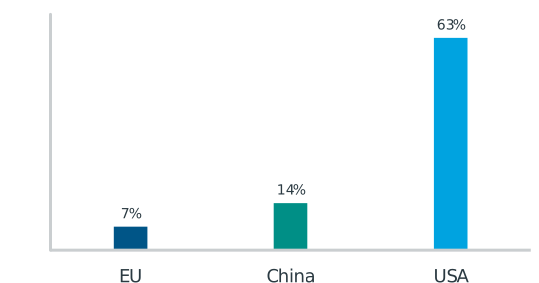
The EU struggles to secure adequate translational funding, particularly in the realm of venture capital (VC), which is crucial for turning its cutting-edge research into viable commercial enterprises. This funding gap is most acute at the scale up stage, where capital intensity rises sharply and companies must make decisions about where to locate trials, manufacturing and leadership teams. Compared to the US and China, European biotech start-ups have received far less VC investment (see Figure 1).

Figure 1: Share of global late-stage Venture Capital (2015 - 2025)

Notes: late-stage funding biopharma start-ups received in each location. Share of global late-stage consists of Series C, Series D, Series E and later-lettered venture rounds following the “Series [Letter]” naming convention.

Source: Technopolis Group, 2025 based on Crunchbase

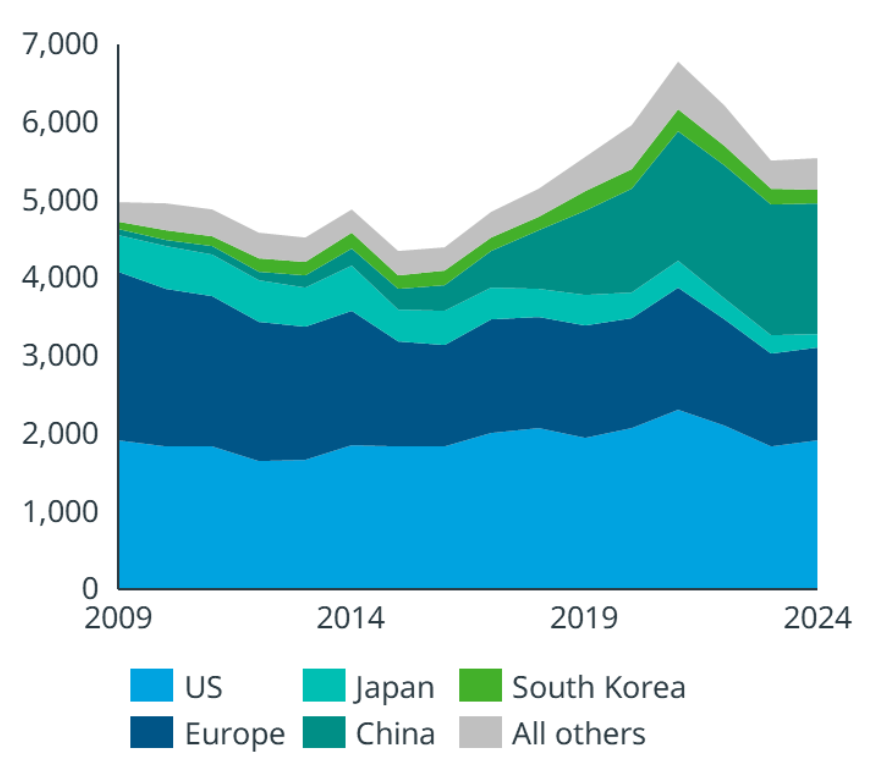
A critical step in translating biotechnology science into medicines for patients are the clinical trials. While the overall number of trials being run in the EU remains healthy, as does the volume of trials being funded by European companies (Figure 2), the proportion of commercial clinical trials being supported by America and China since 2019 has significantly increased, whilst Europe’s proportion has decreased.


Figure 2. Number of Phase I to III commercial trial starts based on company headquarters location

Notes: Europe in this graph refers to continental Europe, including the EU.

Sources: 1. Citeline Trialtrove: 2. Pharma R&D Annual Review, Citeline; 3. IQVIA Pharma Deals, August 2025.

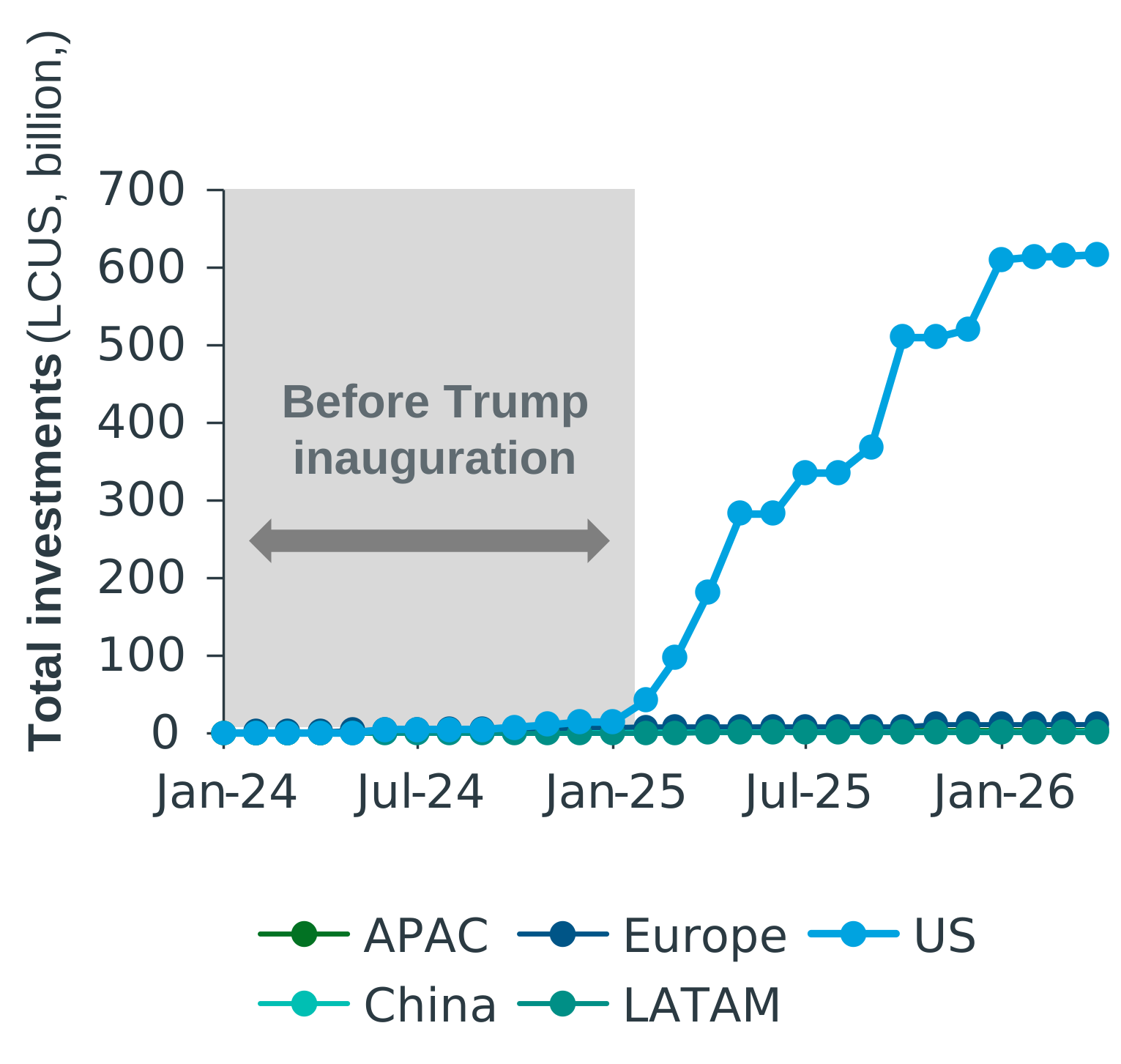
The challenge facing the EU’s biotechnology research base goes beyond clinical trials and into manufacturing. Figure 3 indicates how, since Trump’s 2025 inauguration, most major pharmaceutical companies have pledged hundreds of billions of dollars of investment into US manufacturing in order to avoid tariffs the Administration is planning to place on medicines manufactured outside the US. This threatens the future of Europe’s manufacturing and R&D base.

Figure 3: Manufacturing investment pledges into the U.S. from the top 20 pharma companies (Jan 2024 – April 2026)

Notes: Top 20 pharma based on 2024 FY revenues (IQVIA MIDAS FY 2024); Analysis based on investments in facility upgrades, manufacturing sites, technologies and warehouse expansions announced between Jan 2024 and April 2026. This includes a small percentage of R&D investments. LCUS= Local Currency, converted to US dollars.

Source: Company press release, news articles and industry reports.

Whilst the EU succeeds in securing relatively fast access to new medicines, most are launched outside the EU first, resulting in delays of over a year for EU patients. This is due to a variety of reasons, including:

  • Reimbursement levels and delays, with many companies focussing on launching their medicines in the US first due to its attractive pricing – the US makes up about 50% of global sales for innovative pharmaceutical companies, whereas the EU makes up around 20% percent. Pricing and reimbursement processes differ across the Union and can be lengthy which results in delays to access and uncertainty for investors.
  • Limited access to translational funding, like venture capital, which means many products are not tested and commercialised in the EU.
  • Regulatory timelines and fragmentation, including in running clinical trials, can delay products that are being developed in the EU but also deter access - there is a correlation with where developers do their R&D and where they launch first.

The proposed Act is designed to reduce these hurdles, to enhance the Union's attractiveness and ensure that breakthrough therapies are developed and deployed within the EU.


Biotech Act Summary

The Act goes much further than ‘biotechnology’ as traditionally defined, i.e. deriving from living organisms, but defines it to encompass most medicinal products. This was  chosen to broaden the scope and impact of the Act.

The overarching Act is two pieces of legislation, the first of which was released in December 2025, and is the focus of this blog. Part 2 of the Act will build on this framework, focussing on industrial biotechnologies and biomanufacturing. It is expected in the third quarter of 2026.

Part one of the European Union’s proposed Biotech Act blends industrial policy with long‑overdue regulatory modernisation:

  • Strategic Projects: The Regulation introduces the concepts of ‘health biotechnology strategic projects’ and ‘high-impact health biotechnology strategic projects’. These designations are designed to mobilise public and private investment, scale up critical research infrastructures, and reinforce the Union's industrial biomanufacturing value chains. The designation brings faster permitting and enhances regulatory support. More information on these below.
  • Finance: It establishes an ‘EU Health Biotechnology Investment Pilot’, acknowledging Europe’s shortage of risk tolerant capital. Forged in partnership with the European Investment Bank Group, this mechanism aims to mobilise private investment and venture debt tailored to the high-risk profiles and long lifecycles of biotech enterprises.
  • Intellectual property rights: the Act proposes a 12-month extension to the Supplementary Protection Certificate (SPC) for cutting-edge biotech medicinal products developed via biotechnology processes in the EU. This incentive aims to anchor the clinical development and manufacturing of innovative therapies within the Union.
  • Accelerating Clinical Trials: The Act reforms the Clinical Trials Regulation (EU) No 536/2014 to drastically cut approval timelines for multinational clinical trials from 106 to 75 days. More on that in our forthcoming blog focussing on what the Act means for clinical trials.
  • Medical Device and In Vitro Diagnostic Regulations receive targeted amendments to reduce the structural and regulatory bottlenecks that have slowed innovation across the device ecosystem and prevent supply disruptions.
  • Sandboxes and AI: The Act establishes ‘regulatory sandboxes’ to allow the testing in a controlled environment of novel health biotechnology products that defy existing legal classifications. Recognising the age of algorithms, it tasks the EMA with publishing guidance on the deployment of Artificial Intelligence systems across the entire lifecycle of medicinal product development, from pre-clinical research to post-authorisation monitoring.
  • Biosecurity: The Act takes a robust stance on biosecurity, introducing mandatory screening, requiring verification of who customers are and why they need the ‘biotechnology products of concern’ to prevent misuse.
  • Genetically Modified Micro-organisms: Through the accompanying Directive, the EU is modernising its rules and establishes a streamlined, tailored authorisation procedure for eligible ‘low risk’ genetically modified micro-organisms.

Combined, these measures aim to ensure that Europe can turn its scientific leadership into strategic advantage. The ambition is not merely administrative efficiency but strengthened autonomy, a more resilient industrial base, and the ability to compete with faster-moving regions who spend more. If successful, the legislative trio will offer Europe a clearer route from laboratory breakthroughs to patient‑ready products.

The Act is still a draft, subject to revision. So please read the below understanding that the final Act will be different.


Biotech Act – Key components impacting the EU’s financial attractiveness

In subsections below, we summarise the key components of the Act which impact incentives.

Intellectual Property Incentives – The SPC extension

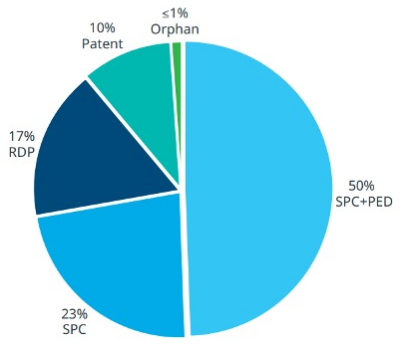
The proposal introduces a twelve month extension to the Supplementary Protection Certificate (SPC) for biotechnology medicines judged to be novel and developed within the Union. An SPC is a form of intellectual property right that extends the protection of patented medicines or products for a specified period beyond the original patent expiry, compensating for time lost during development and regulatory approval processes. Patent rights secure innovative discoveries, preventing competitors from commercialising the same invention for a set period, thus encouraging investment in research. SPCs are one of the most important forms of intellectual property protection for medicinal products and therefore a strong incentive (see Figure 4).

Beyond SPC extensions and patents, other forms of protection include data exclusivity, and market exclusivity. These further shield approved biotechnology medicines from direct competition by restricting the use of clinical trial data and granting sole access to the market for a defined timeframe. This layered protection is crucial to companies’ ability to recoup the substantial costs associated with bringing novel medicines to patients.

Biotechnology medicines are defined here in the traditional sense, akin to EMA’s definition of Biologics.

Figure 4. Sales protected by type of protection instrument

Notes: In euros, molecules that lost exclusivity 2016–21, n=118; RDP = Regulatory Data Protection, including Market Protection; SPC = Supplementary Protection Certificate; SPC+PED = 6‑month paediatric extension to products’ SPCs; Orphan = Orphan exclusivity, including paediatric extensions

Source: IQVIA MIDAS and ARK Patent Intelligence, 2023

The SPC extension is intended to reward firms that bring genuinely superior therapies to patients and conduct part of their clinical development and manufacturing within the EU. It focuses on highly innovative biotechnology treatments and advanced therapies that offer a clear therapeutic advantage.


To be eligible, products must meet one of the following:

  • Developed by means of biotechnological processes
  • Advanced Therapy Medicinal Products (ATMPs)
  • Veterinary medicinal products for zoonotic diseases developed via biotech processes

AND all of the following:

  • Have a patent which qualifies for the granting of such supplementary protection certificate, or an existing SPC
  • Contains a new active substance distinctly different from that of any authorised medicinal product in the Union
  • Mechanism of action distinctly different and shows a level of safety and efficacy which is at least equivalent to that of any authorised medicinal product in the Union for the same disease
  • The clinical trials evaluating the efficacy of the medicinal product and supporting its marketing authorisation were conducted in more than two Member States
  • At least a manufacturing step, excluding packaging, quality testing and certification is performed in the Union

Note: A product must also be protected either by a supplementary protection certificate or by a patent which qualifies for the granting of supplementary protection certificates.

There are linguistic uncertainties and differences between existing legal and regulatory terminology and the wording used in this proposal.

Due to the ambiguity, and political importance of the extension, we expect this wording to change substantially over the course of this legislation.

Under the current wording, small molecules, substances of human/animal origin and some vaccines are excluded. The requirement for “distinct” mechanism of action excludes ‘incremental’ innovation. Treatments for diseases without the patient populations in the EU to run the trials would also be ineligible.

This incentive is likely to encourage some developers of cutting edge, first-in-class products to run their clinical trials and manufacturing in the EU. This seems to be the primary aim.

The incentive is unlikely, however, to be strong enough to encourage the development of additional cutting edge, first-in-class products in and of themselves.

The strength of the incentive depends on the product eligible. An additional year of SPC protection could be worth hundreds of millions of dollars in incentives for some products, whereas it may not be relevant for others who have market exclusivity or data protection as their last line of intellectual property protection against competition, and therefore would not benefit from the additional year of SPC (see Figure 4). Even for those products which do benefit from the SPC extension, however, this additional year comes multiple years after asset investment decisions and so has a weakened pull.

The value of the additional year of SPC is also tempered by the limited competition biologic products face. Many medicines that receive extended protection under the SPC may not actually face competition from similar products once their protection ends. For example, most biological medicines—more than 70%—do not have rival biosimilars on the market. However, this could change in the future because new rules are making it easier and quicker for companies to develop biosimilars. Specifically, the requirements for large clinical trials (Phase III) are being reduced, and regulatory changes are making it simpler for biosimilar manufacturers to use patented inventions for testing purposes (Bolar exemption).

For Payers, this additional year of protection comes at a financial expense, and so this proposal is likely to receive pushback from EU Member States.

Investment Pilots – Bridging the “Valley of Death”

The EU estimates it has a €40 billion annual shortfall in finance needed to carry its biotechnology research — predominantly health and medicines biotech — through development to final products; often called the “Valley of Death”. To ease this, the Act proposes two pilots. The Health Biotechnology Investment Pilot is focused on directly mobilising funding for biotech research and development, while the Late-Stage Capital Booster Pilot aims to strengthen market infrastructure and investor access for biotech companies across the EU.

The Health Biotechnology Investment Pilot is a two year programme to use public money to attract much larger pools of private investment, including early stage and high risk funding, through a partnership with the European Investment Bank Group (EIBG).

Similarly, the EU Late Stage Capital Booster Pilot is proposed as a market building initiative designed to address the limited depth and fragmentation of EU public equity markets for biotechnology companies. Rather than financing individual firms directly, the Pilot supports privately led projects—run by market operators or consortia—that improve biotech companies’ visibility to investors and facilitate cross border access to capital markets (e.g. through investor networks, listing support, or market access platforms). Eligible projects may also qualify as high impact strategic projects, enabling accelerated administrative processes.

The Act also encourages state aid. Whilst it does not alter existing competition rules, it provides justification for national financial support by designating biotechnology as a strategic technology. Furthermore, the Act stipulates that when Member States deploy state aid instruments to support the sector, they must give particular consideration to projects designated as high-impact health biotechnology strategic projects.

The overarching objective is to crowd in large scale private investment, using public investment, across the full biotech lifecycle and strengthen Europe’s capacity to scale breakthrough technologies domestically.

For the Health Biotechnology Investment Pilot, the Commission and the EIBG would set out the eligibility rules and parameters. It will be managed by the EIB Group and the European Investment Fund.

In contrast, the EU Late-Stage Capital Booster Pilot would be led by private sector operators or consortia, potentially involving market infrastructure actors and investors. The EU/Member States would offer administrative support and possible co-financing. The focus is to improve access to capital markets, strengthen cross border investment flows within the EU and expand the pool of credible investors.

Financial support: The Health Biotechnology Investment Pilot aims to mobilise public and private capital to narrow a €40 billion annual investment gap, ensuring the sector's long-term competitiveness and strategic autonomy.

Funding would come from the Commission’s proposed European Competitiveness Fund which ringfences €20.4 billion for the period of 2028-2034 for “health, biotechnology, agriculture and bioeconomy”.

The Pilot will blend equity tools and guarantee mechanisms with venture style debt structured to reflect biotechnology’s distinct risk profile. It can fund development at either end, from applied research, technology transfer and spin offs, to industrial scale up and the build out of production capacity.

Administrative support: The EU Health Biotechnology Support Network will offer guidance—particularly to SMEs, start-ups, and scale-ups—on navigating legal frameworks, regulatory requirements, and available funding opportunities at both Union and national levels. The EU Health Biotechnology Support Network will also support health biotechnology strategic projects as well as high-impact health biotechnology strategic projects.

The application process for the Health Biotechnology Investment Pilot will be detailed in future guidance. The EU Late-Stage Capital Booster Pilot’s application process occurs via the ‘high-impact health biotechnology strategic project’ process, as detailed below.

The Pilots and support measures are primarily designed for operators within the Union's biotechnology ecosystem, with a particular focus on those lacking access to capital or scale-up resources:

  • SMEs, start-ups, and scale-ups: These are the primary beneficiaries, recognised as facing the biggest hurdles in accessing funding for industrial scale-up and navigating regulatory pathways.
  • Research and Academic Institutions: Eligible when participating in consortia or as users of the infrastructures provided by strategic projects (e.g., testing facilities).
  • Non-profit developers: Organisations active in relevant biotechnology sectors across the internal market are specifically mentioned as eligible for administrative and technical support.
  • Pharma companies, including large multinational companies may not be the focus but they are not excluded.
If these Pilots succeed in their aims of crowding in billions of euros per annum of public and private capital into EU biotech, then it will have a substantive impact on translational R&D in the Union, across the entire translational lifecycle. That is a big question mark but there is significant ambition in this proposal.

Strategic Projects & Accelerators

The designations for strategic projects and accelerators sit at the political and commercial core of the Act. Politically, they give Member States and the Commission a mechanism to prioritise biotechnology over competing objectives, including environmental and planning constraints, and to do so explicitly in the name of strategic autonomy. Commercially, they aim to tackle one of Europe’s persistent disadvantages: time. By shortening permitting timelines, simplifying administration and steering capital towards favoured projects, the EU hopes to make it faster and easier to build laboratories, pilot plants and manufacturing capacity at scale. If they work, strategic projects could influence where companies choose to invest, manufacture and run trials. If they do not, the labels risk becoming another avenue of bureaucracy rather than a genuine accelerator.

Health biotechnology strategic projects are designed to reinforce the European Union’s industrial resilience by backing ventures that strengthen research, manufacturing and technological capacity. These projects receive their status directly from Member States and gain accelerated permitting, capped at ten months, and priority handling in administrative and judicial procedures. The project’s strategic importance can also overrule other considerations, including environmental or nature protection rules.

The aim is straightforward: support critical capabilities in an increasingly competitive global biotech environment, while smoothing the bureaucratic hurdles that often slow progress.

High-impact health biotechnology strategic projects go further. Reserved for initiatives with exceptional potential, they include shared testing infrastructures, known as Biotech Development Accelerators, and specialist centres that aim to drive forward areas like advanced therapy medicinal products. These are recognised at the EU level and benefit from even faster timelines, including an eight‑month cap for permits. They also attract more generous support, including preferred access to funding streams and state aid.


Priority Regulatory Status: Strategic projects are granted ‘priority status’ at the national level, ensuring the fastest possible processing of permits and authorisations to significantly reduce time-to-market.

Single Point of Contact: Member States must provide a dedicated single point of contact to coordinate the entire administrative process, reducing complexity and acting as the sole interface for the project promoter.

Administrative Support: Promoters can request assistance with regulatory compliance, permitting, and public communication.

Preferential Funding Access: Strategic projects receive prioritised consideration for Union financial support, including from the potential multi-billion-euro EU Competitiveness Fund. They also benefit from facilitated networking with private investors and the European Investment Bank (high-impact projects only).

Strategic Support & Networking: Promoters gain access to the EU Health Biotechnology Support Network and regulatory sandboxes providing expert guidance on regulatory pathways.

Potential new collaborative structures

The Commission is considering establishing dedicated legal entities, such as European Partnerships, to pool expertise and share risk between public and private actors. These could become important vehicles for implementing and scaling ‘health biotechnology strategic projects’.

  1. National assessment and designation

    Member States begin by appointing a ‘competent authority’ responsible for determining whether a proposal meets the criteria for a health biotechnology strategic project. This authority verifies compliance and, where appropriate, issues the formal recognition decision.

  2. Eligibility criteria

    To qualify, a project located in the Union must make a substantial contribution to at least one of the following objectives:

    • Strengthening industrial capacity, for example through new or expanded biomanufacturing facilities, digital or AI integration, or reduced reliance on non-EU suppliers.
    • Scaling critical infrastructure by establishing or improving pilot, testing and demonstration sites, including those deploying New Approach Methodologies that replace animal testing.
    • Accelerating innovation with breakthrough technologies, AI enabled tools, or giving SMEs and start ups access to advanced production and laboratory capabilities.
    • Addressing skills shortages by attracting talent, expanding training in areas such as data science and AI, or creating stronger university industry collaborations.
    • Enhancing health threat preparedness by developing medical countermeasures for priority risks.

  3. The application process
    Project promoters must submit an application to the designated authority in the Member State where the project is located. Cross border projects benefit from mutual recognition: once one Member State grants designation, others must follow.

  4. Assessment and decision
    Upon receiving a complete dossier, the authority has one month to complete its evaluation. If the necessary requirements are met, it issues a reasoned decision granting the project health biotechnology strategic projects status. Member States are expected to ensure a fair and transparent process, including accessible mechanisms to resolve disputes.

The designated national authority of a Member State must assess the application within one month of receiving a complete application and communicate a reasoned decision.

1. Eligibility criteria for high impact status

To qualify as a high impact project, an initiative must first meet the general requirements for a strategic health biotechnology project (above). It must then demonstrate high impact through its scale, scope or cross border relevance.

2. A two step designation process

High impact status is awarded through a dual system that combines national assessment with EU level approval.

2.1. Member State assessment

The project promoter submits an application to the designated national authority in the country where the project is located. The application must include evidence that the project meets the criteria. The authority has one month to review the dossier and share its assessment report with the Commission.

2.2. Commission decision

The European Commission then issues an implementing act to approve or reject the application. Its decision must consider the views of the European Health Biotechnology Steering Group, which provides strategic oversight.

Alternative pathway: Union level calls for proposals

Projects may also obtain high impact status directly through Commission run calls under Union funding programmes. Selection through these calls confers high impact designation without requiring the two tier process.

  • High-Impact Biotechnology Testing Environments: Strategic projects accelerating AI-driven innovations. They will provide trusted, integrated experimental, computational, and data-driven capabilities (such as wet-labs and pilot-lines) to safely test and validate advanced health biotechnology.
  • Biotechnology Data Quality Accelerators: Entities providing technical assistance to data holders to standardise, annotate, and verify the provenance of their datasets. Their remit is to transform fragmented data into "AI-ready" infrastructure that supports advanced research and innovation across the Union, and supports the implementation of the European Health Data Space.
  • Call for Proposals & Data Safeguards: Data quality accelerators may be recognised by the Commission via competitive calls for proposals.

Industrial Scale-Up & Capital Access:

  • Biotechnology Development Accelerators: Projects providing trusted testing or demonstration facilities that replicate real-world, GMP-compliant biomanufacturing processes. These bridge the gap between research and industrial deployment, allowing for process validation and small-batch manufacturing for early clinical trials.
  • Centres of Excellence for Advanced Therapies: Projects specifically designed to reinforce the Union's capability in Advanced Therapy Medicinal Products (ATMPs), such as cell and gene therapies. They integrate research, regulatory science, and manufacturing to accelerate clinical translation and patient access.
  • EU Late-Stage Capital Booster Pilot Projects (see above): Initiatives led by private-sector operators or consortia designed to overcome the shallow nature of EU public equity markets. They facilitate cross-border investment and improve the visibility of biotechnology issuers to help scale-ups access late-stage capital.

Biosecurity & Threat Preparedness:

  • EU Biothreat Radar Projects: Projects dedicated to pathogen cross border surveillance and early threat detection. They build infrastructure for clinical and environmental sampling and advanced metagenomic sequencing, sharing data rapidly to enable a Union-wide response to novel biological threats.
  • Biodefence Capability Projects: Projects focused on preventing the misuse of biotechnologies. They provide rapid surge capacity for safe sampling, sequencing, and the manufacturing of medical countermeasures, as well as the development of tools to detect and attribute genetic engineering.

Faster permitting, priority regulatory handling and a single point of contact would cut administrative delays and shorten time to market. But they are only one side of the story, money is the other.

For start ups and scale ups, easier access to public and blended funding makes it simpler to build capacity or expand into later stage development. But for global companies, the change will depend on whether the EU can mobilise funding at the scale this proposal aims at – no easy feat.

Conclusion

The EU’s proposed Biotech Act is an ambitious array of actions designed to strengthen the EU’s lifescience and biotechnology ecosystem. The Act implicitly recognises that scientific excellence alone is no longer sufficient to guarantee industrial relevance, with capital, speed, and scale now equally important alongside discovery. By attracting investment, easing permitting procedures, and sharpening incentives, the Act could make the EU a more appealing location for the development of breakthrough health technologies. However, the success of the Act hinges on its implementation and whether funding is mobilised at scale. If these factors align, the Act may help to narrow Europe’s biotech gap.

The Act may yet narrow Europe’s biotech gap, but only if ambition is matched by capital, speed and political resolve.

Stay ahead with the EMEA Thought Leadership insights: your source for industry-leading expertise and analysis