







.svg)











Report details:
- 125 pages
- 53 detailed exhibits
Chapter titles:
- Commercialization of digital health technologies
- Evolution of regulatory and reimbursement pathways
- Reimbursement and uptake in the United States
- Global reimbursement opportunities
- Evidence trends and payer requirements
- Drivers and barriers to adoption
- Life Sciences opportunities and partnerships
Overview
Digital health stakeholders — including developers, policymakers, payers, and providers — are actively shaping and accelerating the adoption of digital health solutions. Driven by the promise these tools offer to optimize care and reduce costs, as well as recent commercial challenges facing the sector, they are rethinking how they evaluate, approve, reimburse, and bring digital technologies to market.
In this report, we examine the strategies each stakeholder is taking in a rapidly evolving landscape and address barriers to adoption. Developers that have struggled to scale their solutions are now diversifying their business models, consolidating to lead in specific segments, and are building broader solutions that better address stakeholder needs. Policymakers are refining national approval pathways and technology assessment criteria, while payers are expanding reimbursement to a wider range of digital solutions. Life sciences companies are also more systematically exploring digital opportunities and applying best practices to commercialize digital products. Yet, despite this momentum, adoption challenges remain. If solutions fail to deliver compelling evidence of health benefits or cost-effectiveness, or cannot integrate with existing systems and care pathways, providers may still hesitate to embrace these technologies.
This report follows our Digital Health Trends 2024 report, which examines the ever-expanding landscape of digital health solutions including emerging segments such as digital diagnostics and digital measures.
Key messages
- Digital health solution developers are now diversifying their business models to expand revenue opportunities, consolidating to lead in specific segments, and expanding horizontally and vertically to deliver broader solutions that better address stakeholder needs.
- National approaches to digital health technologies have matured as policymakers create and refine accelerated regulatory and reimbursement pathways that support high-quality evidence generation, offer temporary reimbursement, and aid their integration into care.
- In the United States, over 300 billing codes now support the use of digital health tools and digital care, including 117 codes for software-based technologies.
- Evidence requirements for reimbursement vary by geography but across key markets, most payers now expect developers to demonstrate benefit through randomized controlled trials, compare solutions to the standard of care, and include local populations — underscoring the need for a global evidence strategy to manage costs and optimize trial design.
- Health system integration is now critical for digital health solutions to gain adoption as providers expect solutions to be interoperable with electronic health records (EHRs), integrate seamlessly into existing workflows to avoid adding to their workload, and fit within traditional care pathways.
- Leading life sciences companies now take a systematic approach to digital health investment, conducting portfolio wide value and feasibility assessments that span solution types to aid diagnosis, therapy, and monitoring, and invest in patient support ecosystems to improve access and the patient experience.
Institute Report FAQs
Other key findings
Trends in Digital Health Business Models
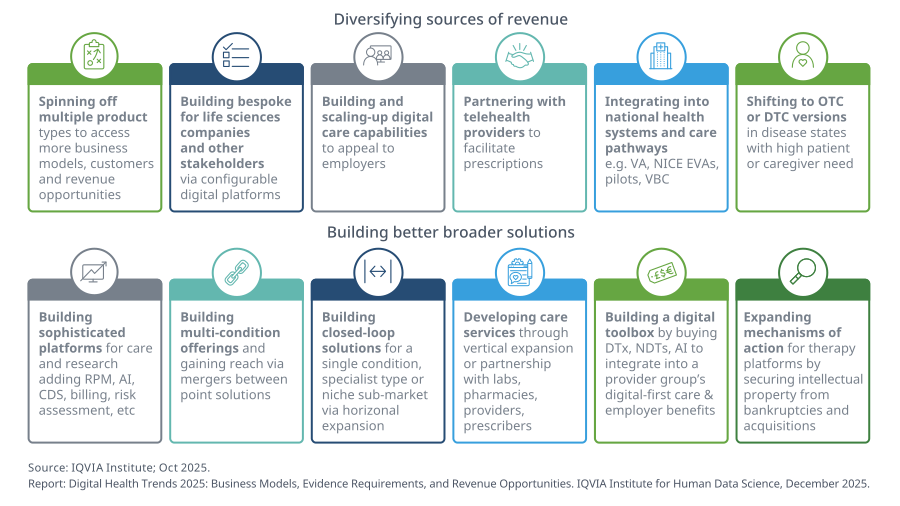
- Many digital health companies that originally designed tools such as digital therapeutics as standalone products are now adapting their solutions to support multiple business models in parallel, expanding potential routes to commercial success.
- In addition to products, digital product developers now offer health services as digital care providers or diagnostic laboratories, repurpose their platforms to deliver custom offerings for providers, employers, and life sciences companies, and adapt remote monitoring tools to support clinical development and patient support programs.
- As competition intensifies, companies are consolidating to lead in specific segments while expanding horizontally and vertically to deliver comprehensive end-to-end solutions that better meet the needs of employers and other stakeholders.
- For instance, leading digital care providers have begun to offer solutions that include self-guided wellness apps for condition self-management alongside medical-grade therapeutic products — allowing them to move patients between different levels of care — and sometimes use AI-driven clinical decision support tools to personalize recommendations.
Digital health related billing codes in the United States by use and code type
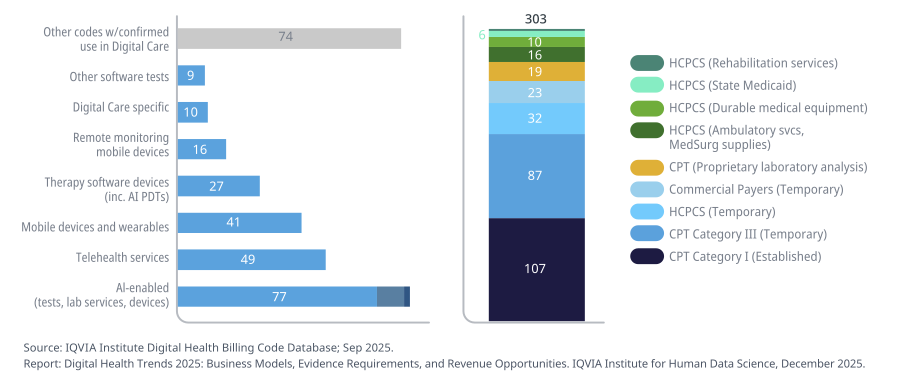
- Billing codes in the United States have been instrumental in supporting the use of digital tools in clinical practice and digital care — enabling providers to request reimbursement and expanding adoption.
- Currently, more than 300 billing codes support the use of digital health solutions and digital care, including 117 specific to software-based technologies such as SaMD, SiMD, and AI-SaMD, but reimbursement opportunities vary by solution type, payer, therapy area, and care setting.
- In 2025, the Centers for Medicare & Medicaid Services introduced new codes to facilitate Medicare reimbursement of digital mental health treatment devices (i.e., digital therapeutics) provided “incident to” care and has signaled it may extend this approach to other software-based solutions.
Use of AI-enabled health assessment tools by type and therapy area (based on a sample of medical claims)
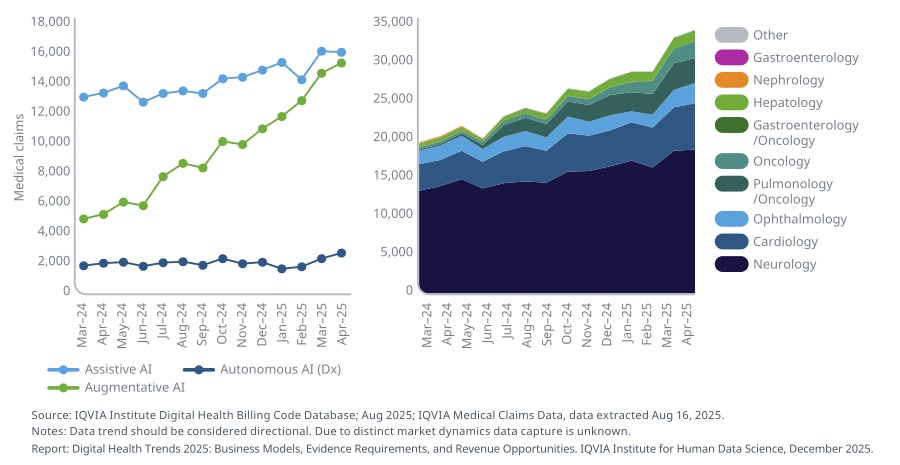
- Growing use of AI-enabled diagnostic tests in the private sector has prompted the creation of the first Category I CPT codes for inclusion in the 2026 Medicare Physician Fee Schedule.
- These codes will help providers analyze coronary arterial plaque to prevent blockages, assess heart disease risk by analyzing fat around blood vessels, determine burn severity via imaging, and identify heart problems using acoustic and ECG signals.
- This development signals that these technologies are now viewed as established rather than experimental, increasing the likelihood of reimbursement by Medicare and other payers and generating significant industry excitement.
Guidance topics as an indication of use case maturity
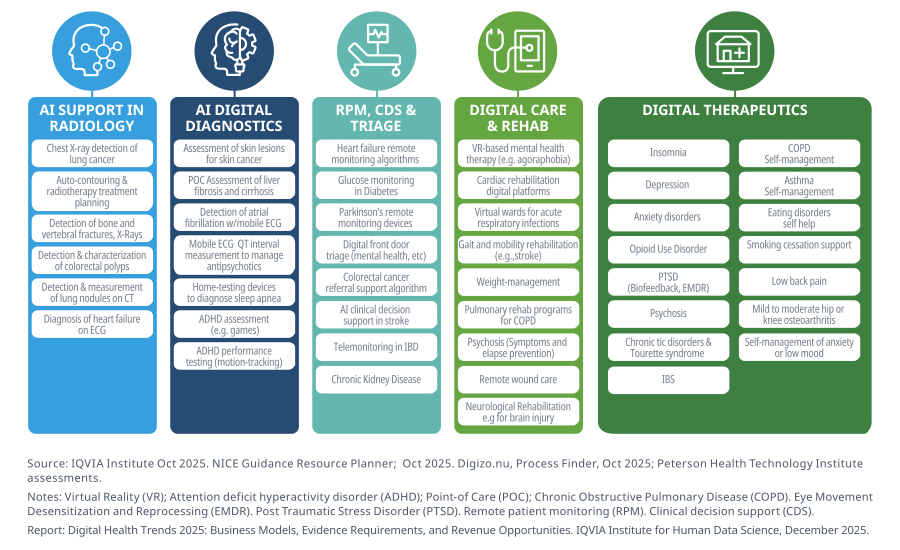
- Accelerated access and reimbursement pathways have opened opportunities for faster market entry and reimbursement of digital health to products of increasingly diverse types and applications.
- Several countries — including the UK, Belgium, and the Netherlands — conduct health technology assessments of multiple digital health solutions for a specific medical purpose and may then recommend and/or reimburse several within the category.
- In the UK, NICE is leading efforts to identify the optimal care setting for digital technologies and has published over 20 Early Value Assessments, recommending more than 47 solutions for use within the NHS.
- These assessments highlight where digital health use cases have matured and started to gain traction in clinical practice.
Criteria for digital health technologies to gain reimbursement in the U.S.
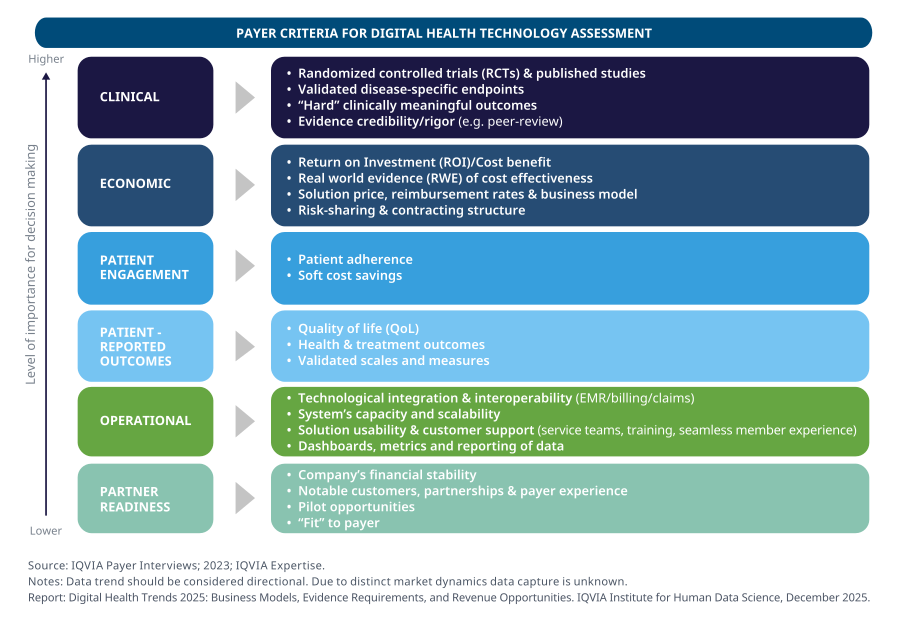
- Payers increasingly require developers to demonstrate clinical benefit through randomized controlled trials, include local populations in studies, and benchmark solutions against the standard of care — driving the need to develop a global evidence strategy.
- Despite their growing importance to payers, health economic studies demonstrating cost-effectiveness remain scarce in published evidence, leading payers to prioritize evidence generation on real-world impact—such as resource utilization and provider workload—within early reimbursement pathways.
- Payers and care organizations also assess operational fit, seeking solutions that align with benefit structures, integrate seamlessly into existing systems, scale effectively, and come from partners with proven financial stability and experience.
Stakeholder requirements for digital solutions to access various revenue streams
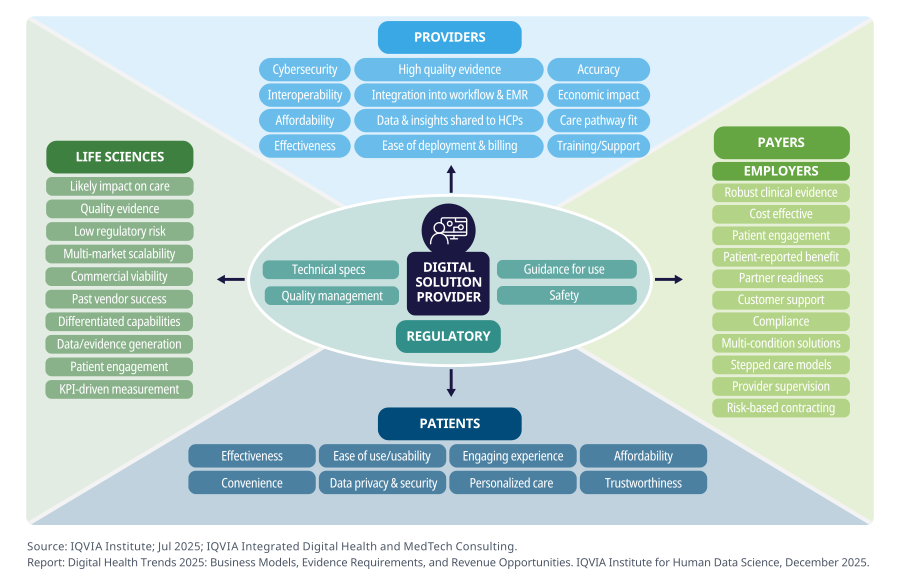
- Health system adoption of new innovations is often slow, as integration into traditional care models takes time.
- In digital health, embedding complex solutions into care requires delivering value to a broad range of stakeholders, making it essential to understand the multidimensional needs of providers, payers, and payers alike.
- Health system integration is also a critical success factor, with providers expecting solutions to minimize added workload, integrate smoothly into existing workflows and feed data back into patient records, making it critical for developers to ensure interoperability with EHRs.
Video
Digital Health Trends 2025