
.svg)




Consumer Health
Shape the future of consumer health.















The Over-the-Counter (OTC) market has demonstrated remarkable resilience and growth over the past few years, according to the latest 2024 full year data from IQVIA Consumer Health, driven by several positive changes including consumer behaviour, evolving retail pharmacy landscape, continued product innovation, digital/AI penetration and growth of e-commerce including e-pharmacies.
Yet the world remains in an uncertain state. In the shadow of trade tariffs, regional conflicts ,and consumers increasingly watching what they spend, there are a number of key trends and issues that the industry needs to keep a watchful eye on to successfully navigate evolving market dynamics and maintain a competitive edge.
EMEA's strong performance fuels global market growth
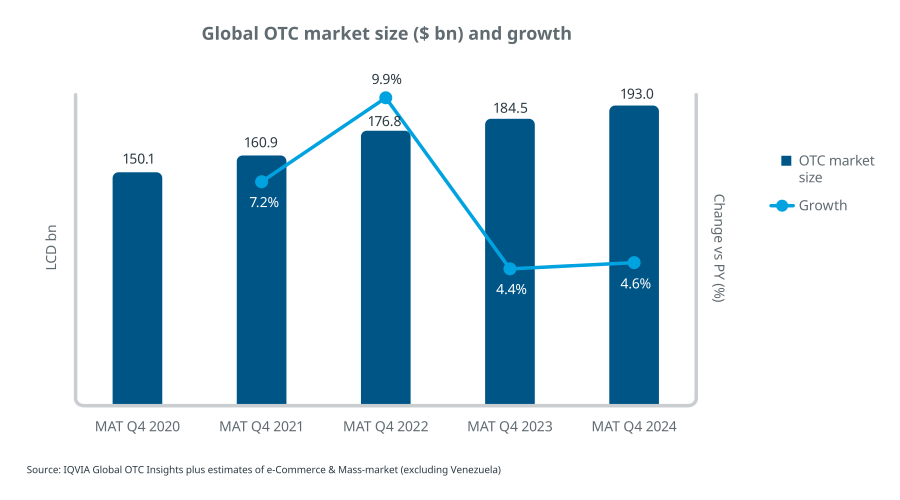
The global OTC market has experienced significant growth, with its size increasing from $150 billion in MAT Q4 2020 to $193 billion in MAT Q4 2024 (see Figure 1). This growth has been driven by expansion across all core categories, the growing strength of OTC brands and increased investment from both large manufacturers and smaller private equity firms.
The compound annual growth rate (CAGR) of 6% for the past 4 years is now at least 2 points higher than the pre-COVID CAGR of 3-4% over the 2015-2019 period. We saw high growth in 2022 due to pent-up demand coming back after COVID vaccines were rolled out in 2021, and a significant improvement in supply. However, over the past two years – 2023 and 2024 – growth has been impacted by high inflation, a weak cough/cold season in 2024, and reduced consumer spending power, especially in China and the US. We expect this growth trend to become more positive in the 2025-2028 period as inflation reduces, innovation accelerates, and economies recover.
EMEA and LATAM outperform global growth
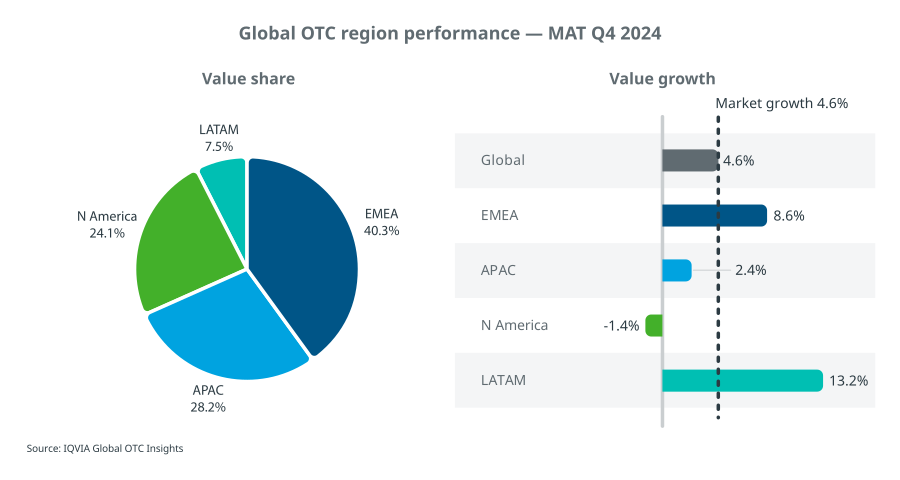
Examining the performance of different regions reveals a diverse picture. EMEA and LATAM have outperformed the global average in latest MAT, with EMEA achieving +8.6% growth driven by CEE +12-13% growth in Central and Eastern Europe and +9-10% growth in the Middle East and Africa region (see Figure 2). LATAM growth has largely been driven by price increases linked to overall higher inflation across core markets like Brazil and Mexico.
By contrast, North America has experienced a slowdown, impacted by lower consumer spending, resulting in a -1.4% value growth and even more significant decline in volume (-4%). APAC has shown softness in the latest MAT due to slow-down in consumption across China over the past two years, well before any impact from recent tariffs.
Continued robust growth across all categories
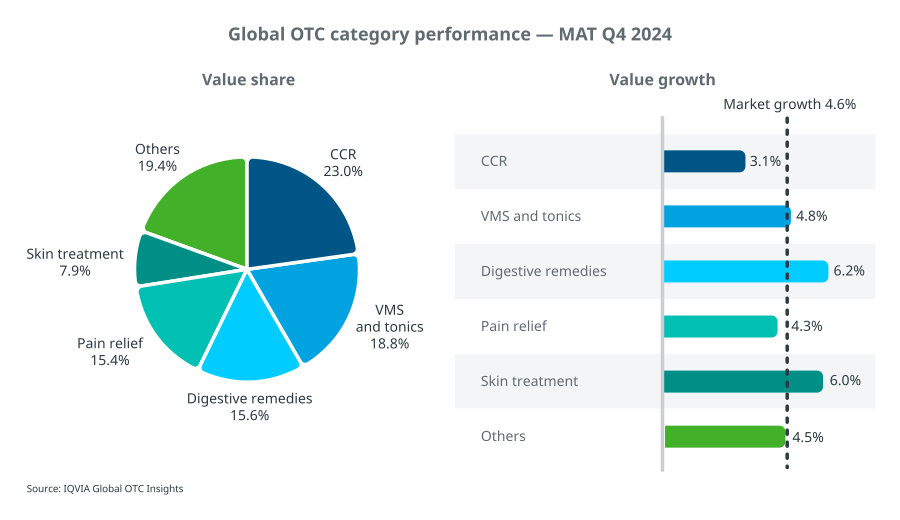
In terms of category performance, Digestive Remedies, Skin Care, and Vitamins, Minerals, and Supplements (VMS) – as defined by IQVIA Consumer Health – have continued to perform well since the post-COVID recovery period.
Digestive Remedies have led the way with a growth rate of +6.2% (see Figure 3), driven by growth across probiotics, laxatives and other sub-categories. We believe a key driver of this is increased consumer focus on prevention, eating healthy, cooking at home, and a growing belief that the ‘gut’ plays a key role in overall health.
VMS has also shown recovery in recent quarters after slumping from the post-COVID high of +16-18% growth in 2022. However, as consumers face spending constraints, they have reduced their discretionary spends on vitamins and supplements, with this impact seen most clearly in the decline across North America.
Minor categories such as Calming & Sleeping, Mood Enhancing, and Eye Care continue to do well but are down from their highs in 2022 and 2023.
Teva and Stada outperform global market growth
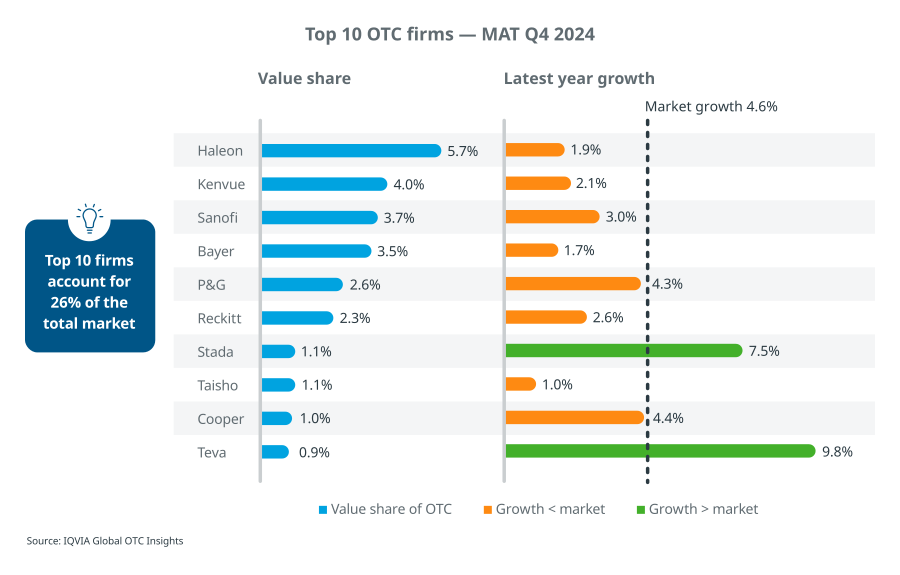
The highly competitive landscape of the OTC market is highlighted by the performance of the top 10 companies in the space. Teva and Stada have outperformed the global OTC market growth, with Teva achieving a growth rate of +9.8% (see Figure 4), well above the market average of +4.6% in the latest MAT. Both Teva and Stada have benefited from the geographical split of their portfolio being predominantly in Europe with little to no exposure in the US and China. All of the top 6 firms have at least 30-45% of their business in the US, and the slow-down across what is the world’s most important OTC market has impacted their overall performance. We expect this to be a temporary phenomenon, and deliver demand will recover across the US in the coming quarters.
Conclusion
We expect the global OTC market to continue growing at a CAGR of 6.4% for the next 5 years with all categories contributing to this growth and cough/cold seasonality returning to historical norms. To continue growing share and maintain leadership we recommend OTC firms and investors:
In summary, industry leaders must remain agile and innovative to address key growth opportunities and implement strategic actions as outlined above. By focusing on consumer engagement, product innovation, and core portfolio priorities, stakeholders can drive sustained growth and enhance market share. Looking ahead, we remain confident that the OTC market holds promising opportunities for those who are willing to adapt, innovate, and invest!
For more insights on the state of today’s OTC market contact out team at consumer.health@iqvia.com or click the CONTACT US button on this page.
Shape the future of consumer health.
Illuminate a path to consumer health success
Adapt fast, maintain momentum and stay relevant