







.svg)











Stay ahead with the EMEA Thought Leadership insights: your source for industry-leading expertise and analysis
Blog
The obesity-inflammation axis: An emerging target for therapeutic innovation
Finding opportunities where metabolism and immunology converge
Jun 11, 2026
Introduction
Metabolic dysfunction is typically one of the first associations with obesity that comes to mind. However, the excessive accumulation of fat as the defining manifestation of obesity also results in an altered immunological state characterised by chronic, low-grade inflammation.
This relationship between adiposity, immune function and inflammation positions obesity as an immunomodulatory factor that plays an important role in the pathogenesis and disease trajectory of many immune disorders, with profound implications for therapeutic approaches.
The mechanistic obesity-immunology overlap is also reflected in high prevalence of overweight and obesity, as co-morbidity, among immunology patients across a wide range of indications (see Figure 1).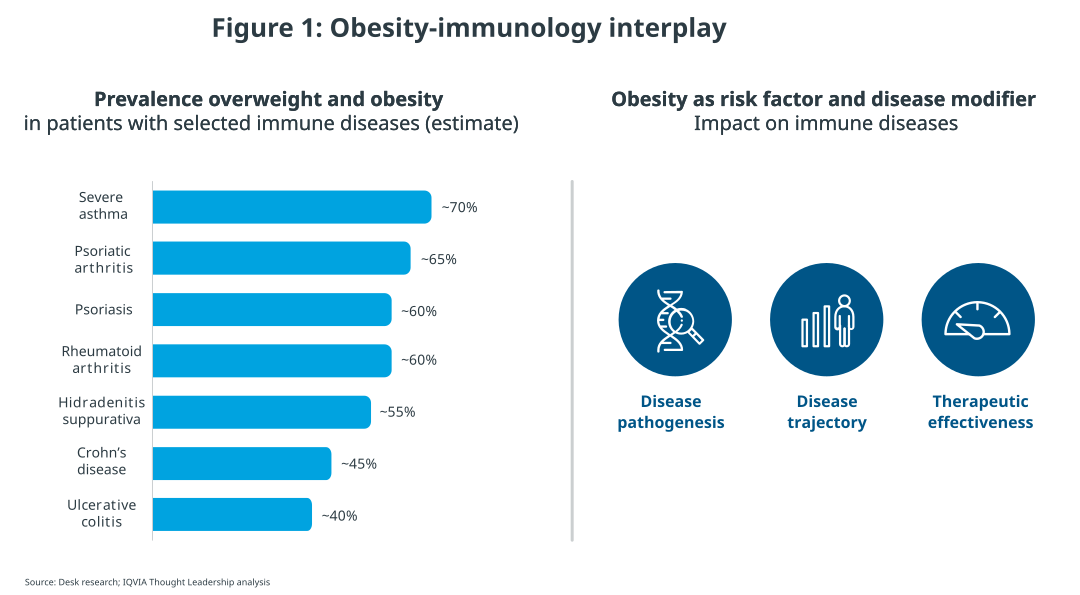
This blog explores the underlying principles behind the obesity-inflammation axis, its impact on immune diseases and the opportunity this presents for therapeutic innovation where obesity and immunology converge.
The obesity-inflammation axis: A brief discourse
White adipose tissue, which is composed of cells containing a single large lipid droplet (monolocular adipocytes) as well as immune cells, is the main form of fat tissue in the human body, with distinct sites of distribution including visceral adipose tissue in the abdominal area and subcutaneous adipose tissue throughout the body. Its primary function is energy storage, however, it also plays an important role as an active endocrine organ that interacts with the immune system.
Dysfunctional white adipose tissue in obesity triggers the release of pro-inflammatory adipokines (fat tissue-derived signalling molecules that primarily regulate metabolism and energy homeostasis), including leptin, resistin and visfatin, alongside pro-inflammatory cytokines TNF-α, IL-6, L‑1β, monocyte chemoattractant protein‐1 (MCP‐1) and plasminogen activator inhibitor 1 (PAI‐1) [1-3].
Adipokine leptin, for example, stimulates the inflammatory phenotype of T-cells, macrophages, and other innate immunity cells. It also encourages Th17 lymphocytes to differentiate and produce pro-inflammatory cytokine IL-17, while suppressing anti-inflammatory regulatory T-cells (Treg) that control the immune response.
At the same time, obesity decreases levels of anti-inflammatory adipokine adiponectin, thus leading to overexpression of pro-inflammatory cytokines, e.g., TNF-α and IL-6.
The resulting interplay between the adipose-derived, pro-inflammation state and immune dysregulation elevates obesity to both a risk factor and disease modifier for a range of autoimmune and inflammatory diseases.
How obesity impacts immune diseases
The extent and manifestations of the impact of obesity vary considerably between different immune diseases. It is determined by a number of factors, some of which are directly linked to the obesity-inflammation axis, while others are a function of increased body weight itself (see Figure 2):
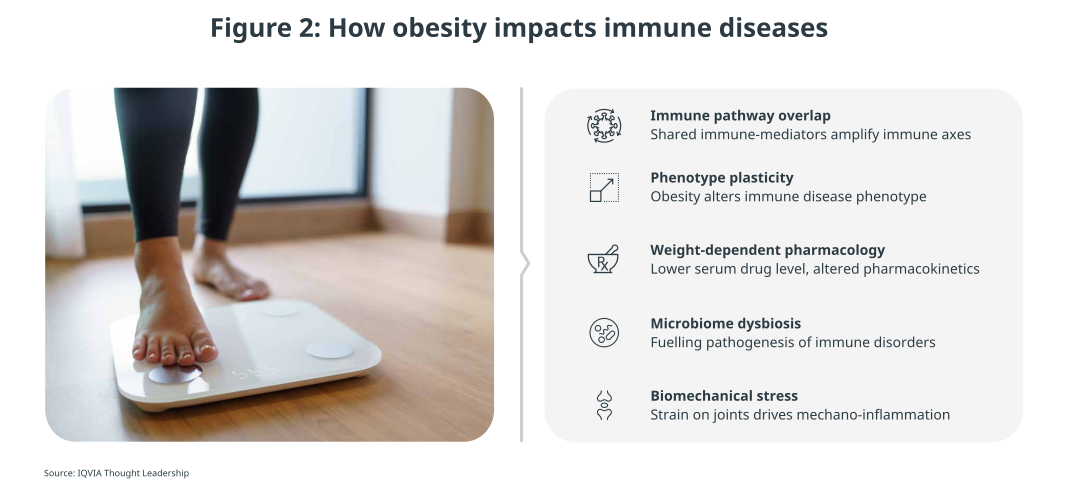
- Immune pathway overlap, where disease-promoting immune-mediators shared with adipose-driven inflammation amplify relevant immune axes, e.g., TNF‑α, IL-6 in rheumatoid arthritis, Th17 (IL17) in psoriasis; IL-6, macrophage- and neutrophil-driven innate immunity in non-type 2 asthma.
- Phenotype plasticity, where obesity alters the immune disease phenotype, e.g., elevating non-type 2 inflammation as dominant phenotype in obesity-associated asthma, or modulating Th17 intensity in psoriasis and psoriatic arthritis.
- Weight-dependent pharmacology, with increased body mass leading to lower serum drug levels, especially for fixed-dose, sub-Q administered biologics, and reduced therapeutic efficacy as a result of changed pharmacokinetics, e.g. accelerated drug metabolism and clearance.
- Microbiome dysbiosis as a result of obesity which has been associated with the pathogenesis of a range of immune disorders, e.g., inflammatory bowel disease or psoriasis.
- Biomechanical stress caused by excess weight, which, for example, increases strain on joints in rheumatoid arthritis and psoriatic arthritis resulting in ‘mechano-inflammation’, or which may lead to more skin folds that in turn exacerbate immuno-dermatological conditions, such as psoriasis and hidradenitis suppurativa.
Collectively, these obesity-related factors can modify disease manifestation and progression, exacerbate severity and affect treatment response across many immune disorders.
Psoriatic disease
Obesity increases the likelihood of psoriatic disease, with double the risk of developing psoriasis and up to six times the risk of developing psoriatic arthritis [4].
Furthermore, obesity is associated with more severe disease for both psoriasis and psoriatic arthritis, including higher risk of nail involvement in psoriasis and the development of psoriatic arthritis as a comorbidity to psoriasis.
The effect of obesity on treatment response in psoriatic disease appears to be MoA-specific, with TNF and IL-17 inhibitors showing lower response in obese psoriasis patients, while having a minimal effect on response to IL-23 and PDE4 inhibitors [5]. Similar effects were observed for TNF inhibitors in psoriatic arthritis, with obesity reducing the likelihood of achieving remission by 50% [6].
While it is well established that pro-inflammatory cytokines TNF and IL-17 are elevated in obese psoriatic disease patients, the exact mechanism for how they blunt the efficacy of inhibitors that target them is not fully understood. One hypothesis postulates the notion of excess cytokines acting as a ‘drug sink’ for inhibitors.
Rheumatoid arthritis
Obesity has been linked with greater arthritis activity, worse overall disease progression, less frequent remissions, and a reduced probability of response to therapies [7].
A direct association was found between disease activity in RA patients and leptin levels, the pro-inflammatory adipokine that is released by dysfunctional adipose tissue, while an inverse relationship was seen for adiponectin, the anti-inflammatory adipokine which is suppressed in obese individuals [8].
A prospective observational study from NORD-STAR (Nordic Rheumatic Diseases Strategy Trials and Registries) found that obesity was associated with a lower likelihood of good treatment response to both conventional anti-rheumatic drugs , including sulfasalazine, hydroxychloroquine and glucocorticoids, and several biologics spanning different MoAs, including Cimzia (TNF), Orencia (cytotoxic T-lymphocyte-associated molecule-4 immunoglobulin) or Actemra (IL-6), respectively [9].
Conversely, the efficacy of JAK inhibitors in RA patients was found to be independent of BMI [10], implying that obesity does not interfere with the JAK-STAT pathway.
Inflammatory bowel disease
Several studies suggest that obesity impacts ulcerative colitis (UC) and Crohn’s disease (CD) differently [11].
Interestingly, high BMI (>30 kg/m²) appears to have a protective effect on CD, with increased time to flares, reduced endoscopic reoccurrence, and lower prevalence of developing strictures, whereas poorer disease outcomes and increased hospitalisation risk have been observed in UC [12, 13].
However, when using visceral adipose tissue (VAT) instead of BMI, as a measure of body composition, high visceral adiposity in CD patients was positively associated with stricturing disease, CD-related surgery, and decreased time to flares, while BMI was not.
The impact of obesity on treatment response also differs between UC and CD. For example, a meta-analysis found that obesity was associated with higher odds of anti-TNF treatment failure in UC patients, for both fixed-dose and weight-based regimens, however, it did not affect therapeutic success in CD [14].
The differential impact of obesity on UC versus CD patients suggests the pathophysiology of how obesity affects inflammatory bowel disease is particularly complex, e.g., involving a distinct, localised form of VAT, mesenteric ‘creeping fat’, which wraps around the intestine and is associated with intestinal inflammation [15], while the role of gut microbiome dysbiosis adds further complexity.
Asthma
Obesity is associated with overall severity of asthma, including increased frequency and severity of exacerbations, airway inflammation, airway hyper-responsiveness and decreased pulmonary function [16].
Adiposity-derived, pro-inflammatory cytokine IL-6 is linked to the severity of asthma. For example, asthma-related exacerbations and emergency room visits were significantly more frequent in patients with high plasma concentrations of IL-6 which correlated with patients’ BMI [17].
Compared to non-obese patients with asthma, the prevalence of type 2 inflammation biomarkers is lower in obese asthma patients, e.g., sputum eosinophilia, blood eosinophilia, immunoglobulin E (IgE) and exhaled nitric oxide (FeNO). This suggests the neutrophilic-driven inflammatory phenotype is dominant in obese asthma patients.
It also explains why obese asthma patients are more refractory to conventional therapeutic approaches, e.g., corticosteroid resistance, and therefore require higher doses of inhaled corticosteroids to maintain sufficient disease control.
As we discussed elsewhere [18], approved biologic immunotherapies for asthma target the type 2 phenotype. This leaves predominantly type 2 low, or non-type 2 and neutrophil-driven obese asthma patients, who are also prone to more severe disease, without effective, advanced pharmacotherapy options.
Therapeutic innovation at the obesity-immunology intersect
The arrival of highly effective, incretin-based pharmacotherapies has transformed the management of obesity. It therefore becomes an eminently modifiable factor for the comprehensive treatment of immune disorders with concomitant obesity involvement acting as immune- and disease-modulator.
Weight loss counteracts the drivers we discussed earlier of how obesity impacts immune diseases, including dampening obesity-related chronic, low-grade inflammation by reducing the release of pro-inflammatory mediators from dysfunctional adipose tissue; more favourable drug pharmacokinetics; alleviating biomechanical stress and possibly facilitating microbiome improvements.
Consequently, targeting weight loss in immune disease patients receiving immuno-pharmacotherapies results in higher treatment effectiveness and superior clinical outcomes, for example (see Figure 3):
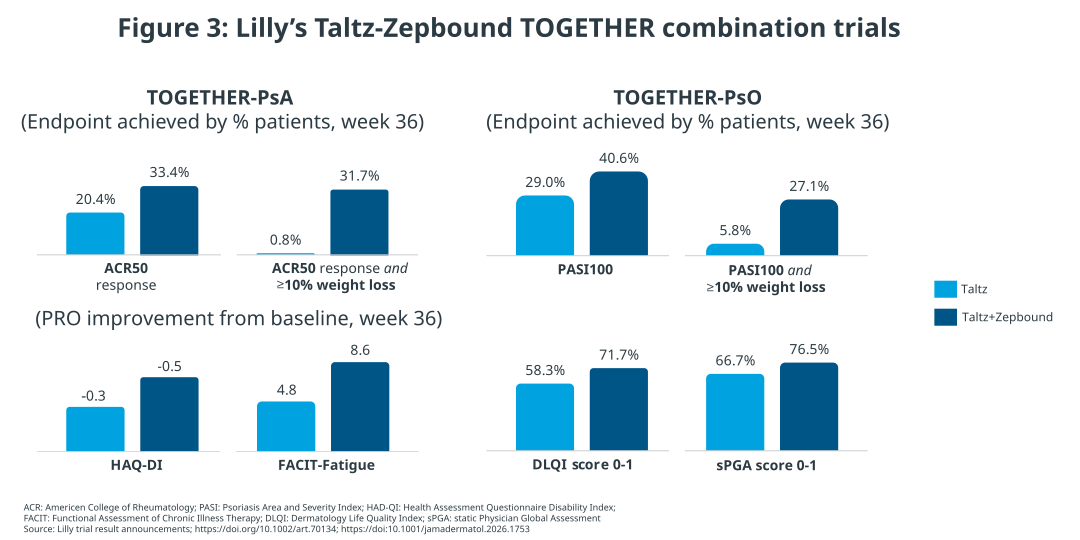
- In the TOGETHER PsA trial, at 36 weeks 31.7% of obese psoriatic arthritis patients receiving Taltz (IL-17 inhibitor) plus obesity therapy Zepbound (GLP-1/GIP receptor agonist) achieved ACR50 response, and ≥10% weight loss, vs. 0.8% for Taltz monotherapy. On a secondary endpoint, the combination delivered 33.4% ACR50 response vs. 20.4% for Taltz alone [19]. The combination also achieved superior patient-reported outcomes.
- In the TOGETHER PsO trial, at 36 weeks 27.1% of obese psoriasis patients treated with the Taltz-Zepbound combination achieved PASI 100, plus ≥10% weight loss, vs. 5.8% for Taltz alone. On a secondary endpoint, the combination delivered 40.6% PASI100 achievement vs. 29% for Taltz monotherapy [20]. Again, the combination also achieved superior patient-reported outcomes.
- Hidradenitis suppurativa patients receiving semaglutide as adjunct to standard immunotherapy reported clinically meaningful improvements of 4 points in Dermatology Life Quality Index (DLQI) and a reduction in mean frequency of flares from once every 8.5 weeks to once every 12 weeks [21].
- Data from a case series showed that rheumatoid arthritis patients who lost >10% of body mass experienced a decrease in disease activity and saw a substantial increase in the odds of achieving remission, from 6% to 63%, without any changes in underlying immunotherapy [22].
- A case report of a patient with difficult-to-treat Sjögren’s syndrome receiving semaglutide as adjunct to standard therapy described how dramatic weight loss was accompanied with near-complete resolution of Sjögren’s flares [23].
Several ongoing clinical trials focus on simultaneously targeting obesity and immune disorders. Specifically, these trials investigate combinations of GLP-1/GIP receptor agonist Zepbound with immunotherapies representing different MoAs, including IL-17, IL-23 and TNF, across a range of autoimmune diseases (see Table 1).
Table 1: Ongoing clinical trials investigating incretin-immunotherapy combinations
| Trial | Phase | Sponsor | Combination | MoAs | Indication |
| TOGETHER-AMPLIFY-PsO | Ph 4 | Lilly | Taltz + Zepbound | Il-17 + GLP-1/GIP | Psoriasis |
| TOGETHER-AMPLIFY-PsA | Ph 4 | Lilly | Taltz + Zepbound | Il-17 + GLP-1/GIP | Psoriatic arthritis |
| COMMIT-CD | Ph 3b | Lilly | Omvoh + Zepbound | Il-23 + GLP-1/GIP | Crohn’s disease |
| COMMIT-UC | Ph 3b | Lilly | Omvoh + Zepbound | Il-23 + GLP-1/GIP | Ulcerative colitis |
| NCT06774079 | Ph 4 | University of Miami | Infliximab or adalimumab + Zepbound | TNF + GLP-1/GIP | Crohn’s disease |
Looking ahead, we can speculate about the future direction of the type of incretin-immuno-therapy combinations innovators may want to explore.
Applying a mechanistic plausibility lens, compelling incretin-immunotherapy combinations will target indications (i) with overlapping biology between incretin and immune disease drivers, such as IL-6 or Th17 activation, and (ii) where obesity defines the phenotype, for example:
- Incretin/IL-6, e.g., in RA, utilising cytokine overlap, with IL-6 playing a central role in both metabolic inflammation and the pathogenesis of RA. Such a combination would dampen upstream metabolic inflammation via the incretin, and thus suppress the release of IL-6, while an IL-6 inhibitor would directly target the RA disease driver.
- Incretin/alarmin (e.g., TSLP, IL-33) in non-type 2 asthma. The incretin delivered weight loss reduces IL‑6-driven inflammation, improves pulmonary mechanics and may ‘reset’ the non-type 2 phenotype, thus enhancing responsiveness to therapy, while targeting alarmins intervenes upstream in innate and adaptive immune activation.
- Incretin/NLRP3, to harness mechanistic synergies for a ‘dual hit’ on the obesity-inflammation axis. The incretin dampens upstream metabolic inflammation to reduce trigger signals for NLRP3 inflammasome activation, while directly targeting NLRP3 blocks downstream inflammasome activity, including IL‑1β and IL‑18 release and chronic innate immune activation. This has the potential to offer a disease-modifying approach for difficult-to-treat indications, e.g., neutrophilic COPD, or complex IBD phenotypes, such as Crohn’s disease with mesenteric ‘creeping fat’.
While these examples are mechanistically plausible, we will have to wait until innovators test such combinations in clinical trials to see if they fulfil their promise.
Incretins: Monotherapy potential in immunology?
An intriguing observation, made during the treatment with combination regimens that include a weight loss drug, points to the monotherapy potential of incretins in immunology: Improvements seen in the treated immune disorder can precede weight loss.
For example, in the TOGETHER PsA trial, ACR50 response was already observed at week 4 after treatment initiation with the Taltz-Zepbound combination – before any significant weight loss had occurred. This suggests that early patient benefits are the result of direct anti-inflammatory and immunomodulatory effects of Zepbound on key psoriatic disease pathways, including invariant natural killer T-cells, lymphocyte migration and pro-inflammatory cytokines, with benefits related to weight loss realised later.
Similarly, psoriasis patients receiving liraglutide experienced improvements in PASI, C-reactive protein (CRP) and quality of life independent of weight loss.
Furthermore, pre-clinical evidence suggests GLP-1 directly modulates several dysregulated inflammatory pathways and immune cell lineages relevant to the IBD pathogenesis and contributes physiologically to enhancing and maintaining the integrity of the important gut barrier [24].
Such direct immune-targeting effects may position incretins for use as monotherapies in specific immunology patient segments.
For example, Lilly is investigating GLP-1/GIP receptor agonist brenipatide in a phase 2 trial for the treatment of uncontrolled, moderate to severe asthma [25]. Brenipatide is the only active intervention in this trial, on top of pre-existing standard medication for asthma control, while, crucially, BMI is not included in the eligibility criteria for the trial population.
This clearly indicates that the direct immunomodulatory effect of brenipatide, as monotherapy, is the primary focus of this trial, not its weight loss potential.
Adopting an integrated care approach in immunology
The therapeutic potential of targeting obesity as a critical, modifiable factor for the comprehensive treatment of immune diseases is indisputable. Benefits extend far beyond weight loss itself to include favourably altering the trajectory of immune diseases and enhanced response to immunotherapies.
However, innovators need to understand and prepare for the specific challenges facing an integrated care approach in immunology with obesity management as a central part of it:
- Guidelines: Weight loss is currently not systematically incorporated into the standard practice of immunology disease management.
- Care fragmentation: Different prescriber specialties are involved in managing patients who are the target group for incretin-immunotherapy approaches, e.g., endocrinologists vs. immunology specialists, such as rheumatologists, dermatologists, gastroenterologists or pulmonologists, with typically limited familiarity with the use of incretins among immunology HCPs.
- Market access: Payers will be concerned about the additive cost of combining two therapeutic approaches and will likely want to restrict access, e.g., to complex, multi-morbid patients, high-risk phenotypes, or narrow, refractory sub-populations, while possibly limiting treatment duration.
- Clinical practice: HCPs will need clear guidance on when and how to use incretins or incretin-immunotherapy combinations in immunology, e.g., positioning within the treatment algorithm, identifying eligible patients in routine practice and dose titration for combinations. Innovators will also have to address safety concerns, e.g., about potentially cumulative risk.
In this context, positioning obesity medicines as ‘value amplifiers’ in immunology is critical to ensure adoption. This will also help with their reimbursement for use in immunology, especially ex-US, where coverage of weight loss drugs to treat obesity alone is generally highly restricted.
This value proposition must be supported by compelling evidence that demonstrates benefits against payer- and patient-relevant endpoints, e.g., effective exacerbation control, deep, durable remission; QoL impact and long-term safety, and that enables patient-stratification in routine practice, e.g., pragmatic phenotyping via relevant biomarkers.
Finally, early stakeholder engagement is essential for extensive market shaping to build the necessary advocacy for an integrated care approach in immunology.
Final thoughts
The prevalence of obesity, defined as BMI ≥30 kg/m2, dwarfs that of immune diseases, especially when considering moderate to severe patients only as the eligible segment for advanced immunotherapy. Given the relative sizes of the corresponding commercial opportunities, with very different competitive dynamics, predominantly obesity-focussed players may lack the interest to explore the obesity-immunology adjacency themselves as a source of incremental growth.
Conversely, for immunology companies, or those with a mixed obesity/immunology portfolio, targeting the obesity-inflammation axis offers the potential to transform clinical outcomes in their core therapy area as a path towards establishing, or further entrenching, disease area leadership in immunology.
This raises a number of strategic questions for the future dynamics in immunology:
- Will the obesity-immunology opportunity compel immunology companies to seek development and/or commercial partnerships with obesity players?
- To what extent will differentiation between obesity therapies matter to payers and immunology HCP specialties in their decision making? Or might they simply extrapolate immunology-related patient benefits across all weight loss drugs?
- What impact will off-patent semaglutide have on immunology? For example, will it emerge as the standard, possibly payer-mandated, adjunct to immunotherapy as part of an integrated care approach for obese patients across immune diseases?
Without a doubt, the obesity-inflammation axis as an emerging therapeutic target opens up exciting new opportunities for innovators. It will be fascinating to observe how this field progresses.
References
- Jiang Z, Tabuchi C, Gayer SG, Bapat SP. Immune Dysregulation in Obesity. Annu Rev Pathol. 2025 Jan;20(1):483-509. https://doi.org/10.1146/annurev-pathmechdis-051222-015350
- Kwiat VR, Reis G, Valera IC, Parvatiyar K and Parvatiyar MS (2022) Autoimmunity as a sequela to obesity and systemic inflammation. Front. Physiol. 13:887702. https://doi.org/10.3389/fphys.2022.887702
- Mariowska A, Horwat P, Szymańska A, Pierudzka W, Dzieciątkowska M. The Impact of Obesity on the Development and Progression of Selected Autoimmune Diseases: Interplay Between Inflammation and Immune Dysregulation – A Review. Medical Science 2025; 29: e191ms3646 https://doi.org/10.54905/disssi.v29i163.e191ms3646
- Haberman, R.H., Ogdie, A., Merola, J.F. et al. The obesity–inflammation axis in psoriatic disease: mechanisms and therapeutic strategies. Nat Rev Rheumatol 22, 151–164 (2026). https://doi.org/10.1038/s41584-025-01326-6
- Enos, C. W. et al. Comorbid obesity and history of diabetes are independently associated with poorer treatment response to biologics at 6 months: a prospective analysis in Corrona Psoriasis Registry. J. Am. Acad. Dermatol. 86, 68–76 (2022). https://doi.org/10.1016/j.jaad.2021.06.883
- Vallejo-Yagüe E, Burkard T, Micheroli R, et al Minimal disease activity and remission in patients with psoriatic arthritis with elevated body mass index: an observational cohort study in the Swiss Clinical Quality Management cohort. BMJ Open 2022;12:e061474. https://doi.10.1136/bmjopen-2022-061474
- Corrado, A., Guadagni, I., Picarelli, G. and Variola, A. (2025), Obesity and Chronic Inflammation: Implications for Rheumatoid Arthritis, Spondyloarthritis, and Ulcerative Colitis. Immunity, Inflammation and Disease, 13: e70080. https://doi.org/10.1002/iid3.70080
- A. Corrado, R. Colia, C. Rotondo, E. Sanpaolo, and F. P. Cantatore, “Changes in Serum Adipokines Profile and Insulin Resistance in Patients With Rheumatoid Arthritis Treated With Anti-TNF-α,” Current Medical Research and Opinion 35 (2019): 2197–2205, https://doi.org/10.1080/03007995.2019.1654988.
- Dubovyk V, Vasileiadis GK, Fatima T, Zhang Y, Kapetanovic MC, Kastbom A, et al. Obesity is a risk factor for poor response to treatment in early rheumatoid arthritis: a NORD-STAR study. RMD Open. 2024;10:e004227. https://doi.org/10.1136/rmdopen-2024-004227
- A. H. Dikranian, M. A. Gonzalez-Gay, F. Wellborne, et al., “Efficacy of Tofacitinib in Patients With Rheumatoid Arthritis Stratified by Baseline Body Mass Index: An Analysis of Pooled Data From Phase 3 Studies,” RMD Open 8 (2022): e002103, https://doi.org/10.1136/rmdopen-2021-002103.
- Jessica Sun, Ella C Brooks, Yashar Houshyar, Susan J Connor, Gokulan Paven, Michael C Grimm, Georgina L Hold, Unravelling the Relationship Between Obesity and Inflammatory Bowel Disease, Inflammatory Bowel Diseases, Volume 31, Issue 9, September 2025, Pages 2547–2560, https://doi.org/10.1093/ibd/izaf098
- Zulian A, Cancello R, Micheletto G, Gentilini D, Gilardini L, Danelli P, Invitti C. Visceral adipocytes: old actors in obesity and new protagonists in Crohn's disease? Gut. 2012 Jan;61(1):86-94. Epub 2011 Sep 19. https://doi.org/10.1136/gutjnl-2011-300391
- Johnson AM, Harmsen WS, Aniwan S, Tremaine WJ, Abu Dayyeh BK, Loftus EV. Prevalence and Impact of Obesity on Disease-specific Outcomes in a Population-based Cohort of Patients with Ulcerative Colitis. J Crohns Colitis. 2021 Nov 8;15(11):1816-1823. https://doi.org/10.1093/ecco-jcc/jjab097
- Z. Dai, X. Xu, and Z. Ran, “Associations Between Obesity and the Effectiveness of Anti–Tumor Necrosis Factor-α Agents in Inflammatory Bowel Disease Patients: A Literature Review and Meta-Analysis,” Annals of Pharmacotherapy 54 (2020): 729–741, https://doi.org/10.1177/1060028019900660
- Gewirtz AT. Deciphering the Role of Mesenteric Fat in Inflammatory Bowel Disease. Cell Mol Gastroenterol Hepatol. 2015 Jun 11;1(4):352-353. https://doi.org/10.1016/j.jcmgh.2015.05.004
- Rubabin Tooba, Tianshi David Wu, Obesity and asthma: A focused review, Respiratory Medicine, Volume 204, 2022, 107012, ISSN 0954-6111, https://doi.org/10.1016/j.rmed.2022.107012
- Hiroki Tashiro, Yuki Kurihara, Yuki Kuwahara, Koichiro Takahashi, Impact of obesity in asthma: Possible future therapies, Allergology International, Volume 73, Issue 1, 2024, Pages 48-57, ISSN 1323-8930, https://doi.org/10.1016/j.alit.2023.08.007
- Respiratory reimagined with targeted immunotherapies, IQVIA blog, 2026;
- TOGETHER-PsA results, Lilly press release, 8 January 2026: https://investor.lilly.com/news-releases/news-release-details/lillys-taltz-ixekizumab-and-zepbound-tirzepatide-used-together
- TOGETHER-PsO results, Lilly press release, 18 February 2026: https://investor.lilly.com/news-releases/news-release-details/lillys-taltz-ixekizumab-and-zepbound-tirzepatide-used-together-0
- Daniel Lyons el al, Semaglutide for weight loss in people with obesity as an adjunctive treatment for hidradenitis suppurativa: its impact on disease control and quality of life, British Journal of Dermatology, Volume 191, Issue 4, October 2024, Pages 631–633, https://doi.org/10.1093/bjd/ljae216
- J. M. Weijers, W. D. Müskens, and P. L. C. M. Van Riel, “Effect of Significant Weight Loss on Disease Activity: Reason to Implement This Non-Pharmaceutical Intervention in Daily Clinical Practice,” RMD Open 7 (2021): e001498, https://doi.org/10.1136/rmdopen-2020-001498.
- Jung J, Zazay I, Kalia P, Shaghaghi N, Ross N, Homan B. Semaglutide as a potential therapeutic adjunct for reducing flare-ups in Sjögren's syndrome: A case report. SAGE Open Med Case Rep. 2025 Aug 31;13:2050313X251372813. https://doi.org/10.1177/2050313X251372813
- Colwill M, Povlsen S, Pollok R, Patel K, Goodhand J, Ahmad T, Honap S. Glucagon-like peptide-1 (GLP-1) receptor agonists in inflammatory bowel disease: mechanisms, clinical implications, and therapeutic potential. J Crohns Colitis. 2025 Sep 28;19(9):jjaf167. https://doi.org/10.1093/ecco-jcc/jjaf167
- A Study to Evaluate Brenipatide Compared With Placebo in Adult Participants With Uncontrolled Moderate to Severe Asthma; Lilly Trials: https://trials.lilly.com/en-US/trial/661835