


Institute Report
U.S. Medicine Use Trends 2026
Increased use and spending amid access and cost pressures
Apr 28, 2026

IQVIA customers will be able to access these reports at no cost via discount codes. If you are an existing customer, please contact your account representative or send a request for the code to Info@IQVIAInstitute.org.

These reports are view-only via browser or app, and may be viewed on up to ten personal devices.

This report is licensed for individual use only. It may not be shared, reproduced, distributed, or transferred in any form to any other person or entity without prior written consent. This report is subject to the terms and conditions of the IQVIA Licensing and Services Agreement General Terms and Conditions (April 2022) available at ( https://ogc.iqvia.com/Contracts/LSA-0422). By purchasing this report, you agree that your use of the report is bound by these General Terms.

Summary

The U.S. healthcare system is undergoing significant transformation, shaped by shifting patterns in medicine use, evolving patient cost burdens, changing benefit designs, and rising spending driven by innovation. At the same time, structural barriers in access and affordability continue to present persistent challenges for patients, often leading to patients who may need medicines the most not receiving them. Together, these dynamics define a market that is expanding in complexity while also signaling important opportunities for system-level improvements. As discussions continue around access and affordability, policymakers, payers, and manufacturers have an opportunity to implement meaningful change to ensure sustainability of the U.S. healthcare system and that patients are able to benefit from the full potential of medical advances.

Areas of focus in this year’s report range from looking at how medicine usage patterns have shifted, to the impact of out-of-pocket costs and benefit designs on patients, to the complex nature of drug pricing. Evolving trends in 2025 and recent policies have driven significant revisions to the outlook, and in this report the drivers of change in medicine spending over the next five years are deconstructed to enable better understanding. This examination includes the impact of novel obesity and diabetes medicines and the uptake of other innovative brands that are driving medicine spending.
Key Findings

  • Medicine use has increased:
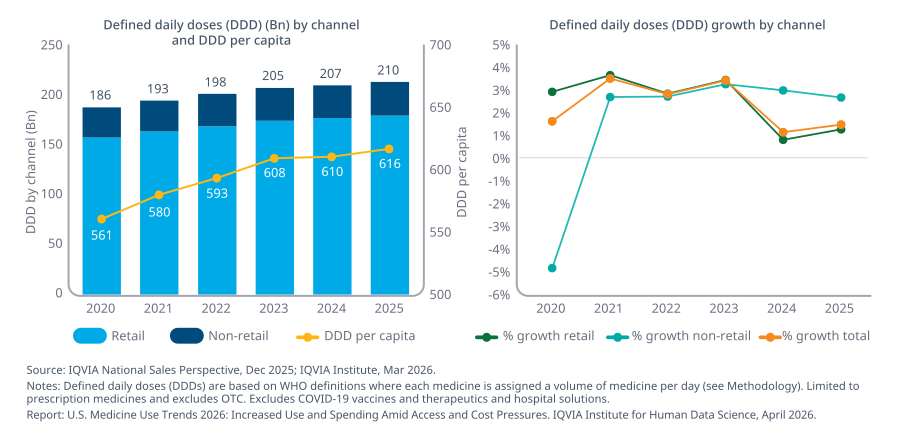
    • Total prescription medicine use increased 1.5%, reaching 210 billion days of therapy in 2025
    • Vaccinations have had mixed trends, with seasonal vaccines seeing significant declines in the latest season while many routine vaccines increased in 2025
  • Some patients see out-of-pocket cost reductions:
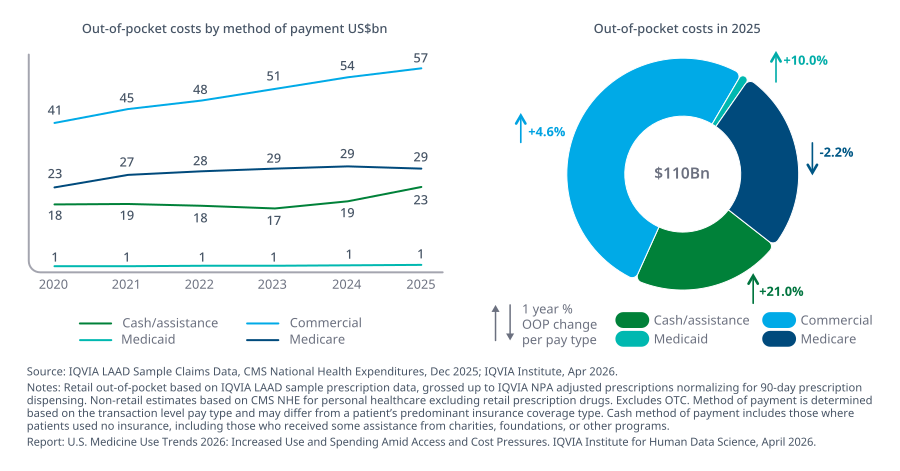
    • Patient out-of-pocket costs reached a record $110Bn in 2025, increasing by $6Bn
    • Implementation of the Medicare Part D out-of-pocket cap reduced overall spending by Medicare beneficiaries, offset by increases in other pay types driven by GIP/GLP-1s
  • Patients continue to see barriers to medicine access:
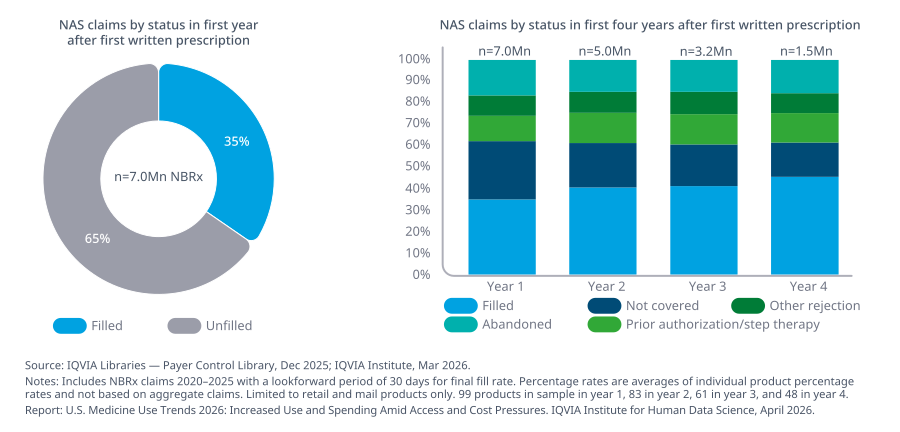
    • Nearly two-thirds of prescriptions for newly launched drugs go unfilled in the first year on the market, and limited coverage persists for several years
  • Spending on medicines has accelerated:
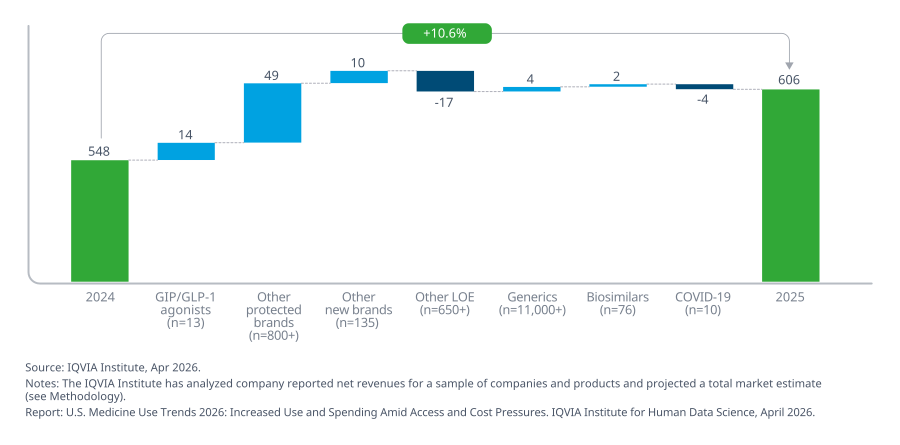
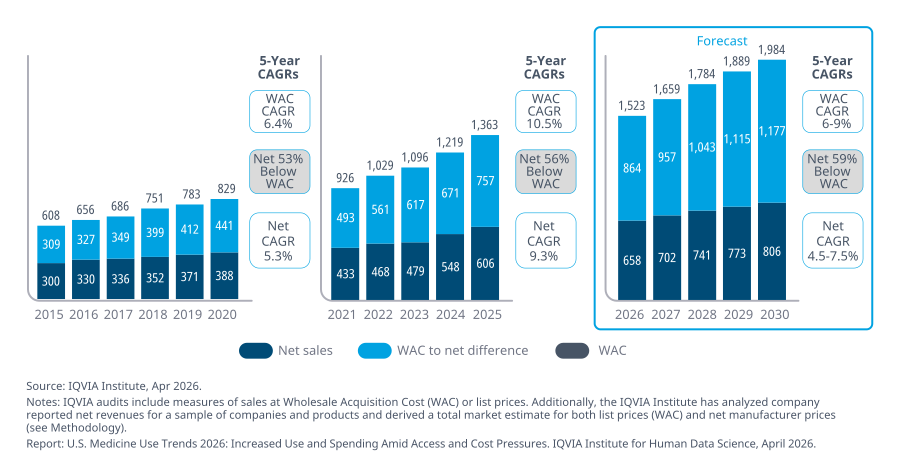
    • The U.S. market at net prices grew 10.6% in 2025 and an average of 9.3% annually over the last five years
    • GIP/GLP-1 agonists and COVID-19 medicines have had significant impacts on spending growth since 2020
  • Growth will slow through 2030:
    • U.S. medicine spending at net prices is forecast to grow 4.5 to 7.5% through 2030, while 6 to 9% at list prices
    • Pricing pressures and patent expiries will slow growth through 2030 offset by continued uptake of innovative therapies

Other Findings

  • The use of prescription medicines in the U.S. — based on defined daily doses — has grown 13% in the last five years to 210 billion days of therapy across both retail and non‑retail settings, although growth slowed beginning in 2024.
  • Retail drugs currently represent 84% of medicine use in the U.S., with only 16% in non‑retail settings, and non‑retail growth exceeded retail growth in 2025.
  • The use of prescription drugs dispensed from retail pharmacies has continued to grow at an average annual rate of 2.4% over the last five years, with much slower growth in 2024 and 2025, reducing total market growth.
  • Out‑of‑pocket costs rose in aggregate for commercially insured patients, Medicaid beneficiaries, and those who paid cash, while Medicare out‑of‑pocket costs declined, largely driven by the Medicare Part D out‑of‑pocket cap implemented in 2025.
  • Commercial insurance out‑of‑pocket costs, which account for 52% of total patient out‑of‑pocket costs, rose 5% in aggregate in 2025 and 37% over five years due to increased volume and a shift towards higher‑cost prescriptions.
  • Medicare out‑of‑pocket costs declined by $638 million (2.2%) in aggregate in 2025 following the implementation of the Medicare Part D out‑of‑pocket cap; however, costs remain more than $5.3 billion (23%) higher than in 2020, driven by increased volume and shifts in prescription mix.
  • Between 2020 and 2024, 99 novel medicines launched in retail and mail channels in the U.S., often providing benefits over standard of care or addressing unmet needs. For these medicines, 7 million new prescriptions were written in the first year of availability, with 64% related to RSV vaccines alone.
  • On average, 35% of these prescriptions were filled, while 65% went unfilled, including an average of 49% rejected by payers and 17% abandoned by patients after payer approval, likely due to high out‑of‑pocket costs.
  • During the first four years a new medicine is on the market, fill rates improve; however, by year four, more than half of new prescriptions still go unfilled, significantly higher than the 29% unfilled rate across all brands and branded generics.
  • Net medicine spending increased by $58 billion (10.6%) in aggregate, rising from $548 billion in 2024 to $606 billion in 2025, with most growth driven by protected brands outside GIP/GLP‑1 agonists and COVID‑19 vaccines and therapeutics.
  • GIP/GLP‑1 agonists across diabetes and obesity contributed $14 billion in growth, with $9.6 billion concentrated in products approved for obesity and related comorbidities.
  • COVID‑19 vaccines and therapeutics, which contributed to spending growth in 2024, declined by $4 billion in 2025.
  • Total net spending on medicines in 2030 is expected to increase by $200 billion compared to 2025, as volume growth and adoption of innovation are partly offset by lower‑price drivers such as patent expiries and policy effects.
  • Over the next five years, medicine spending is projected to grow between 6–9% on a list‑price basis and 4.5–7.5% after discounts, rebates, and other price concessions.
  • Growth will be driven by the adoption of newly launched innovative products, with an average of 50–55 new medicines expected to launch annually over the next five years, including therapies in oncology, immunology, and other specialty areas, as well as more traditional treatments in diabetes, obesity, and neurology.

Related solutions

Contact Us