






.svg)











Stay ahead with the EMEA Thought Leadership insights: your source for industry-leading expertise and analysis
Blog
Nine for 2026: Part 2
Nine issues that are new or trend-breaking in 2026 for global Life Sciences and healthcare
Jan 13, 2026
As we move into 2026, the global healthcare and life sciences sectors face another year of transformation. This blog is the second part in our “Nine for 2026” series, where we spotlight IQVIA’s perspectives on the most significant new and trend-breaking issues set to influence prescription medicine markets and global healthcare in 2026 and beyond. In our first blog, we reviewed the defining themes of 2025 and explored macro and policy issues shaping the year ahead. Now, we turn our attention to three innovative and therapeutic trends that promise to redefine the landscape for years to come (Figure 1).

What could happen if the US deprioritises some Life Sciences fields?
For decades, the US has been the undisputed leader in science and technology R&D, fuelling a pipeline that delivered many of the world’s breakthrough medicines (Figure 2). But now, that leadership faces a challenge. Proposals to slash NIH funding by nearly 40% for 2026 linger, despite fierce opposition in Congress. The ripple effects of such defunding would significantly reshape the global scientific landscape for years to come. In addition, the recent government shutdown has already cast a shadow, slowing grant applications and stalling funding cycles.
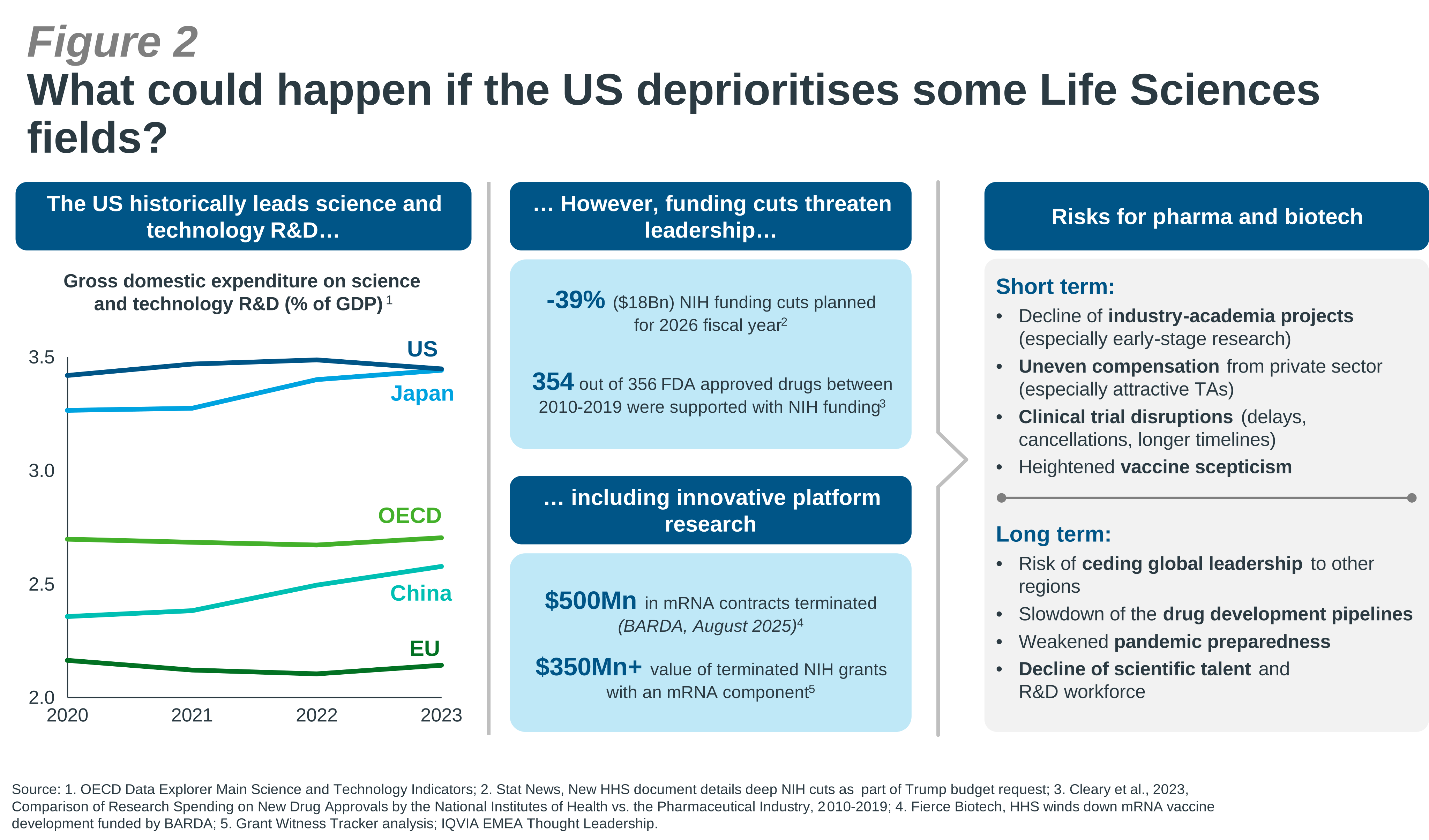
In the short term, clinical trials may face delays, cancellations, and longer timelines. Looking further ahead, reduced NIH funding threatens to slow drug development pipelines, undermining a foundation that has supported nearly all FDA-approved drugs in the past decade. Additionally, the retreat from mRNA investment, through terminated grants and R&D defunding, further escalates existing concerns such as the level of pandemic preparedness and rising vaccine scepticism.
A shrinking pool of federal funding may also spark a talent drain, as scientists seek stability elsewhere. Biotech firms could find themselves leaning more on private capital or foreign partnerships to sustain early-stage innovation. For the wider industry, this means recalibrating assumptions, diversifying partnerships, and perhaps looking beyond the US for scientific talent and infrastructure.
These challenges do not stand alone. They coincide with new policy moves - the BIOSECURE Act restricts certain foreign collaborations, while tariffs complicate global supply chains. Together, these forces threaten to fragment the innovation ecosystem, making it harder for multinational companies to operate seamlessly across borders. The message is clear: the era of exclusively US-centric innovation is giving way to a more globally distributed, and increasingly politically influenced, pharmaceutical landscape.
What geographies are the new global innovators from?
With reduced US investment in life sciences, attention is increasingly shifting to China’s rise as a pioneering R&D and clinical trial centre, particularly at the forefront of novel mechanism of action innovation, alongside the growing influence of other innovation hubs outside the US:
1. China’s rise as an innovation powerhouse
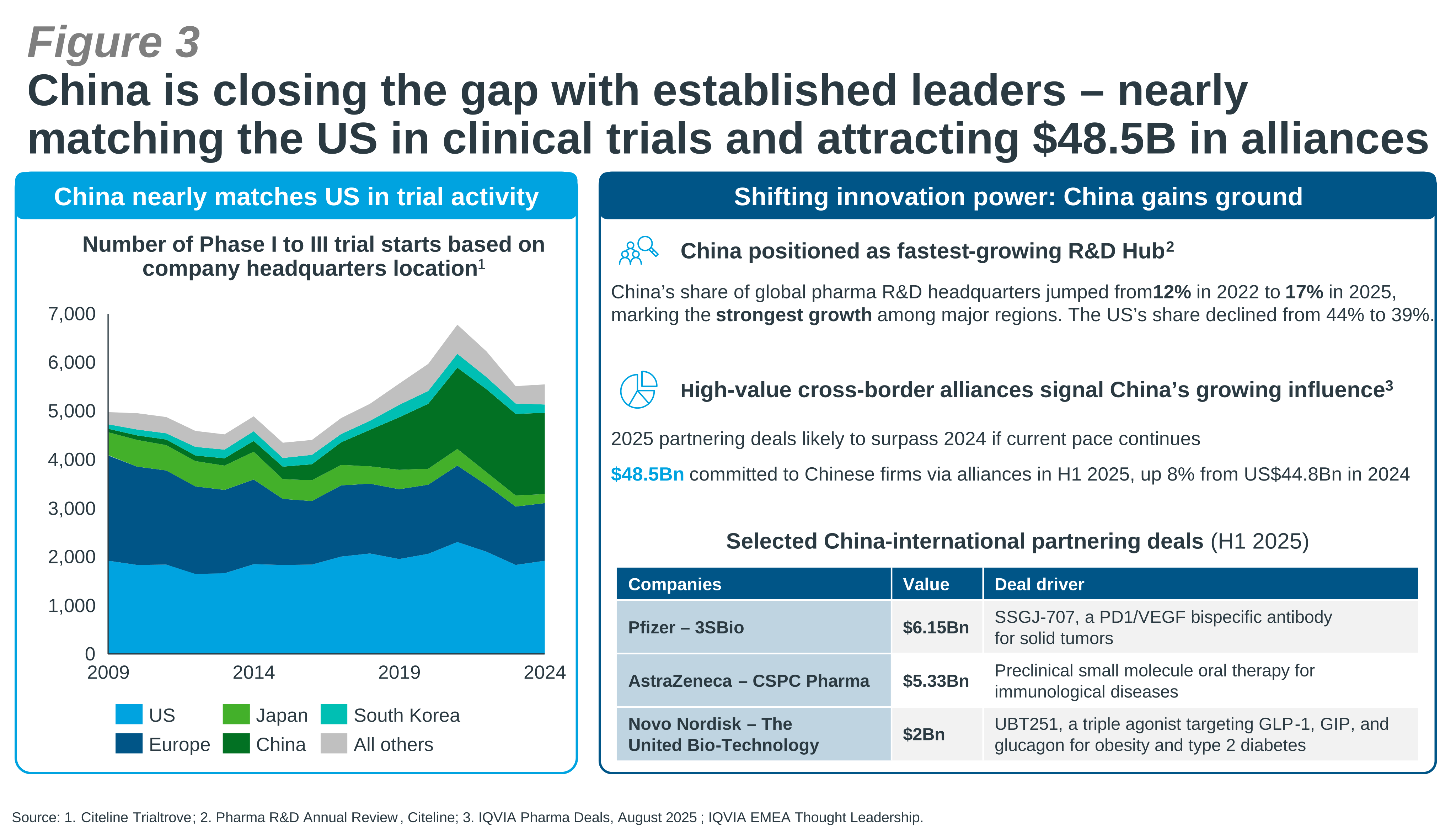
China’s landmark ascent in life sciences is now a defining reality. The country has overtaken Europe and is nearly matching the US in clinical trial starts, prompting sponsors to consider China-first or China-inclusive strategies for pivotal studies (Figure 3). This shift brings new complexity, with intellectual property norms, regulatory harmonisation, and geopolitical tensions influencing decision-making.
In 2025, Chinese firms attracted $48.5 billion in alliance funding, with major deals in oncology, immunology, and obesity. Global players such as Pfizer, AstraZeneca, and Novo Nordisk are partnering aggressively, reflecting decades of government investment in R&D infrastructure, streamlined approval pathways, and policies favouring data exclusivity. Chinese companies are now exporting innovation globally, intensifying competition and prompting multinational pharma to rethink portfolio planning and risk management.
2. India as an emerging clinical trial hub
India is rapidly establishing itself as a key clinical trial hub, with trial share growth (the relative increase in number of trials sponsored by Indian headquartered companies compared to other key markets) up 109% since 2019, albeit from a low base. This increase marks a decisive shift from generics to innovation, driven by government initiatives such as the National Policy on R&D and Innovation and a $500 million investment programme. Companies like Dr. Reddy’s and Glenmark are investing in novel therapies, from immuno-oncology to CNS.
In contrast, trial activity has declined sharply in EU4 countries, the UK, and Japan. The innovation map is being redrawn, with profound implications for global launch strategies. Operating in this multipolar world demands agility and new capabilities. While emerging hubs bring regulatory and operational complexity, they offer significant rewards: access to large patient populations, cost efficiencies, and proximity to fast-growing markets. Early investment in local partnerships and talent will be key to capturing these opportunities.
Novel administration routes transform therapy areas
Convenience is quickly becoming the new frontier in therapeutic innovation, reshaping how patients and clinicians think about treatment. The arrival of oral GLP-1 therapies for obesity, such as Novo Nordisk’s oral semaglutide and Lilly’s orforglipron in 2026 signals a seismic shift in a market dominated by injectables. Psoriasis, too, is witnessing its own revolution. Icotrokinra, the first oral IL-23 inhibitor, delivers biologic-like efficacy without the need for injections. This isn’t just incremental progress; it’s a fundamental change in how chronic conditions can be managed, with oral therapies set to expand access, simplify administration, and enhance adherence.
Ultra-long acting injectables are also poised to transform multiple therapy areas. Take depemokimab (brand name Exdensur), a recently approved IL-5 inhibitor for severe asthma: patients need only two doses a year, a dramatic departure from the fortnightly or monthly routines of standard biologics. Innovations like Gilead’s bi-annual injectable for HIV signifies another landmark advance. For patients, this means fewer interactions with healthcare systems and less disruption to daily life. For payers, it means a reduced burden and potentially lower costs. For pharma, it’s a call to rethink lifecycle strategies and competitive positioning.
Oral therapies and ultra long acting injectables are two distinct strategies to improve patient and healthcare system outcomes. Whilst orals have long been seen as the most convenient administration option, preferences may shift as injectables move towards ultra long-acting dosing (potentially even bi-annual treatment). These implications will continue to reverberate across the value chain. In markets like obesity, where out-of-pocket spending is growing significantly, oral and ultra long-acting options could accelerate consumerisation, challenge traditional reimbursement models and demand new approaches - not just in therapeutic innovation, but in go-to-market models.
Closing thoughts
These innovative and therapeutic trends - US life science defunding, new administration routes, and the emergence of China and India as innovation hubs - are driving fundamental change across the sector. Together, they are influencing where research investment is directed, transforming how treatments are delivered, and intensifying global competition. Companies that recognise and respond to these shifts will be best placed to succeed, while those slow to adapt risk losing relevance in an increasingly complex and dynamic landscape.
In our next blog, we’ll turn to the business and competitive issues set to disrupt the sector, concluding with key takeaways for navigating the year ahead. For more details, watch our Nine for 2026 webinar on demand here.
Read Nine for 2026: Part 1 here and Nine for 2026: Part 3 here for the full outlook.